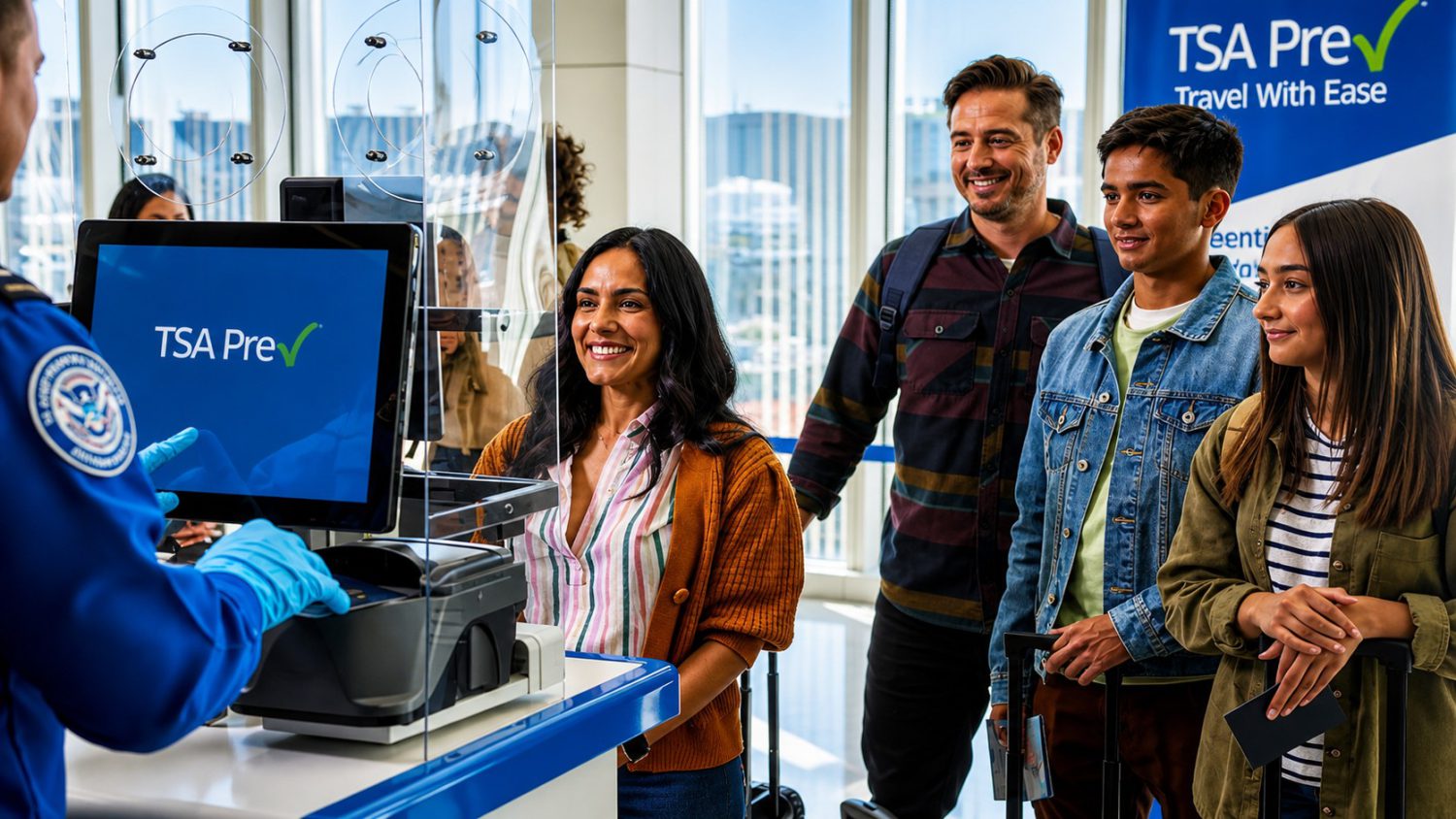
Standing at the TSA podium, a camera points at your face. The CAT-2 kiosk captures your live image and matches it against your passport or ID photo in real time—automating what used to be a purely manual check. TSA frames this as faster and smarter. Privacy experts call it something else entirely, raising concerns about surveillance technology that may extend well beyond its stated purpose.
Here’s what TSA says about the program:
- Deployed at 80+ airports; planned expansion to 400+ federalized airports
- Officially optional—travelers may decline “without recourse”
- Photos not stored after a successful match, except in limited testing environments
- Manual ID check remains available; opting out won’t cost you your place in line
- Framed as identity verification only—not surveillance or law enforcement
Why Experts Say Opt Out Anyway
Civil liberties advocates and bipartisan lawmakers are raising alarms that go well beyond convenience.
The Electronic Privacy Information Center isn’t subtle about its position: “Facial recognition is an invasive and dangerous surveillance technology… TSA’s use of facial recognition normalizes the use of our face as our ID, and the dangerous implications are far too great to ignore.” Optional today doesn’t guarantee optional tomorrow—and cases of apps secretly tracking users show how quickly stated limitations can erode. Senators Jeff Merkley and John Kennedy—a Democrat and a Republican—introduced bipartisan legislation to restrict the program. When those two agree on something, that’s worth your attention.
Then there’s the accuracy problem. NIST’s Face Recognition Vendor Test found false positive rates 10–100 times higher for Asian and African American faces compared to Caucasian faces. Lead researcher Patrick Grother documented “demographic differentials in the majority of the face recognition algorithms” studied. For Black women specifically, one-to-many false positive rates were among the highest recorded. It’s a bit like a Spotify algorithm confidently insisting you love yacht rock after one ironic playlist—except the consequences aren’t a bad Friday afternoon. They’re secondary screening and missed flights.
How to Actually Opt Out
One sentence at the podium is all it takes to exercise a right TSA explicitly guarantees.
At the podium, say this: “I’d like to opt out of the facial photograph and use manual ID verification, please.” Present your physical ID. Complete standard screening. TSA policy is explicit—no penalty, no delay, no lost place in line. Officers may sometimes default to the camera regardless, so knowing your rights before you reach the checkpoint is your most reliable defense. For broader travel security tips, learn how to stay safe at other common airport vulnerabilities too.
Your face is the one password you can never reset.
The Bigger Picture
The infrastructure TSA is building today will outlast any single administration’s stated intentions.
If enough travelers say nothing, facial recognition becomes the default—not by law, but by habit. TSA’s assurances may be genuine today. A system built across 400 airports will outlast any single administration’s intentions. Opting out costs you nothing. Staying silent might cost considerably more.