Does your neighbor ask Siri about salvation instead of calling their pastor? That’s not a hypothetical anymore—it’s Sunday morning in America. Nearly half of practicing US Christians now trust AI to guide their spiritual growth, creating the most profound shift in religious authority since the printing press gave everyone their own Bible.
The Divine Algorithm Paradox
Christians simultaneously embrace and fear AI as their spiritual advisor.
Recent research reveals that practicing US Christians show both remarkable trust and deep anxiety about AI‘s role in faith. Among younger believers, trust climbs even higher—with Gen Z and Millennial Christians more likely to put AI wisdom on par with pastoral counsel.
Yet the same communities express overwhelming concern. Most worry AI will misinterpret Scripture, fear it will erode religious faith, and believe AI threatens to replace God and spiritual leaders entirely. You’re simultaneously asking ChatGPT to explain Romans while panicking it might lead you astray—the ultimate tech adoption paradox.
When Algorithms Meet Altars
The gap between pews and pulpits grows wider with each passing Sunday.
The disconnect between laypeople and clergy reveals a crisis of authority waiting to explode in church board meetings nationwide. While practicing Christians increasingly embrace AI spiritual assistance, pastors remain deeply skeptical about artificial intelligence helping people grow spiritually.
Christians aren’t just casually experimenting—they’re integrating AI into core spiritual practices. Gloo’s research shows roughly 40% of practicing Christians use AI for prayer composition, Bible study, and spiritual growth exercises. Your grandmother might be getting devotional prompts from the same technology that writes marketing copy, and she probably trusts it more than you trust your GPS.
Vatican Versus Silicon Valley
Religious institutions scramble to respond to AI’s spiritual authority.
Pope Francis has called for binding international AI treaties, warning against outsourcing moral decisions to algorithms that lack conscience. Vatican ethicist Paolo Benanti accuses tech elites of “playing God” with artificial intelligence—though apparently, congregants don’t mind letting AI play pastor.
This theological whiplash reflects a deeper tension between technological convenience and spiritual authenticity.
The God From The Machine
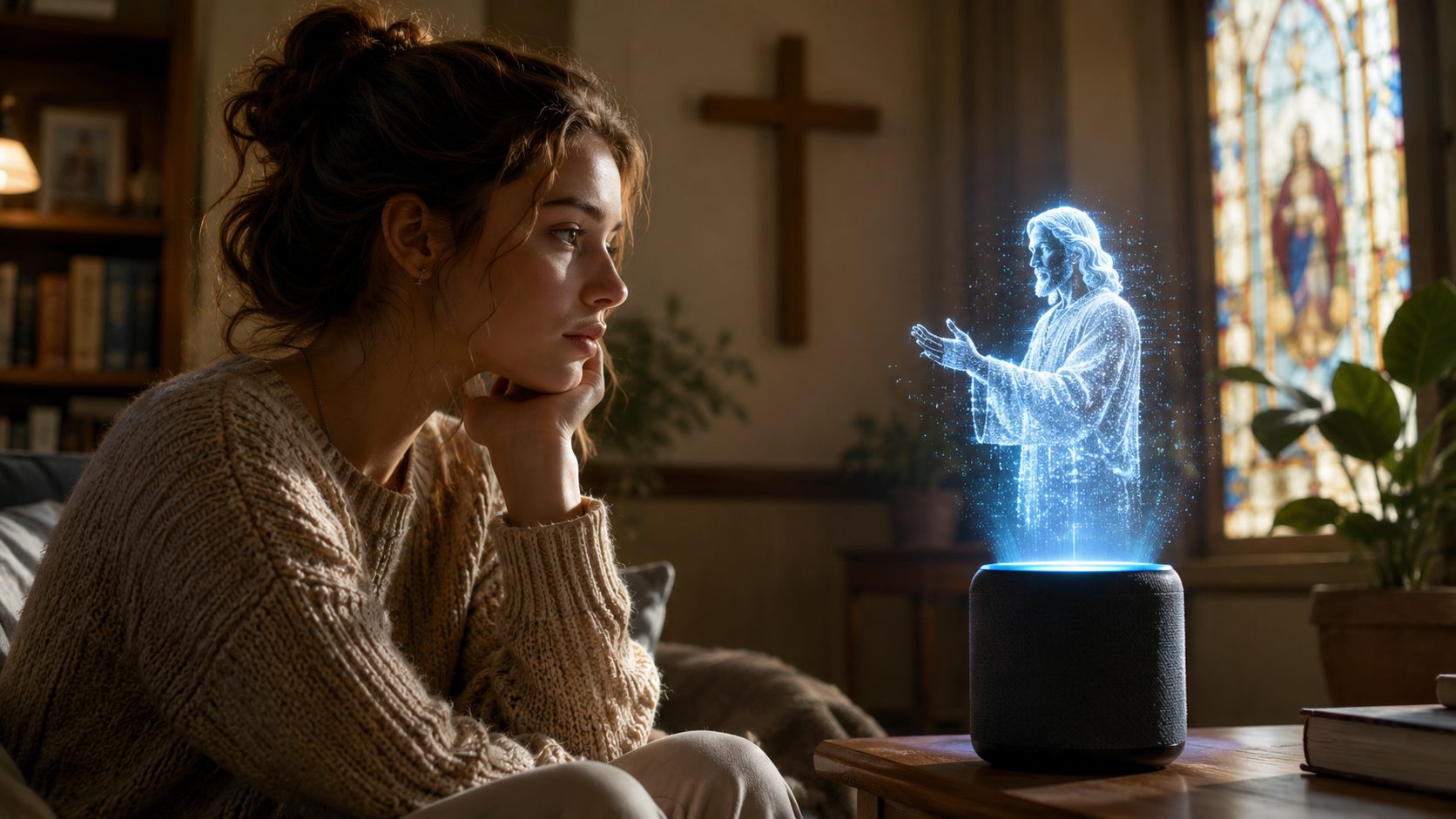
This isn’t just another tech trend—it’s a fundamental question about who speaks for the divine in the digital age. When your smart speaker offers spiritual advice with the confidence of an oracle and the availability of a 24/7 hotline, traditional religious authority faces its biggest challenger since Darwin.
The real question isn’t whether AI belongs in faith—it’s already there. The question is what happens when the algorithm becomes the authority, and whether churches can guide that transformation or merely watch it unfold.