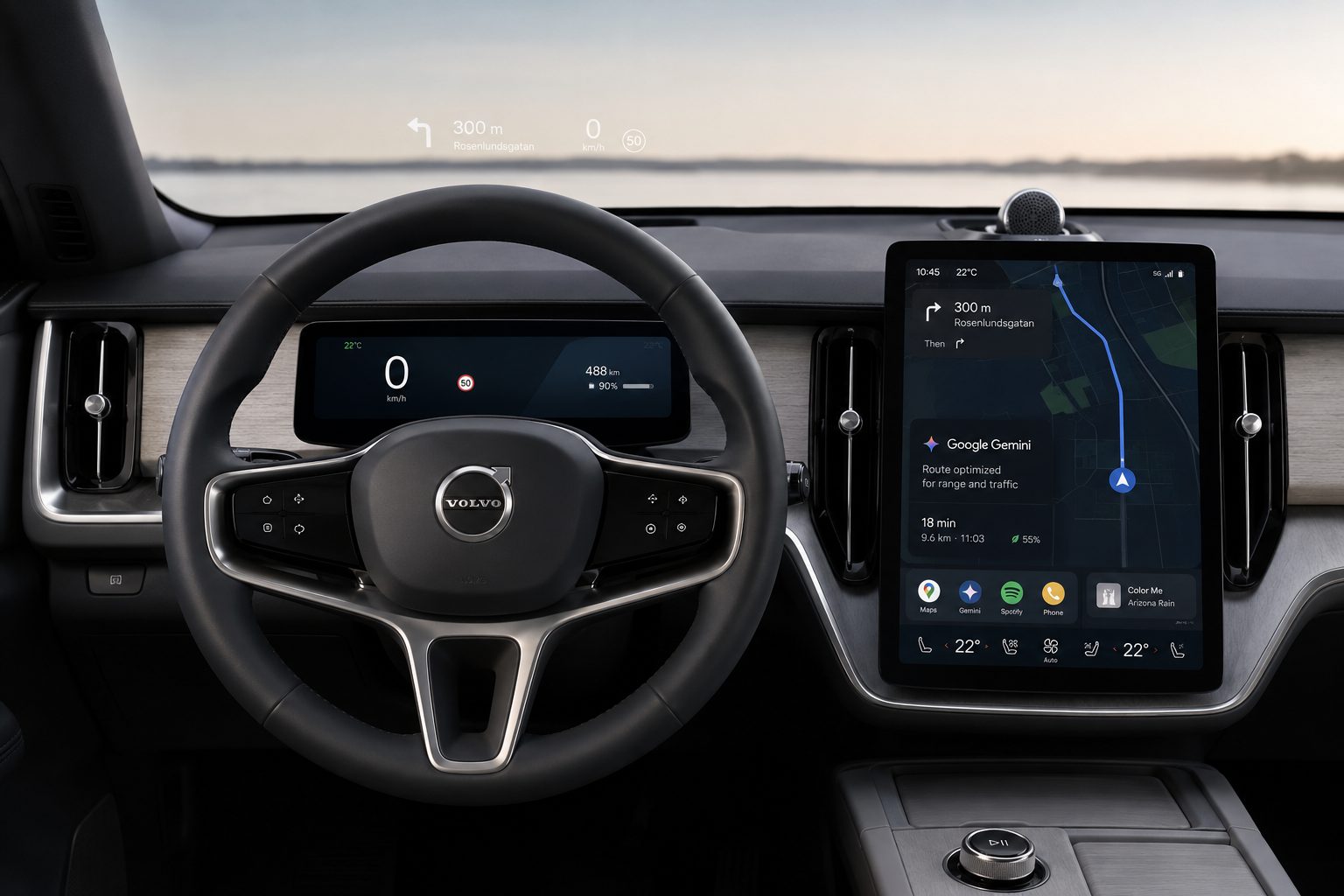
A road sign in Portuguese flashes past a driver in rural Portugal — and instead of reaching for a phone, they ask the car what it says. That’s the scenario Google just demoed at its Mountain View campus, with Gemini reading the world outside a Volvo EX60‘s windshield in real time. The feature is experimental, permission-based, and nowhere near shipping. But it signals something worth paying attention to.
What Gemini Actually Saw
The demo wasn’t vague — Gemini identified specific real-world landmarks through the EX60’s forward-facing camera with enough precision to make the use case feel tangible.
During the live test, the system picked out a public art installation called “The Orb,” the solar roof on the Gradient Canopy building, and the Shoreline Amphitheater. No generic “building detected” placeholders. Actual identification with context, delivered conversationally.
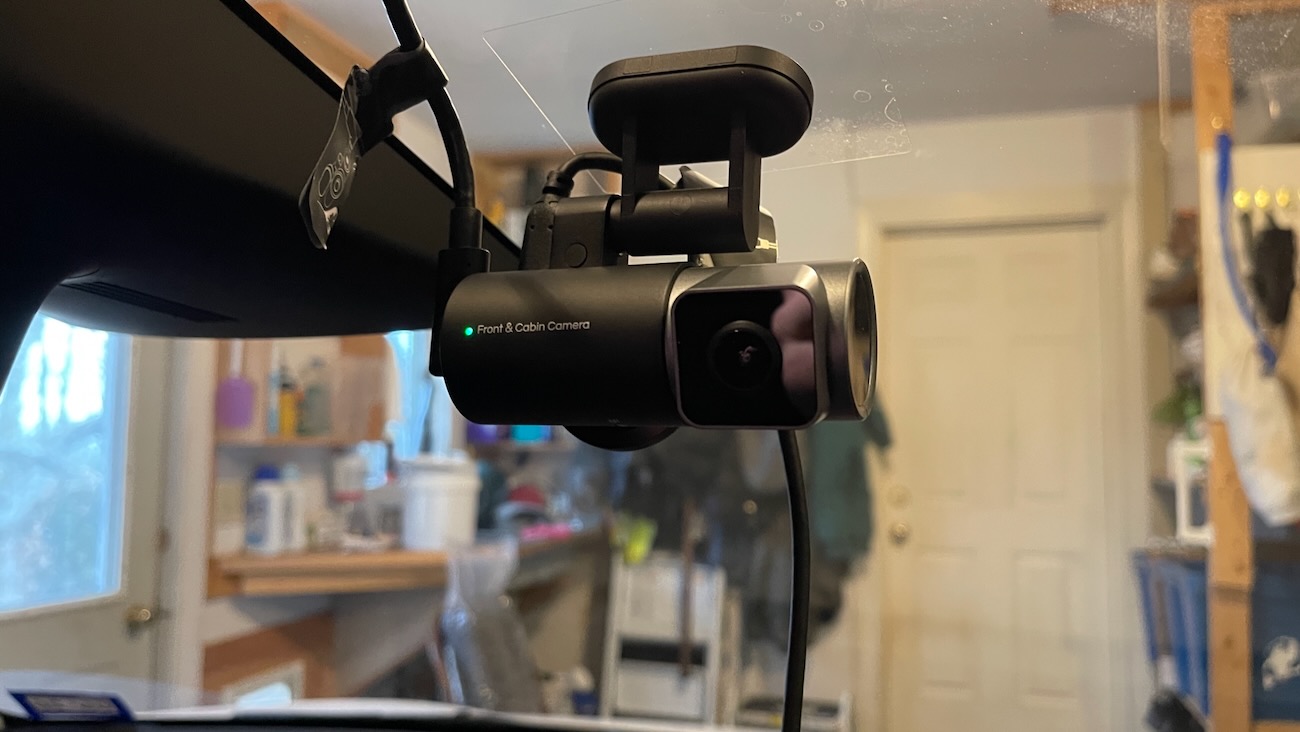
- The camera activates only when the driver asks a question; the feed cuts after Gemini responds
- Google describes this as permission-based — the camera is not continuously watching
- A primary use case is translating road signs for drivers in foreign-language countries, hands-free
- No confirmed release date and no confirmed expansion beyond this single demo platform
Your Car as Co-Pilot, Not Surveillance Van
Visual AI in a car is a meaningful step beyond the voice-only assistants already in your dashboard — and it comes with real questions attached.
Most in-car AI has been voice-only until now — essentially a fancy speaker that checks your calendar. Google is crossing into visual territory here, and that changes the calculus. The company says the camera feed is triggered by a question and ends with the answer. Whether that holds under real-world pressure depends on how much faith you place in opt-in architecture. It’s worth noting that Google has faced regulatory scrutiny over data practices before, so the privacy claim deserves more than a press-release read. This demo also fits into Google’s broader push to embed Gemini into Android Auto, making it feel less like a one-off stunt and more like an early roadmap preview.
Google and Volvo described the feature as a demonstration of future context-aware driving, with Google emphasizing permission and privacy controls throughout the demo presentation, according to published reporting.
The Hardware Behind the Demo
The Volvo EX60 arrives with specs that stand on their own — but its role as a Gemini test platform is the more interesting story right now.
If you’re EV shopping, the EX60 carries numbers worth noting: up to 810 km of range and 340 km added in just 10 minutes at a 400 kW fast charger. Volvo calls it their most intelligent car to date, and the full reveal is set for January 21, 2026. But treat the Gemini camera feature like a concept-car door handle — shown at the event, not confirmed for the production model.
What This Actually Means for You
The tension here is simple: in-car AI that reads the physical world is both genuinely useful and genuinely complicated.
An assistant that can translate a sign, identify a landmark, or explain what’s outside your window without requiring you to touch your phone addresses a real friction point. Get the privacy architecture right, and this becomes the first in-car AI assistant that actually helps you navigate the unfamiliar. Get it wrong, and your commute becomes a data collection exercise with cup holders. The demo proves the concept works. Whether the product earns your trust is the part still being written.