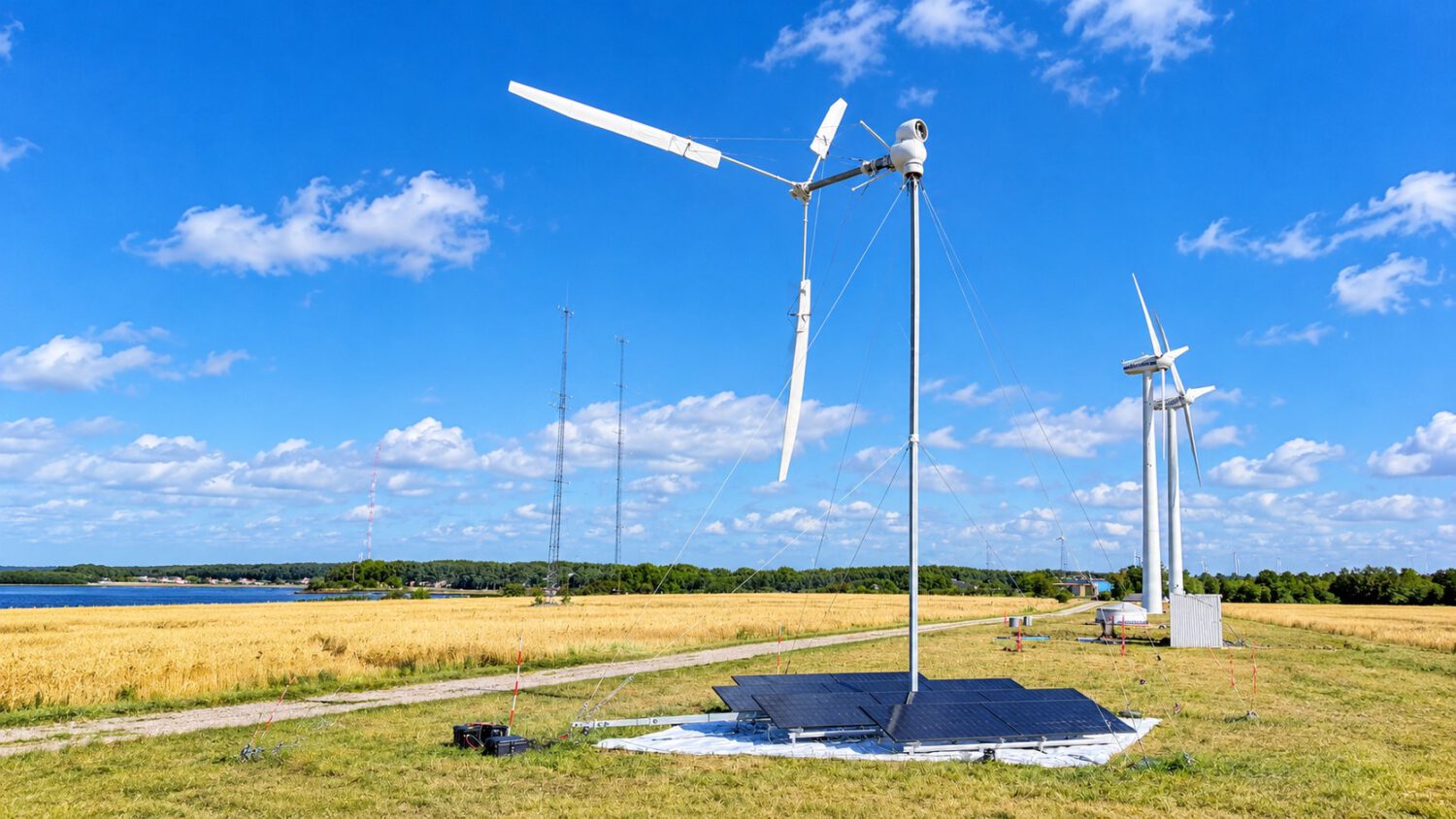
KiteX’s TWT-11 replaces concrete foundations with ground anchors and a one-day install, and roughly 100 pre-orders have already claimed every unit the company plans to build in 2027, according to the company.
From Beach Kite to Pre-Sold Production Line
A teenage kite mishap and a series of engineering pivots became the origin story for a household turbine that KiteX says has already reserved its entire first-year production run.
KiteX founder Andreas Okholm was 15 when a large kite hauled him into the air on a windy Danish beach, then escaped down the sand without him. That involuntary physics lesson set him on a longer path than it sounds. KiteX first tried self-flying kite generators that produced electricity through small propellers, but the project ran short of funding and the team pivoted to a simpler ground-based design.
That redesign became the Wind Catcher portable turbine, with more than 200 units sold before the company moved on to the TWT-11. KiteX says approximately 100 pre-orders have reserved all of its projected 2027 production, with initial deliveries planned for spring 2027 in Denmark and northern Germany.
What the TWT-11 Actually Is
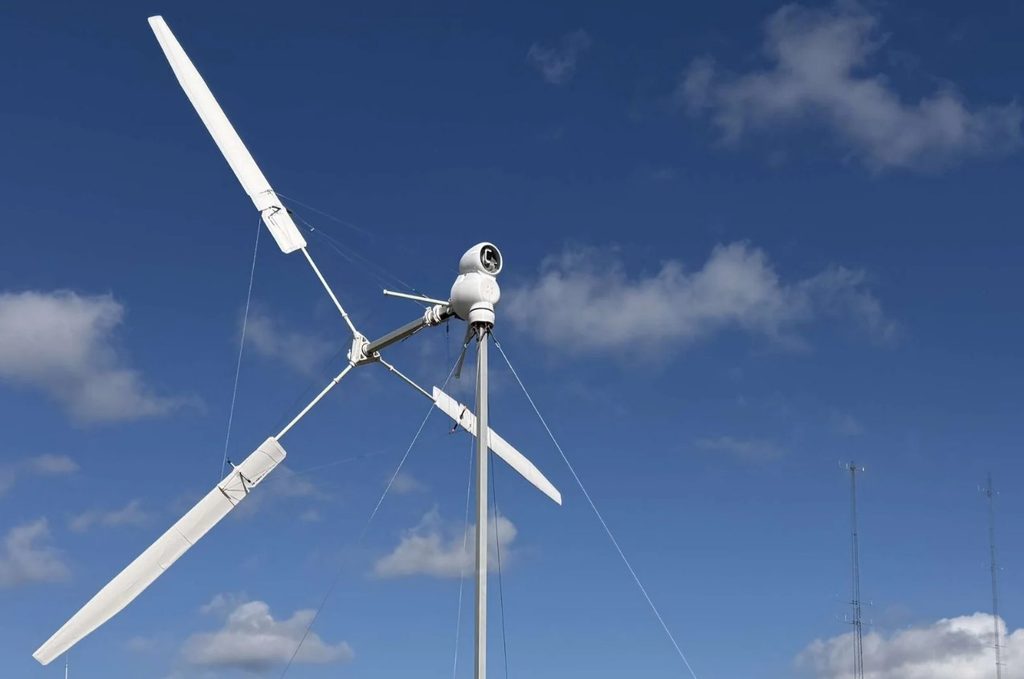
The turbine trades steel, concrete, and a crane-heavy foundation for a glass-fiber structure, guy lines, and five screw-in ground anchors.
Rated at a 5-kilowatt peak generator paired with a 6-kilowatt three-phase grid-tie inverter, the TWT-11 weighs approximately 326 kilograms. Its 5.5-meter blades reach a maximum tip height of 21 meters under Danish regulations.
Five screw-in ground anchors and guy lines replace a conventional concrete foundation, letting the whole assembly travel on a standard trailer and go up in roughly one day. KiteX estimates annual output at approximately 15,000 kWh at a suitable site with normal Danish wind conditions. That figure reflects projected performance, not an independently audited result.
The turbine is a downwind, passive-yaw design: the rotor and upper tower rotate together to face the wind without active motors, while blade pitch adjusts automatically to changing conditions. KiteX lists a cut-in speed of 3.5 meters per second, a cut-off at 18, and a survival wind speed of 42. Estimated noise in silent mode is 47 decibels at 25 meters, though independent acoustic testing is not yet complete.
Cost, Expert Opinion, and What Remains Unproven
Pricing is set and expert interest is real, but certified performance data and long-term maintenance costs remain outstanding questions.
Pricing sits at 165,000 Danish kroner in Denmark and 21,100 euros in Germany, both figures inclusive of VAT and installation. The package covers the inverter, permits, 25 meters of cable, and a first-year system check.
KiteX estimates a five-to-eight-year payback period, but that projection depends heavily on local electricity prices, wind quality, grid arrangements, and permitting outcomes. Treat it as a starting point for your own calculation, not a guaranteed return.
Danish wind pioneer Henrik Stiesdal offered a preliminary assessment suggesting a 30 to 40 percent capacity factor is plausible under typical onshore European conditions, corresponding to roughly 13,000–17,000 kWh per year and a lifetime energy cost of approximately 150 euros per megawatt-hour. He described the concept as the most compelling small-scale wind design he had encountered, according to secondary reporting. Those comments were preliminary and carry no certification weight.
IEC 61400 type certification remains in progress, and early testing could still prompt design adjustments. Maintenance adds a practical constraint: the turbine is not designed to be climbed, so servicing requires lowering the entire structure. Some plastic components and guy lines may need replacement around the ten-year mark, a cost that no real-world operators have yet had the chance to verify.
Watch the First Shipments
The 2027 delivery window will be the first real test of whether the TWT-11’s projected performance holds up in the field.
Those first production units will answer the questions that matter most: actual measured output, real noise levels, permitting timelines, and what service genuinely costs. A waitlist is open for production beyond the 2027 allocation. The honest answer to whether the TWT-11 delivers on its promise arrives when those turbines go up, start spinning, and run through a full year of northern European weather.