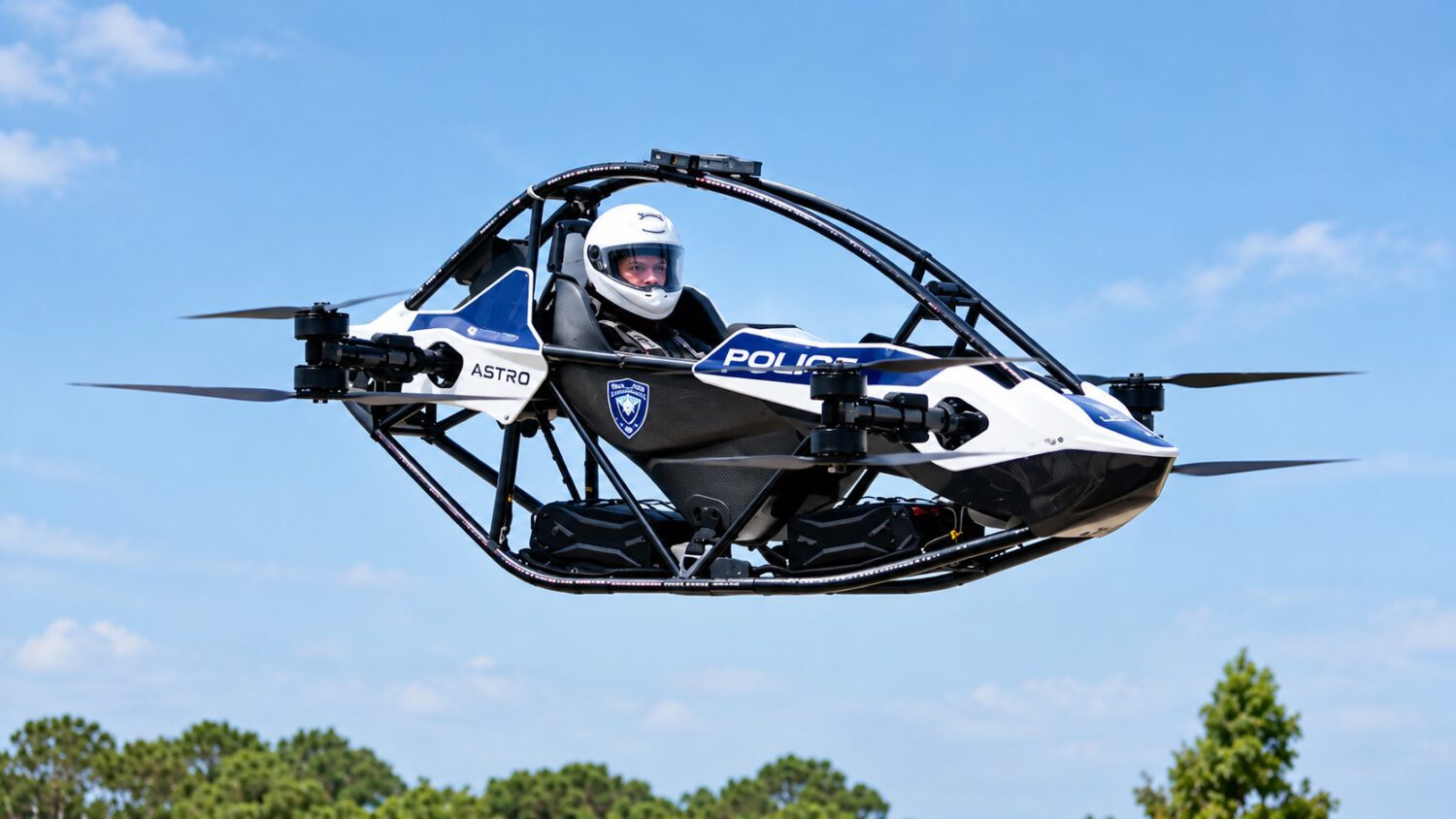
A multi-rotor aircraft designed to carry a human pilot reportedly cost Florida Polytechnic University approximately $148,000 in university funds. No confirmed public notice process, no published data-retention policy, and no FAA clearance for official operations accompanied that purchase.
That’s where the Lakeland university stands right now.
Florida Polytechnic recently took delivery of a Jetson ONE, a human-carrying electric vertical-takeoff-and-landing craft its police department has named “Astro.” This is not a conventional unmanned surveillance app: a person operates it from aboard the vehicle. The university says potential uses include locating missing people, reaching inaccessible areas, and supporting student research, which sounds reasonable until you ask what existing ground patrols and the conventional drone unit cannot already handle.
What the University Says Versus What Florida Law Actually Permits
The gap between stated intentions and legal authority deserves scrutiny before a single official flight takes place.
Florida Polytechnic’s police department already operates a standard drone unit. The Jetson ONE’s distinguishing feature is that it carries a pilot, not necessarily that it sees more or responds faster than equipment already on hand.
“In the final stages of seeking approval from the Federal Aviation Administration to use the aerial patrol vehicle in its operations” Florida Polytechnic University, via Carscoops.
Astro is not yet cleared for official missions. FAA rules on flights over congested areas and nighttime operations impose additional constraints on where and when it can fly.
Florida law adds its own limits, though with an important qualification. Florida Statute 934.50 restricts law-enforcement agencies from using a covered “drone” to gather evidence or other information except under enumerated circumstances: a warrant, a documented imminent-danger emergency, a missing-person search, specific crowd-safety situations, counterterrorism operations, traffic management, and several other carved-out uses. The statute defines a covered “drone” as an aircraft that does not carry a human operator, which means its direct application to the piloted Jetson ONE requires legal analysis the university has not publicly provided. The statute also restricts recording people or private property where a reasonable expectation of privacy exists. Florida law does not grant unrestricted aerial authority to law enforcement, whatever the aircraft.
The reported purchase price suggests this was a deliberate institutional decision, which makes the absence of a visible public governance process harder to overlook.
What Responsible Deployment Looks Like Before the Rotors Spin
Other Florida universities have established formal oversight frameworks before operations begin, and Florida Polytechnic should do the same.
UCF’s published drone policy offers a useful reference point. Every pilot conducting flights over UCF property must hold an FAA Part 107 small unmanned aircraft systems license, and all flights require prior approval, per UCF’s published emergency-management procedures. That framework was in place before operations, not built around them afterward.
No policy was identified in the reviewed public materials indicating whether Florida Polytechnic students, faculty, staff, or nearby residents received advance notice of the purchase. Whether public comment was sought remains unresolved. No data-retention or imagery policy was located. Full operating costs beyond the sticker price have not been disclosed publicly.
Aerial technology in campus safety is not inherently wrong. A piloted eVTOL could reach a remote location faster than a ground unit in a genuine emergency. But that case remains hypothetical when the aircraft is not yet approved to fly official missions and the accountability infrastructure has not been built in public view.
Buying the aircraft first and addressing governance questions afterward is a bit like installing the smoke detector after the kitchen renovation is already finished: the order matters, and so does who gets to weigh in before the work begins.