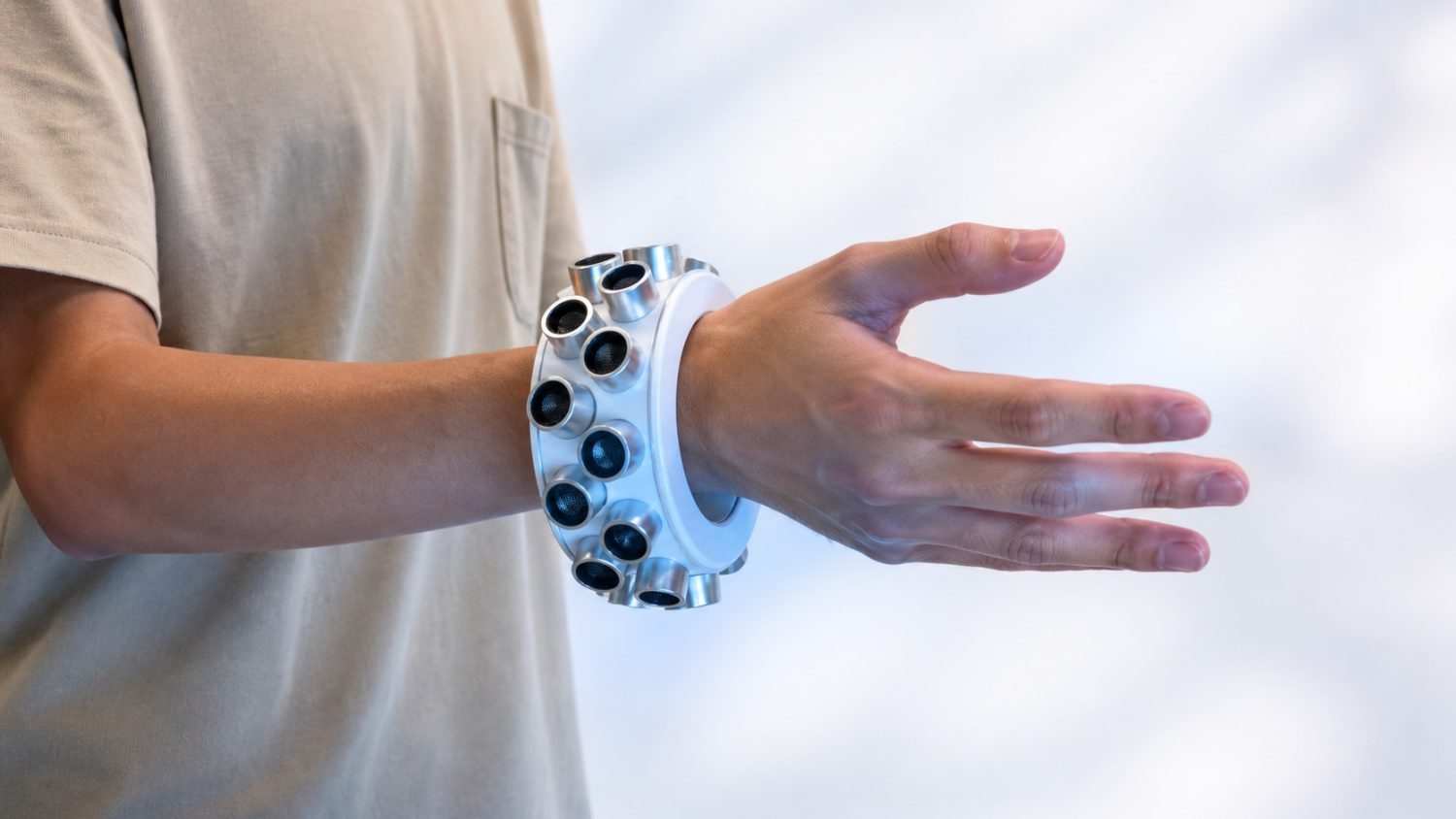
Cramming a full operating system into a bracelet-sized device is not a concept born in some recent AI hype cycle. It has a documented engineering history stretching back decades, driven by a straightforward premise: the wrist is the most accessible real estate on the human body, and compute keeps shrinking.
Wearable hardware is accelerating, and several independent projects are converging on the bracelet as the next serious computing surface.
Where This Started
The engineering roots of wrist-based computing run deeper than most people realize.
IBM’s research division demonstrated the concept early, building a Linux wristwatch prototype that ran full X11 graphics, Bluetooth wireless connectivity, and a VGA-class display. The goal was to reuse standard desktop Linux APIs so developers could target the device without learning a proprietary platform.
On the DIY side, makers built watches running Windows 98 via QEMU emulation on Raspberry Pi hardware. The OS booted, interactions were described as unbearably slow, and the hardware resembled strapping a first-generation iPod nano to your wrist with electrical tape. The proof of concept held regardless.
What Exists Now
Three current projects show how the bracelet-as-computer idea has matured, and where it still falls short.
“We’re trying to open up a very different kind of platform around low-power, persistent, large display on the body.” – Phil Inagaki, CEO of Polyera, speaking to TechCrunch about the Wove band.
Polyera’s Wove band translated that ambition into a flexible E-ink panel that wraps around the arm, running Wove OS, an Android-based platform connected over Bluetooth. It targeted developers before any general consumer release.
On the security side, PlugOS built an Android 14 environment with its own processor, memory, storage, and secure module inside a thumb-sized device. It connects to Android, iOS, Linux, Mac, and Windows hosts.
At IFA 2026, Lingverse introduced iKairos, a pendant carrying a detachable Neural Core. That core runs LifeOS, a human-machine operating system designed to shift between a desk robot and a wearable shell.
Wear OS, Zepp OS, and AsteroidOS, by contrast, primarily function as phone companions rather than independent platforms.
The Hard Problems
Battery life, thermals, and screen size remain the three constraints no bracelet project has solved at once.
Battery life is the first constraint. AsteroidOS achieves about 48 hours on optimized watch hardware; desktop OS emulation on a Pi drains a comparable battery far faster.
Thermals are the second problem. A bracelet sits against skin, so heat management is not optional. The third constraint is the interaction surface: a bracelet display forces UI compromises that no current OS handles gracefully at that scale.
Each of these problems is solvable individually. Solving all three simultaneously, inside something you actually want to wear, is where the engineering gap remains.