Water scarcity just became Wall Street’s problem. SpaceX’s recent IPO filing explicitly warns investors that water access now ranks alongside power and processors as a critical constraint on AI data center expansion. The company states that “significant water resources may be required for cooling large-scale data center operations”—corporate speak for “we need rivers to keep ChatGPT running.”
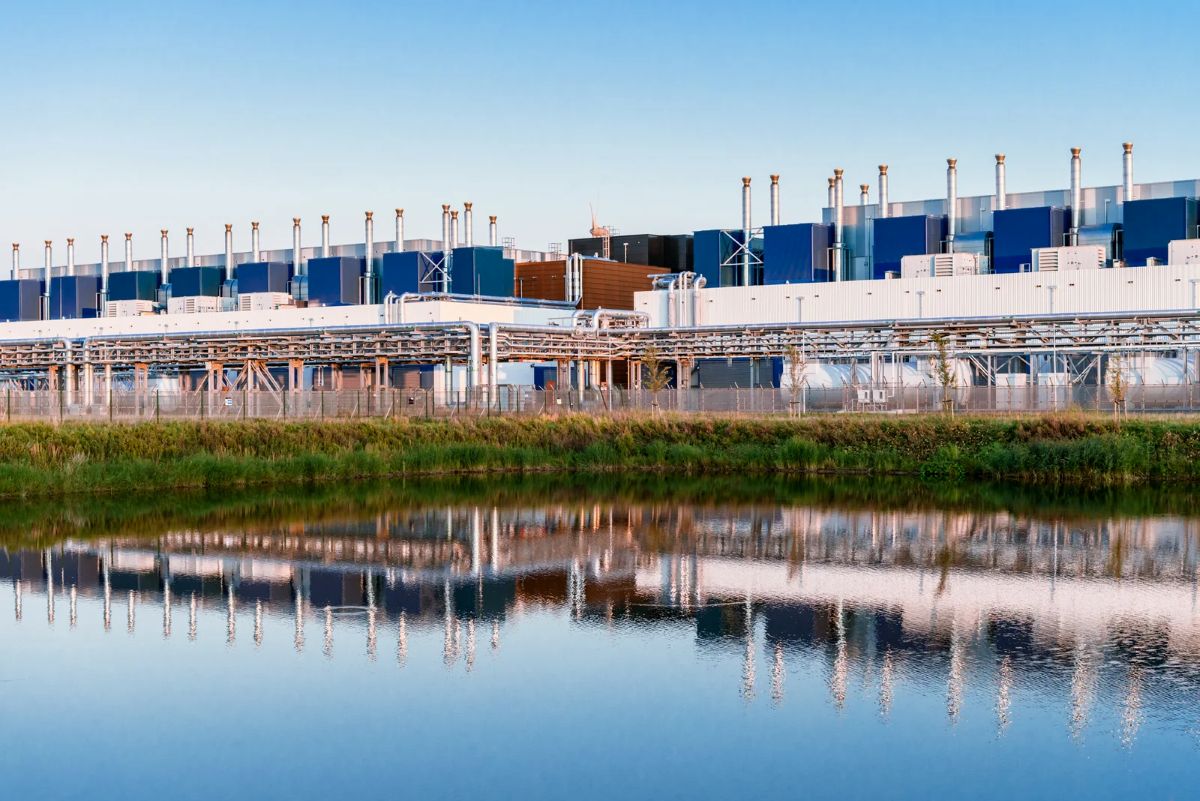
The numbers explain the panic. Your typical data center guzzles 300,000 gallons daily, matching the consumption of 1,000 households. Large AI facilities can drain up to 5 million gallons per day—equivalent to a town of 50,000 residents. Medium-sized centers alone consume 110 million gallons annually, while Brookings projections show cooling water use could surge 870% as more facilities come online. Communities from Chile to Oregon are pushing back hard, with Google already halting expansion plans and facing public records battles over disclosure.
The Tech Industry’s Cooling Dilemma
Companies deploy closed-loop systems and liquid cooling to cut water consumption by up to 70%.
Operators are scrambling to deploy alternatives to traditional evaporative cooling, which literally evaporates freshwater into the atmosphere. Closed-loop systems recirculate water through sealed circuits, while direct-to-chip liquid cooling and immersion cooling reduce much of the water waste. Google and Microsoft have shifted toward reclaimed wastewater and sophisticated air cooling in suitable climates. These solutions can slash freshwater consumption by 70%, but they’re expensive and energy-intensive.
Trading Water for Electricity Creates New Problems
Moving away from evaporative cooling increases power demand, potentially shifting water use to power plants.
Here’s where it gets messy. Companies like Microsoft, OpenAI, and Oracle are abandoning evaporative cooling in water-stressed regions, but researcher Shaolei Ren’s work suggests this creates a different problem. His analysis indicates that strategic evaporative cooling could free 10-30 gigawatts of grid capacity during peak demand. Without it, data centers need more mechanical chilling—which demands more electricity from power plants that also consume massive amounts of water for cooling. You’re not eliminating the water problem; you’re just moving it upstream.
The SpaceX disclosure suggests that water-risk assessments may become more common in tech IPOs, joining carbon footprints and supply chain vulnerabilities as investor concerns. Regions with abundant water and robust grids may emerge as infrastructure winners, while drought-prone areas face development caps or sky-high compliance costs. The AI boom’s collision with finite local water resources is forcing an uncomfortable truth: even digital infrastructure has very physical limits.