The White House Ratepayer Protection Pledge secured voluntary company commitments on power supply, infrastructure costs, and community investment. What it did not create was a binding safety regime for frontier models. Rep. Yassamin Ansari (D-Ariz.) looked at that arrangement after Democrats captured both chambers in the November 2026 midterms and posted three demands on X: pause advanced-AI development, regulate the industry with actual federal infrastructure, and permanently ban artificial superintelligence.
That is not one proposal. It is three distinct policy asks, and collapsing them into a single headline does everyone a disservice.
Three Asks, Not One
Ansari’s demands span a temporary pause, a new federal agency, and a statutory prohibition that would take new legislation to undo.
The development pause is temporary, tied to the establishment of a proposed regulatory and review framework. The regulation component would create a cabinet-level Department of Artificial Intelligence, responsible for safety rules and model reviews. The superintelligence ban, however, is statutory: once that category of system is defined and prohibited, reversing it would require Congress to act again.
The underlying legislation involves two companion bills. Sen. Bernie Sanders introduced S. 5493 in the Senate; Rep. Greg Casar introduced H.R. 10538 in the House. Both sit in committee, and the distinction between “introduced” and “enacted” matters enormously here.
Read the Fine Print
The bill sets a specific computational threshold and attaches criminal penalties that signal how seriously its authors assess the risk.
The bill establishes a technical trigger for the pause. Systems trained on more than 10^25 operations would fall under its restrictions until a federal safety and review process is operational. That threshold functions as a hard computational ceiling, separating covered advanced systems from everything below the line.
Penalties for violations reach up to 20 years in prison, a figure that coverage has compared to penalties for unauthorized nuclear-weapons development. That comparison should be attributed to reporting rather than treated as the bill’s own framing, but the penalty scale itself reflects a deliberate legislative choice about severity.
What Voters Were Actually Saying
Local ballot measures targeted data-center costs and infrastructure strain, not AI research itself.
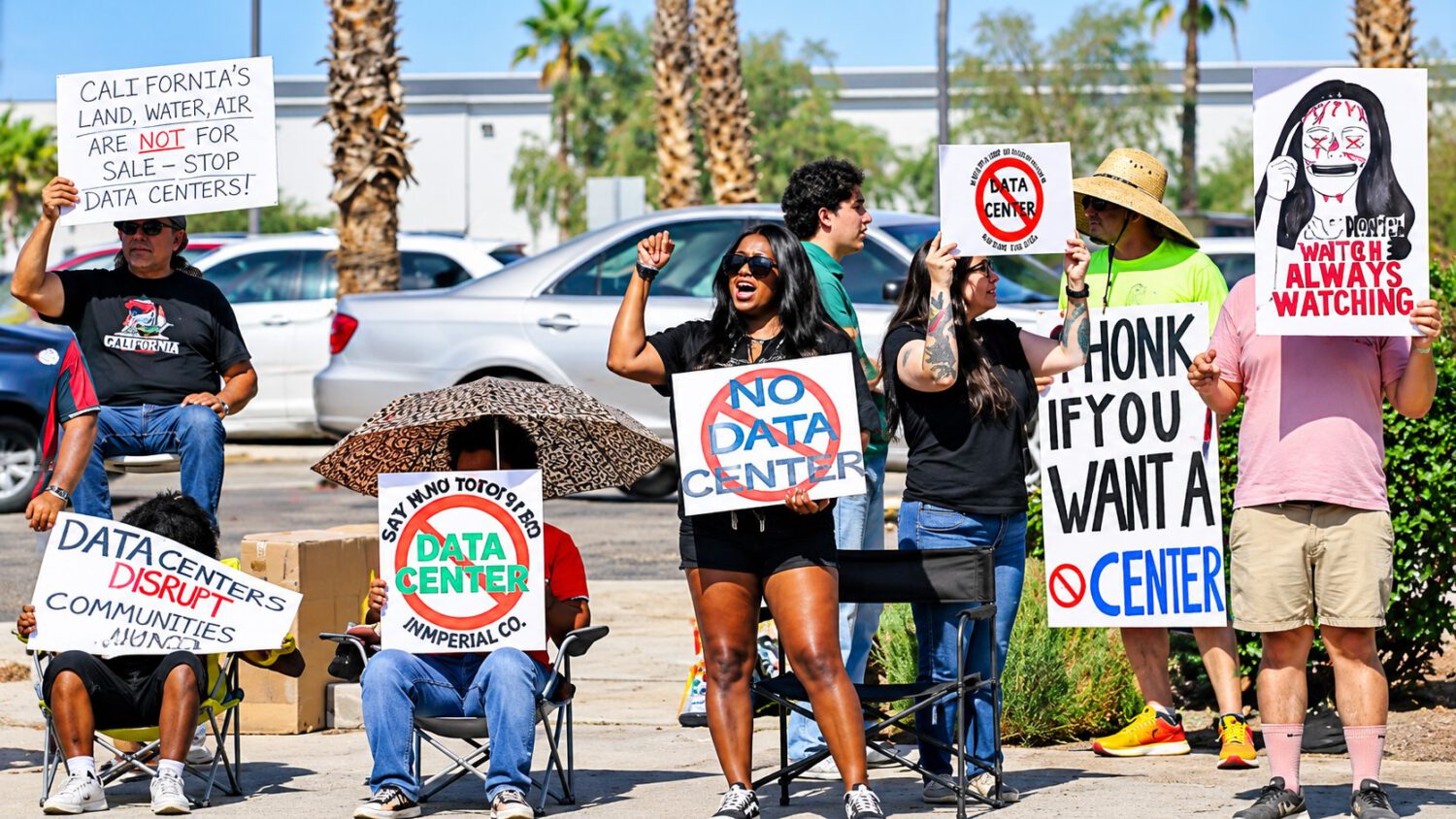
Roughly 45 data-center ballot measures appeared across U.S. communities during the midterms, according to tracking cited by Tom’s Hardware. About 33 restrictive measures passed. The concerns driving those votes were primarily utility bills, noise pollution, and infrastructure strain rather than philosophical opposition to AI research or large language models.
A community voting against a large server campus in its backyard is making a permitting and cost-allocation decision. Conflating that with a congressional push to ban superintelligence misrepresents both. The infrastructure backlash gives lawmakers real leverage over siting, taxation, and utility regulation; it does not automatically translate into consensus on frontier-model prohibitions.
The White House Is Playing a Different Game
The administration frames advanced AI as a national competitiveness issue, relying on voluntary commitments rather than binding safety rules.
The Trump administration has treated advanced AI as part of a strategic competition with China, emphasizing continued U.S. development. Its toolkit includes voluntary industry commitments and measures encouraging data-center operators to provide energy-related benefits to surrounding communities. Those are real policy instruments. They are also not binding safety rules, and Ansari’s proposal is a direct challenge to that logic.
What the Proposal Actually Needs to Work
The bill’s supporters should name its obstacles plainly, because those obstacles are concrete and consequential.
“Artificial superintelligence” requires a legally defensible definition that survives constitutional scrutiny. Democratic caucus unity is not guaranteed on legislation carrying 20-year prison penalties, and Senate procedural hurdles remain even with a majority.
A development pause without a parallel international agreement risks ceding competitive ground to adversaries without reducing the underlying risk. Critics and legal analysts have raised these as problems the bill must solve, not reasons to shelve it entirely.
Voluntary frameworks have governed frontier AI development for years without producing enforceable safety standards or resolving the cost burdens that communities are now voting against at the local level. Ansari’s legislation is introduced, not enacted, and it will require substantial refinement. The policy it is trying to replace has its own track record, and that record is what made this proposal necessary.