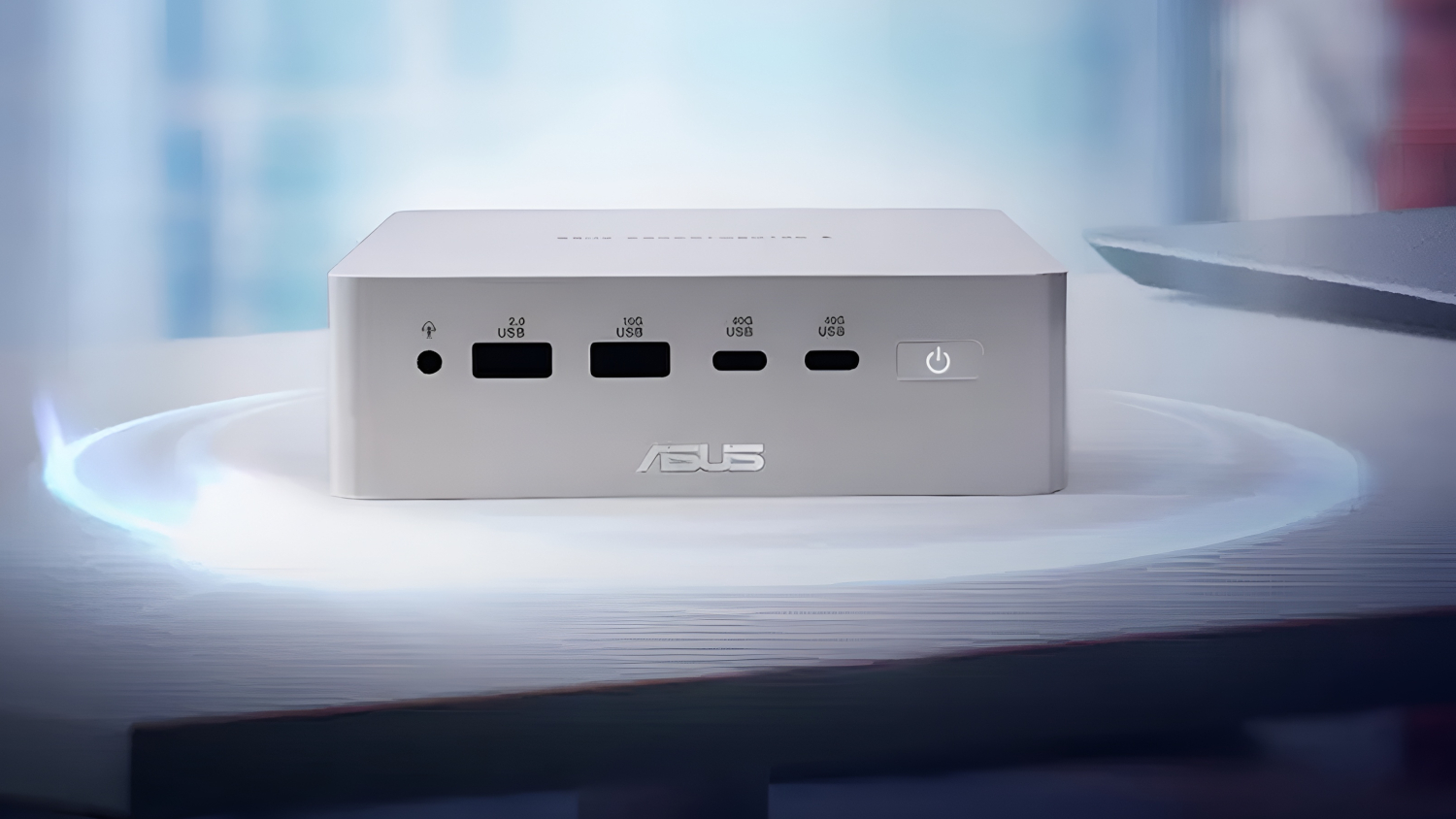
Most mini-PCs ask buyers to compromise on processing muscle. The Ascent QN10 pitches the opposite, delivering an 80-TOPS neural processing unit and an 18-core CPU in a compact chassis now confirmed available across European and U.S. markets.
ASUS describes the QN10 as its first Qualcomm-powered AI mini-PC, aimed at developers, enterprise users, and professionals who need on-device AI inference without the footprint of a tower.

Hardware at the Core
The Snapdragon X2 Elite platform combines a high-core-count Oryon CPU with dedicated AI acceleration in a single integrated package.
The QN10 runs on the Snapdragon X2 Elite X2E-88-100 platform. It pairs an 18-core third-generation Qualcomm Oryon CPU with an Adreno X2-90 integrated GPU and a Hexagon NPU rated at 80 TOPS INT8, per ASUS specifications.
Memory options are 16 GB or 32 GB of LPDDR5X, running at 8,533 or 9,600 MHz depending on configuration. Storage starts at a 512 GB PCIe 4.0 NVMe SSD, with additional M.2 configurations listed in ASUS documentation, though exact upgrade options vary by regional model.
The chassis measures 130 x 130 x 40 mm, and ASUS’s specifications list the weight at approximately 750 grams for this enclosure.
A Dense Port Lineup for 0.7 Litres
The QN10 packs an unusually complete set of connections into a calculated volume of roughly 0.7 litres.
For a machine this small, the QN10’s port selection is notably complete. ASUS equips it with:
- Three USB4 Type-C ports with DisplayPort and power delivery support
- Three USB Type-A ports covering USB 3.2 and USB 2.0
- HDMI 2.1 FRL
- 2.5 Gigabit Ethernet
- Wi-Fi 7 and Bluetooth 6.0
That combination supports multi-display setups, fast local-network storage, and peripheral-heavy workflows without requiring a separate dock.
What It Costs
U.S. pricing starts at $1,349, while European buyers face meaningfully higher configured prices.
In the U.S., ASUS lists the entry configuration, with 16 GB of memory and 512 GB of storage, at $1,349. The 32 GB configuration is priced at $1,699, according to ASUS’s official announcement.
European pricing sits higher. The Eurozone retail price is approximately €2,195, with third-party listings ranging from roughly €1,994 to €2,208 at the time of research; retail pricing can shift, so checking current listings before purchasing is advisable.
Configuration and regional availability differ meaningfully. Confirm the exact model available in your market before making price or performance comparisons.
Windows on ARM: Check Your Software First
The QN10 ships with Windows 11 for ARM64 and qualifies as a Copilot+ PC in applicable configurations.
The QN10 ships with Windows 11 Home or Windows 11 Pro, running on the ARM64 platform. Applicable configurations qualify for Microsoft’s Copilot+ PC designation.
Buyers with x86-dependent applications, specialist hardware drivers, or professional software should verify compatibility before committing. The ARM architecture delivers efficiency and AI acceleration benefits, but not every legacy tool or peripheral is fully supported yet.
Where This Fits in a Shifting Market
The QN10’s broader availability reflects a wider move toward premium, AI-focused ARM Windows desktops.
The QN10’s expanded reach is one more signal in a clear trend. ARM-based Windows mini-PCs are moving upmarket, trading the budget positioning of earlier Snapdragon machines for premium pricing, desktop-class connectivity, and dedicated on-device AI inference hardware.
That positions the QN10 alongside high-end x86 compact desktops and Apple’s Mac mini, a category where competition was already strong before Qualcomm’s NPU joined the conversation.