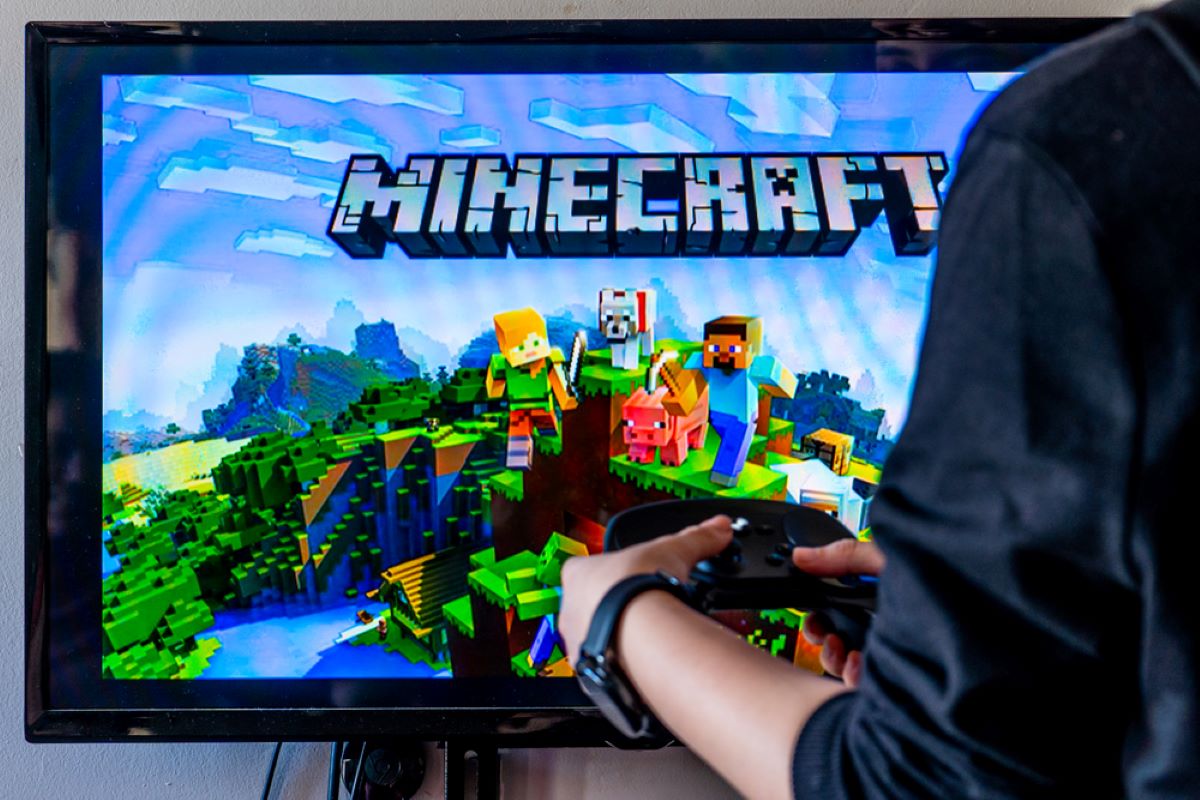
Minecraft’s official website literally distributes server software so you can host your own world. Microsoft governs those community servers under a published EULA. None of that stopped the Entertainment Software Association from walking into a California Senate hearing and telling lawmakers that private Minecraft and Call of Duty servers are illegal piracy — like calling your neighborhood potluck a health code violation because restaurants exist. AB 1921, the Protect Our Games Act, stalled partly on this testimony, and the lobbying effort that followed has reshaped what consumer ownership of a paid game is allowed to mean.
What the ESA Actually Said
A single question from a California senator produced one of the most misleading statements in recent gaming policy history.
ESA vice president Jennifer Gibbons, responding to Senator Caroline Menjivar’s question about community-run servers, confirmed they were akin to “the black market of videogames.” She cited two pending ESA lawsuits and the U.S. Trade Representative’s Notorious Markets reports, offering no distinction between authorized servers and rogue operations — just a blanket declaration: “Yes. In fact, we consider it piracy.”
Here’s what AB 1921 actually required of publishers for paid, online-only games:
- 60-day notice before shutting down official servers
- Stop selling the game during that warning window
- Provide a remedy — offline mode or full refund
- Free-to-play and subscription titles were explicitly exempt
“Private servers infringe on the intellectual property rights of game publishers. Publishers reserve the right to exercise their rights against them.” — ESA official statement
The Problem With That Argument
Minecraft’s own infrastructure exposes exactly how far the ESA’s piracy claim strays from reality.
Minecraft’s EULA explicitly governs community servers, and Microsoft distributes the hosting software itself. PC Gamer called Gibbons’ testimony “nonsense.” The ESA’s follow-up statement tried narrowing the claim to servers distributing copyrighted content “without authorization” — a critical legal distinction it never bothered making in front of the lawmakers who needed to hear it.
Lawmakers heard “piracy.” They didn’t hear the footnote.
The backdrop makes this worse. Ubisoft shut down The Crew in 2024, bricking roughly 12 million paid copies — like a Netflix show getting pulled, except you paid full price for a disc. A Ubisoft executive told players to “get used to not owning video games.” Stop Killing Games formed in response, collected nearly 1.3 million EU signatures, and watched the European Commission downgrade their effort to non-binding industry tech scandals talks after a closed-door meeting with publishers. AB 1921 failed by three votes, though it was granted reconsideration and isn’t completely dead.
SKG plans to push similar bills in other states and potentially federal court. The ESA has deeper lobbying pockets. But the core question — whether buying a game means anything when a publisher can flip a switch and erase it — keeps getting louder, no matter how many hearings the industry tries to talk its way through.