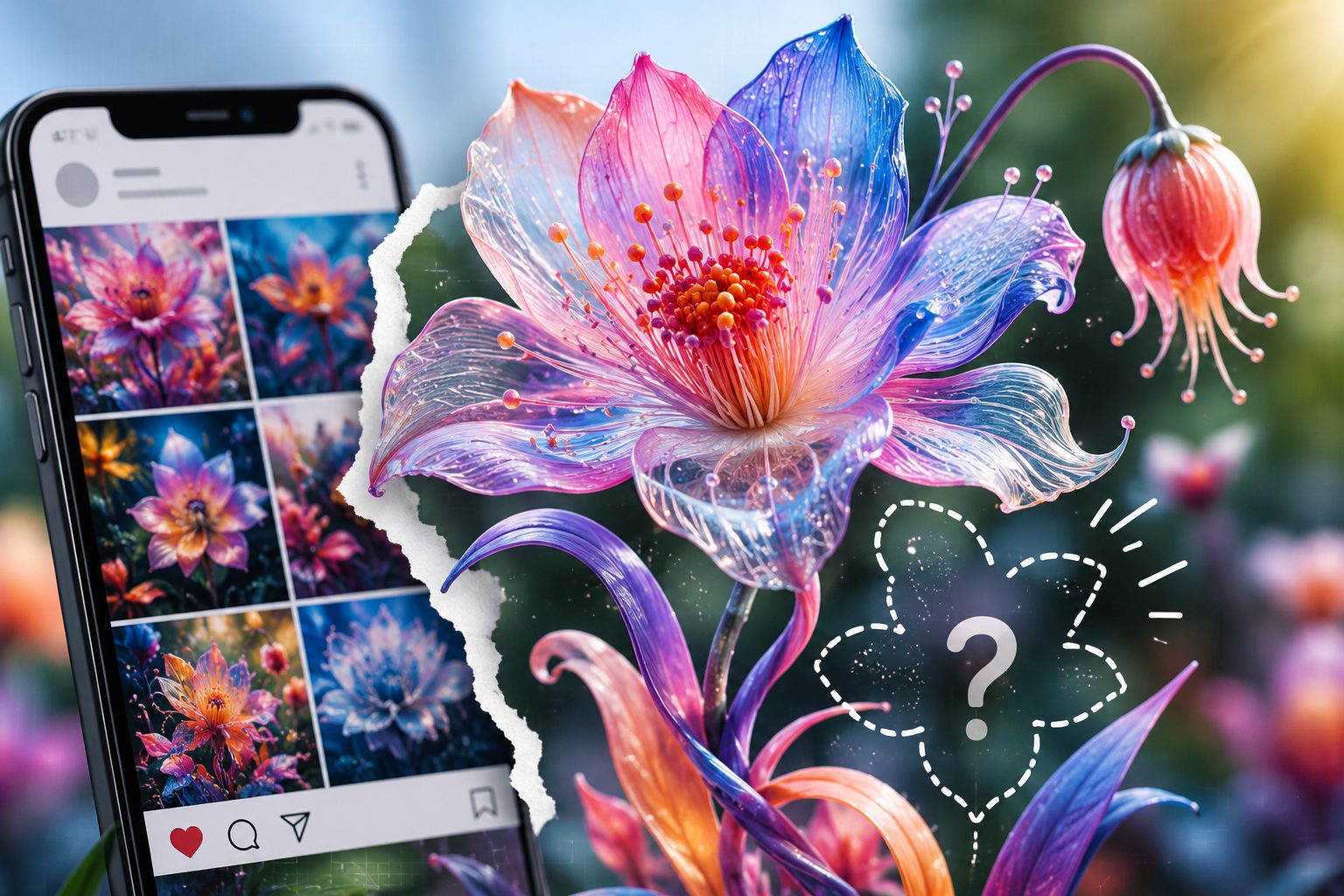
You’re scrolling through Etsy on a Sunday afternoon, and there it is: a sunflower so vibrantly purple it looks like it was designed by a Wes Anderson set decorator. You almost add seeds to your cart. The price is low. The photo is stunning. The flower does not exist. Across eBay, Amazon, and Etsy, scammers are reportedly using AI-generated and color-manipulated images to sell seeds for plants with no real-world counterpart, according to WTOP. Generative AI didn’t invent seed fraud — shady listings have circulated for years — but it made producing convincing fake imagery nearly costless and infinitely scalable.
The Flower Doesn’t Exist. The Listing Does.
Real cultivars get twisted into botanical deepfakes that fool casual buyers and waste real money.
The teddy bear sunflower is a real variety. The surreal purple version with eerie symmetry plastered across marketplace listings is not. A nursery professional quoted by WTOP noted that scammers frequently take real plant photos and alter colors to fabricate convincing new “varieties.” Buyers end up receiving different seeds than advertised, no seeds at all, or seeds that simply never germinate — a frustrating loss of money and trust.
“Legitimate sellers usually list the genus, species, and cultivar,” the nursery professional told WTOP.
That ecological risk deserves more than a footnote. Buyers who unknowingly receive a mislabeled species could introduce invasive or regionally inappropriate plants into local environments — disrupting ecosystems in ways that are difficult and expensive to reverse. It’s a downstream consequence most shoppers never consider when clicking “Add to Cart.”
The National Garden Bureau identifies several red flags worth memorizing before your next purchase:
- No botanical name (genus, species, cultivar) in the listing
- Unnatural traits: impossible colors, odd symmetry, features that defy how plants actually grow
- Seller has no verifiable history or established presence
- Reverse image search shows the same photo across unrelated sites
- No timestamped photos of the actual plant
Platforms Are Playing Whac-A-Mole with Phantoms
Fake-plant listings don’t trip counterfeit-brand filters, making automated enforcement painfully slow.
Before generative AI, pulling off this scam required real effort — sourced images, basic photo editing, time. Now producing a convincing fake plant image takes seconds. Think deepfakes, but for your houseplant wishlist, colonizing Etsy one listing at a time. An eBay spokesperson told WTOP the company uses policy enforcement, seller compliance audits, block filters, AI-supported monitoring, and regulator partnerships to remove misleading listings. The challenge is that fabricated biological claims don’t fit neatly into counterfeit-detection frameworks built for knockoff sneakers and fake electronics — making enforcement slower and more inconsistent across categories.
If you’re buying anything based on a product photo in 2025, this story matters well beyond gardening. The same trust erosion hitting seed listings is spreading across visual search and social commerce. Reverse image search before checkout, verify the seller’s history, and confirm the botanical name — because a beautiful product photo is the beginning of due diligence, not the end of it. If you’re also concerned about paying too much for products that don’t deliver, the same vigilance applies across online shopping.