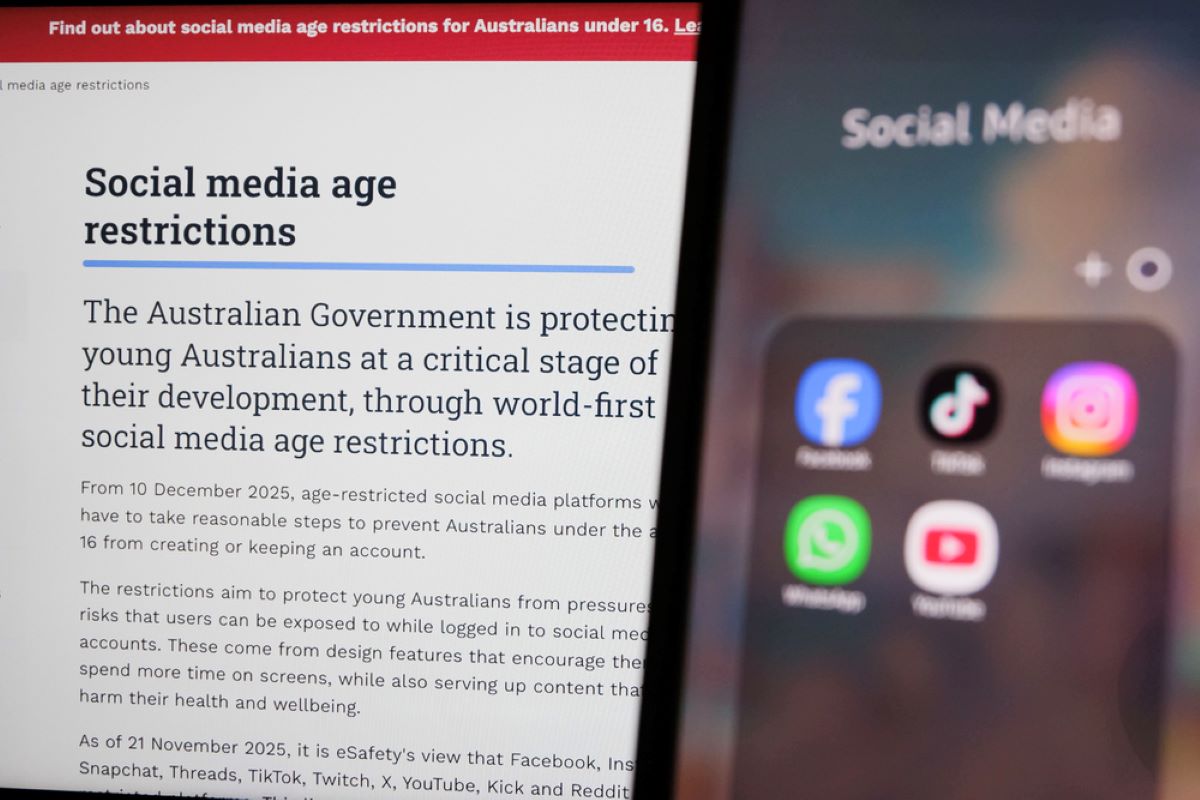
Eighty-five percent of Australian 12- to 15-year-olds were still using social media three months after the country’s under-16 ban took effect, according to a peer-reviewed study of 408 adolescents published in the British Medical Journal.
Australia passed the world’s first age-based social media restriction, doubled the maximum fine to A$99 million, and expanded regulator powers. It has issued zero fines. The UK is planning its own version by spring 2027. This is the test case everyone is watching.
The Law That Looks Tougher on Paper
Kids are bypassing age checks with fake birthdays and selfies that fool automated verification tools.
The numbers are damning:
- Seven in ten children who had accounts before the ban still have access, according to eSafety Commissioner data.
- Roughly 61 percent of 12- to 15-year-olds remained on restricted platforms four months after the law passed.
- Nearly two-thirds of platforms took no action to remove underage accounts.
How? Through age assurance — the umbrella term for how platforms verify you’re old enough to sign up. Two-thirds of underage users bypassed these checks by either self-declaring an age over 16 or uploading a selfie that automated systems accepted as showing someone over 16. The selfie age-check is the regulatory equivalent of a velvet rope with no bouncer: looks exclusive, lets everyone through.
Minister for Communications Anika Wells didn’t mince words. Platforms are “adopting tricks straight out of the big tech playbook and doing the bare minimum to get by,” she said.
New legislation now lets the eSafety Commissioner compel platforms and third parties — age-assurance vendors, app stores — to hand over evidence of compliance. Penalties for ignoring those demands have also doubled, mirroring the increase applied to systematic breaches of the ban itself. The government is shifting from “trust us” to “show your work.”
Who’s Actually Watching
Active investigations target the biggest names in social media, but enforcement remains theoretical.
Facebook, Instagram, Snapchat, TikTok, and YouTube are all under investigation for potential non-compliance. Six months after enforcement began, eSafety Commissioner records show zero fines have been issued. The penalties now align with Australian competition and consumer law — meaning regulators are framing non-compliance as corporate misconduct, not a content moderation footnote.
Five million underage accounts have reportedly been deactivated or restricted since the ban took effect. That sounds meaningful until you consider that the majority of affected kids apparently found their way back in.
The UK’s upcoming ban will include proposed curbs on infinite scrolling and overnight curfews for under-18s — governments are finally reading the same playbook as attention-economy critics. Australia’s experiment, though, offers a blunt lesson: bigger numbers on paper don’t change behavior without actual consequences attached to them.