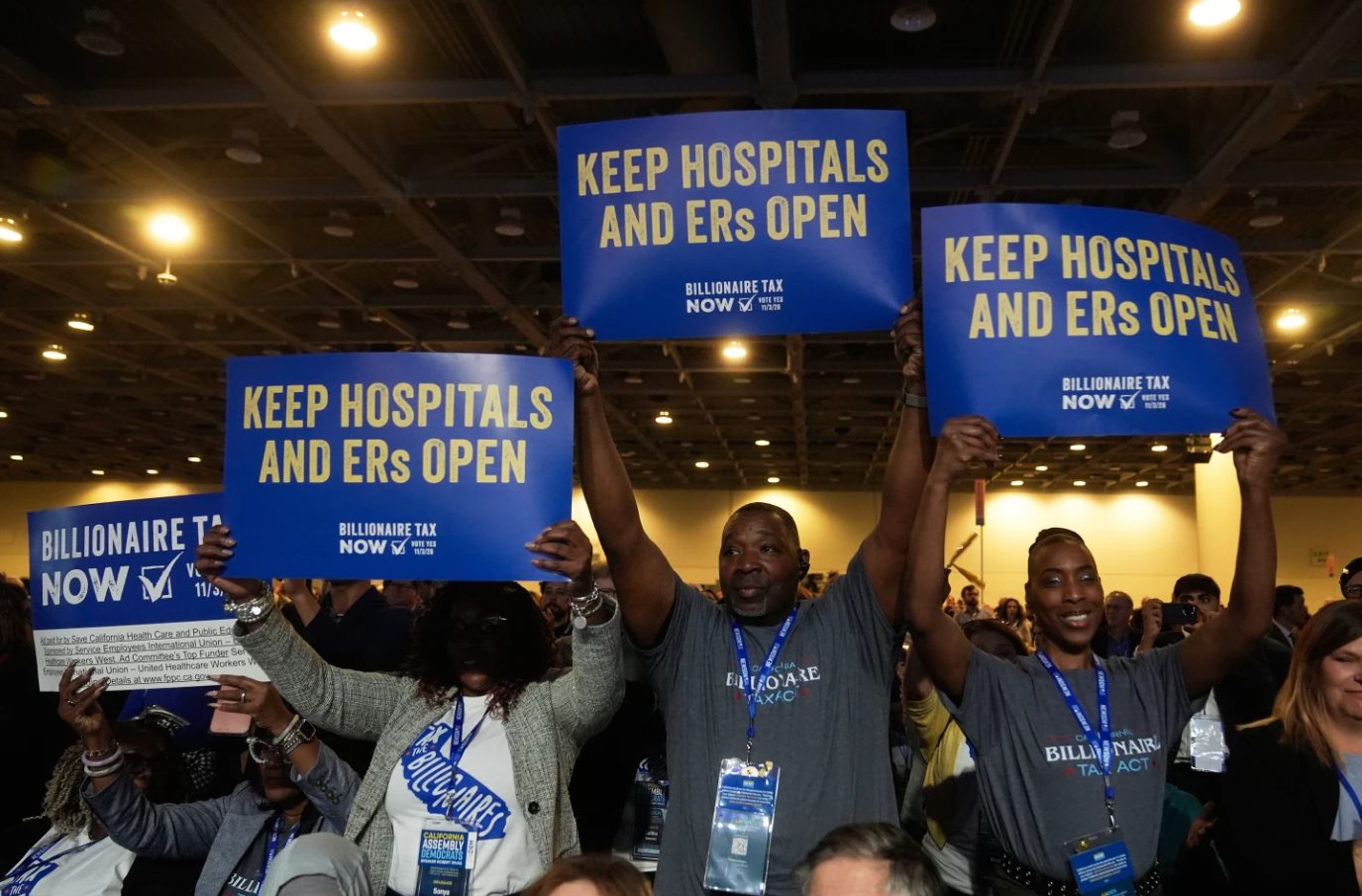
Planned Parenthood and a health-care workers’ union are on opposite sides of a tax fight. That sentence alone tells you this isn’t your standard rich-vs-poor ballot drama. The California billionaire tax, sponsored by SEIU-UHW and heading to voters on November 3, 2026, has turned the state’s left flank into a circular firing squad — with $100 billion and the future of Medi-Cal caught in the crossfire.
One Tax, Five Years, $100 Billion
The mechanics are deceptively simple, but the implications reach every corner of California’s fiscal future.
The initiative imposes a one-time 5% excise tax on net worth above $1 billion, payable at 1% per year over five years. Here’s what that actually means:
- Who pays: California residents as of January 1, 2026, with net worth exceeding $1 billion — roughly 200 people. Leave the state afterward? You still owe the full amount.
- What’s taxed: Worldwide net worth as of December 31, 2026, excluding directly held real estate.
- Where the money goes: 90% to Medi-Cal and health-care programs, 10% to education and food assistance.
- What’s next: Voter approval required November 2026. Constitutional challenges are virtually guaranteed regardless of outcome.
According to an expert analysis commissioned by proponents and published by ITEP, “the proposed tax would generate $100 billion in additional revenue” over five years. The Legislative Analyst’s Office confirms “tens of billions” in potential revenue but flags serious behavioral uncertainty — meaning nobody knows how many billionaires might restructure holdings or mount legal challenges before a dollar clears.
The Coalition That Isn’t
The California Teachers Association, Planned Parenthood affiliates, and building trades unions have lined up against fellow progressives — and that tells you everything.
Supporters frame this as an emergency tourniquet for federal Medi-Cal cuts, pointing out that California billionaire wealth has ballooned roughly 200% in six years, much of it riding the AI-driven stock surge. Opponents, according to CalMatters reporting, have raised over $100 million against the measure — versus $30 million from supporters — warning about budget volatility, capital flight to Texas and Florida, and the risk of treating billionaire wealth as a one-time ATM withdrawal.
Polling shows just over half of Californians support the measure. That thin majority masks deep fractures. The “California exodus” narrative has been oversold before, yet the residency-lock provision — locking in liability as of January 1, 2026 — suggests even the initiative’s sponsors take flight risk seriously.
The real tension is concrete: if this passes, Medi-Cal patients get a funding lifeline and California sets a national precedent for state-level wealth taxation. If it fails or gets struck down in court, the state has burned political capital and still faces a widening budget hole. Either way, 40 million Californians bear the outcome.