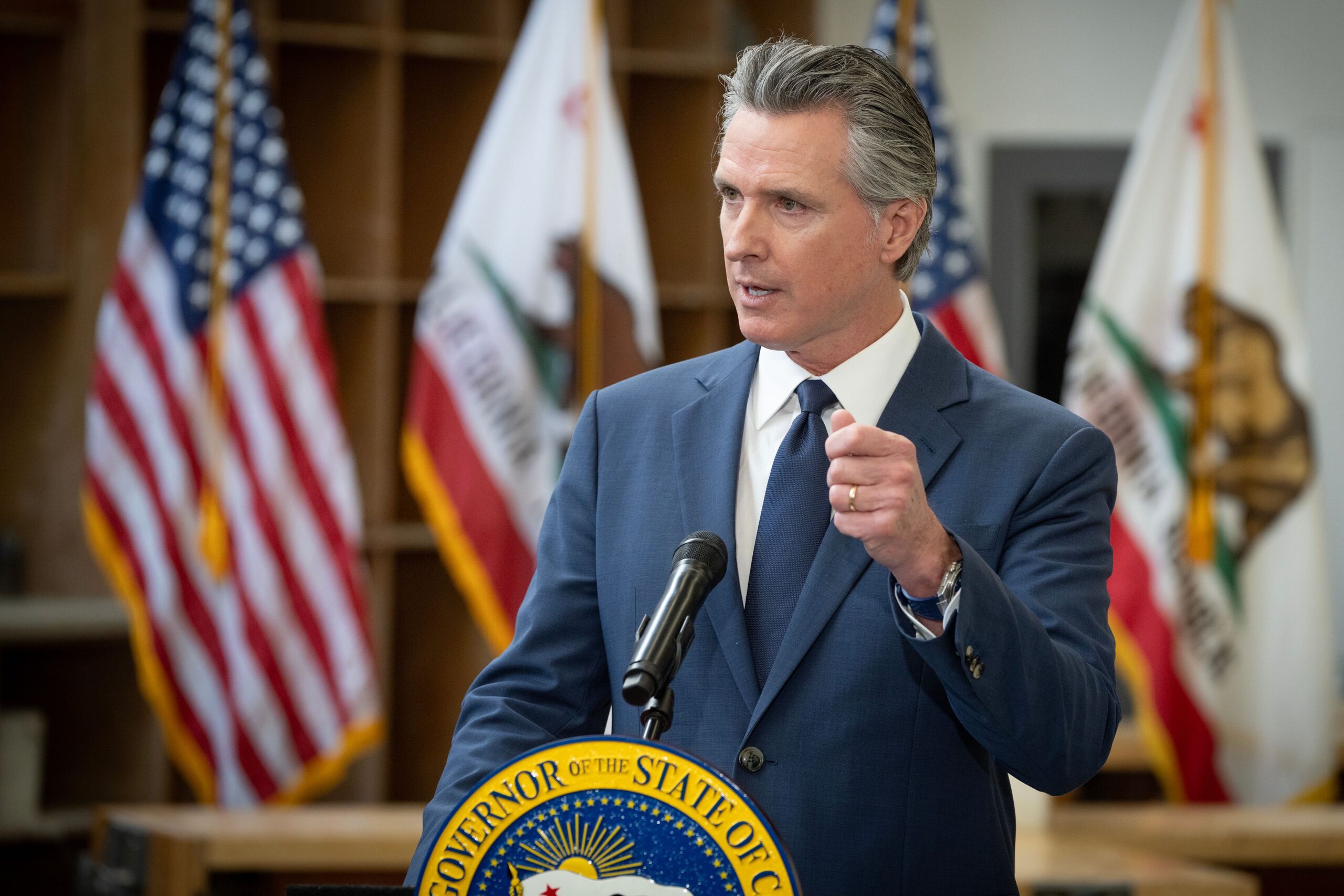
For workers who have long dreaded AI displacement, California just built the alarm clock. The state’s new AI-Unemployment Tracker, launched under Governor Gavin Newsom’s Executive Order N-6-26 signed May 21, 2026, is the first state-level tool in the country designed to measure whether AI is actually displacing workers. The early findings land like a plot twist in a Black Mirror episode: college-educated workers in AI-exposed occupations — not forklift operators or cashiers — are showing elevated unemployment claim rates, particularly in the San Francisco Bay Area. Related efforts like Meta’s job guarantee program signal how seriously the industry is taking the threat.
How the Tracker Works
The dashboard cross-references unemployment claims with AI-exposure classifications to flag patterns — not prove causation.
Most layoff trackers count bodies after the fact. This one, built by the Employment Development Department and the California Policy Lab at UCLA, cross-references unemployment insurance claims against an AI-exposure classification for each occupation, flagging correlations rather than establishing causation. Ben Hyman of the California Policy Lab notes that no large-scale AI-related layoffs are visible statewide yet — a finding corroborated by independent research from Yale’s Budget Lab and Anthropic. In other words, the people automation anxiety has traditionally targeted aren’t the ones showing up in the data first.
What This Means for You
No new employer obligations exist yet, but the data infrastructure for future regulation is now firmly in place.
If you work in software, financial analysis, or customer service in a tech-heavy metro, the tracker has your occupation in its crosshairs. Roles once considered safe are increasingly at risk — innovations like the receptionist obsolete humanoid robot illustrate how quickly white-collar positions can be disrupted. Updated monthly, the dashboard will guide where California steers retraining dollars, safety-net reviews, and possible WARN Act revisions. “This new tracker helps replace speculation with evidence, giving us a clearer understanding of what’s changing and how to best support affected workers,” according to Till von Wachter, faculty director at the California Policy Lab UCLA.
Legal analysts at Duane Morris and Ogletree note that the executive order creates no new obligations for employers — yet. The operative word there is “yet.” California is quietly assembling a data foundation like someone building a court case before filing charges.
The Bigger Picture
Other states are watching California’s experiment, and the monthly data will only grow more detailed over time.
Should the tracker eventually reveal consistent sector-specific spikes, California already has the policy framework to act — from enhanced severance expectations to subsidized retraining and potential worker equity in AI productivity gains. Workers looking to get ahead of the curve may find that exploring AI-powered websites can help build the skills and adaptability the new economy demands. Other states are watching closely. The tracker won’t tell you whether AI is coming for your job tomorrow. But for the first time, a government is actually measuring instead of guessing.