A CEO stood before a room of rural Florida residents on June 23 and offered a daily water estimate for his proposed data center: somewhere between zero and 3 million gallons. That range — wide enough to drive a tanker truck fleet through — lit the fuse. After nearly three hours of public comment, four DeSoto County commissioners voted to direct the county attorney to draft a one-year moratorium on new data center applications. One commissioner recused himself. Every streaming session and AI query worldwide touches infrastructure like this. The fight over where it gets built just arrived in cattle country.
The Project Nobody Can Fully Describe Yet
DCIP Group’s sprawling proposal remains a moving target, and residents are running out of patience with the uncertainty.
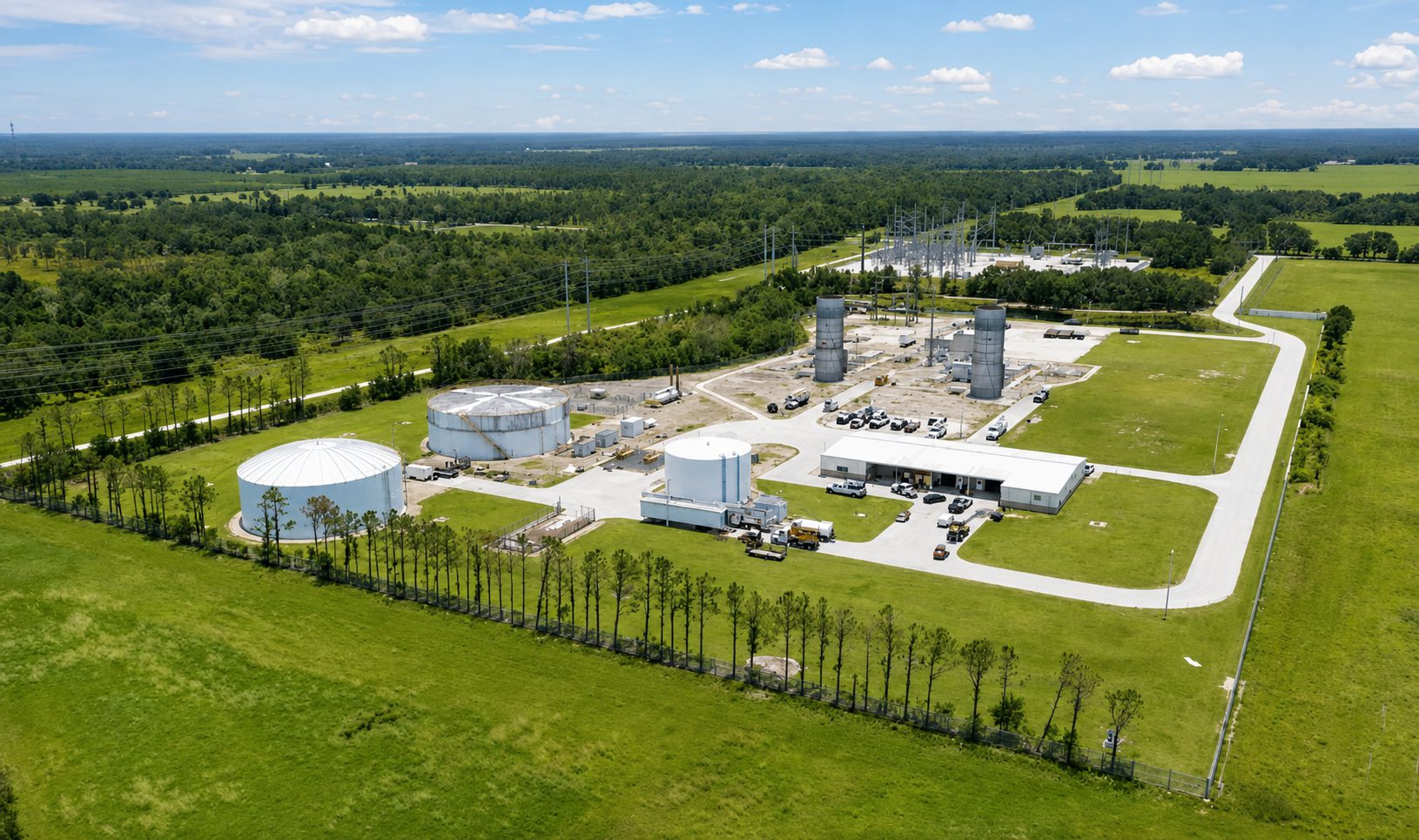
DCIP Group’s proposal covers more than 800 acres at a retired power plant site, with potential expansion to 1,300 acres. Gas-powered. Hyperscale. CEO Jon Brown described the system as “a full, very complicated design for a micro grid,” acknowledging that turbine counts and resource demands remain design-dependent. The honesty is almost refreshing — except residents are being asked to evaluate a project whose environmental footprint reads like a choose-your-own-adventure book.
“Residents should not be asked to accept unknown water impacts based on future promises.” — Arcadia resident Asha Stalnaker.
Here’s what matters right now:
- Four commissioners directed the county attorney to draft moratorium language; one recused himself
- The freeze would not apply to DCIP’s already-pending rezoning application
- DCIP’s CEO cited daily water use ranging from zero to 3 million gallons depending on final design
- Industry-wide, large hyperscale centers typically consume one to five million gallons per day; a medium-sized facility can use roughly 110 million gallons annually
- Commissioners must vote again before any moratorium takes effect
That zero-to-3-million-gallon range deserves real scrutiny. Industry data consistently shows hyperscale cooling demands comparable to small towns. Calling your water needs “zero to 3 million” is like telling your landlord rent will land somewhere between free and your entire paycheck. Rural counties lack the regulatory muscle to stress-test claims like these before shovels hit dirt — and that gap is precisely what a moratorium exists to close.
A Pause, Not a Ban — And the Fine Print Matters
Commissioners signaled responsiveness to residents while leaving the door open for future reconsideration, stopping well short of a permanent prohibition.
This vote is preliminary. The DCIP application already in the pipeline is explicitly carved out, meaning residents whose primary concern is this specific project may find limited near-term relief. DeSoto County isn’t unique — it’s just early. Across the country, AI infrastructure is arriving in communities faster than zoning law can follow. Whether this pause produces stronger rules or simply delays the inevitable is the question nobody answered Tuesday night — and regulatory pushback against big tech infrastructure is intensifying far beyond rural Florida.