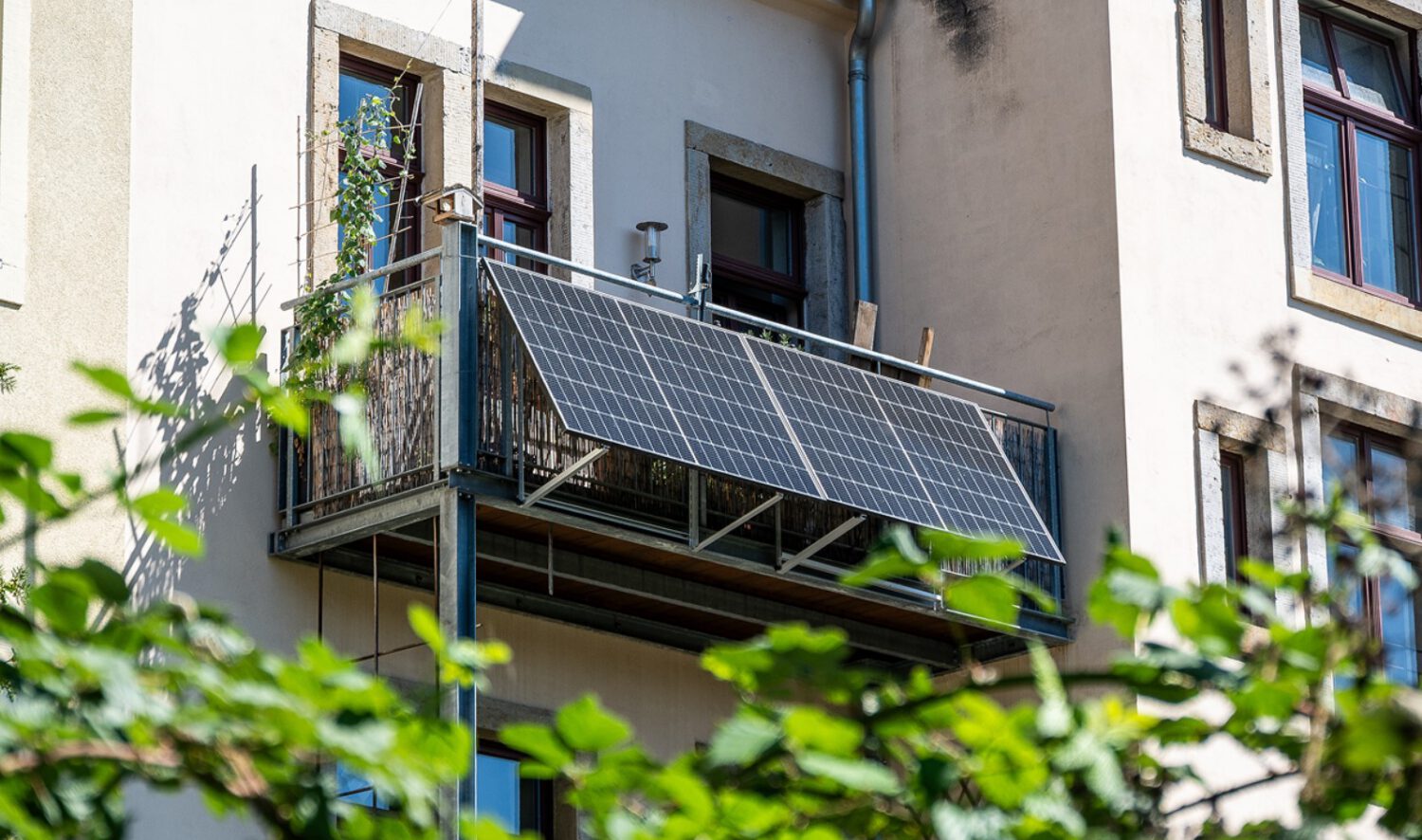
Governor Gavin Newsom reportedly signed SB 868, the Plug and Play Solar Act, on September 30, 2026. The measure would create a streamlined pathway for renters, condo residents, and homeowners with unusable rooftops to connect small solar systems to a household outlet. The law is set to take effect January 1, 2027, pending confirmation of the enacted statutory text.
How the Law Would Work
The bill’s mechanics center on safety certification, a household output cap, and a temporary exemption from utility red tape.
Qualifying systems would produce up to 1,200 watts AC per dwelling, roughly enough to offset power drawn by a refrigerator and several smaller appliances, depending on sunlight and usage.
Every qualifying device would need certification from UL Solutions or an equivalent testing laboratory. Systems would also need anti-islanding protection, a safety feature that prevents electricity from flowing back into the grid during a power outage.
Until January 1, 2030, utilities reportedly could not require an interconnection agreement, advance approval, or device-related fees for qualifying systems. A utility may ask for a simple online notification listing the installation address, device make and model, and system size.
Not every panel-and-inverter combination would qualify. Only systems meeting the statutory definition and passing safety certification would be covered. According to KQED, compliant products were expected to reach store shelves around mid-2027.
What This Means for Your Bill
The law removes administrative barriers; it does not promise a specific reduction in what you pay each month.
Actual savings will depend on system size, panel orientation, shading, and local electricity rates. You may also be paying too much in other areas without realizing it. Your household’s consumption patterns and whether generation coincides with your peak usage also factor in.
Output varies by season, time of day, and how your unit faces the sun. The 1,200-watt ceiling is a household cap, not a guarantee of continuous output at that level.
Building rules, landlord permissions, and local electrical codes still apply regardless of what state law allows. The utility exemptions would sunset on January 1, 2030, so the current framework remains subject to future legislative or regulatory decisions.
The Bigger Picture
Two companion bills signal California’s broader direction on distributed energy and grid planning.
SB 913, the Clean Local Power Act, would create a clearer pathway for customer-owned batteries, electric vehicles, and smart thermostats to function as a coordinated virtual power plant. That aggregation would allow those devices to count toward utilities’ resource-adequacy requirements. The implementation deadline for SB 913 appears inconsistently across available sources: one cites June 30, 2027 and another cites June 30, 2028. Confirm that date against the statutory text or California Public Utilities Commission materials before planning around it.
SB 905 would require large investor-owned utilities to publish data on grid capacity and congestion. It would also require evaluation of whether batteries or demand-response programs could defer costly infrastructure upgrades. Whether any of that translates to lower customer bills depends on regulatory decisions still to come.
Plug-in solar is already used across parts of Europe, and similar frameworks exist in several other U.S. states. California’s scale and comparatively high residential electricity rates make the potential reach of this legislation worth watching.
Keep an eye on certified products reaching stores, utility notification portals going live, and whether your building owner will permit an installation once the law is confirmed and in effect.