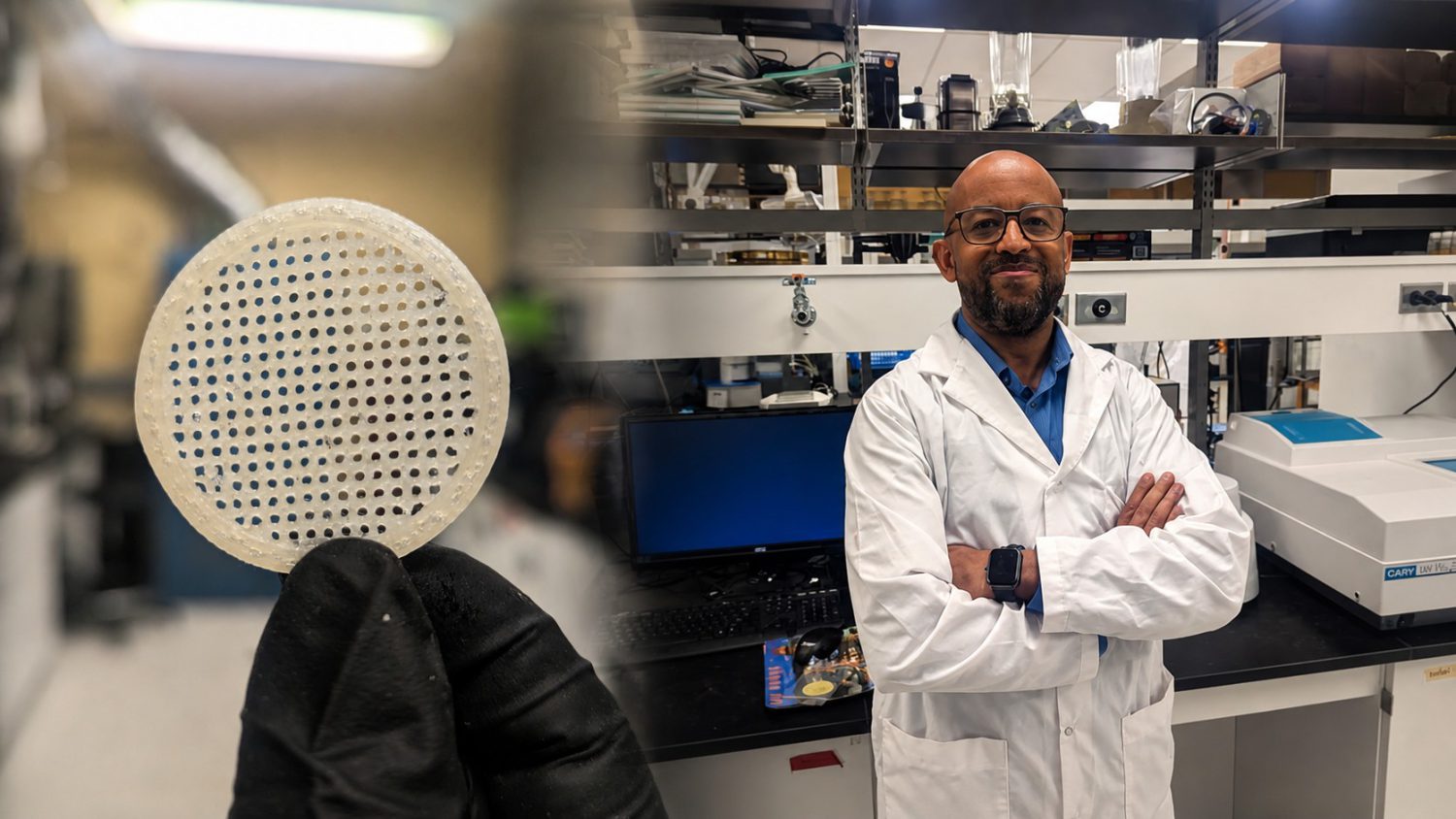
Your fleece jacket sheds synthetic fibers every time it goes through a wash cycle. University of Waterloo engineers published results in Separation and Purification Technology showing a stackable, 3D-printed filter column that removed up to 90% of microplastics under lab conditions, using low-cost PLA disks and a customizable, gravity-driven design.
How the Filter Works
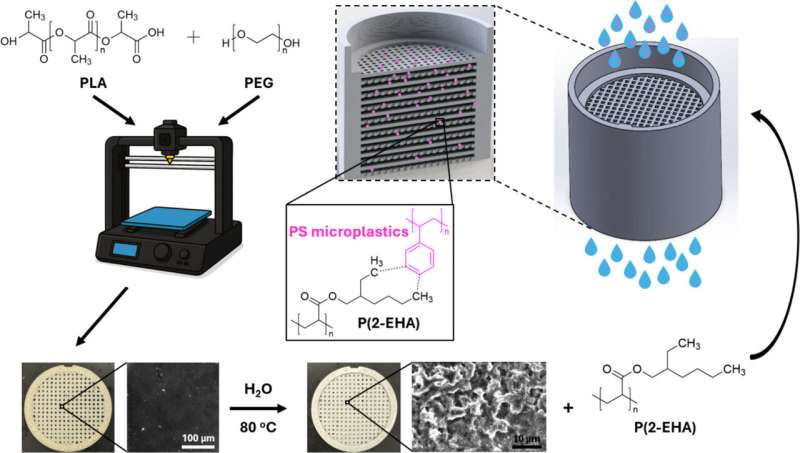
The research team, led by chemical engineering professor Tizazu Mekonnen and graduate student Ethan Crawford, designed each disk to maximize contact between flowing water and the filter surface. The geometry forces water through a longer, more complex route, a concept the researchers described as a deliberate flow-path design intended to extend particle exposure time.
Manufacturing adds another layer of ingenuity. A water-soluble polymer is printed into each disk and then washed away, leaving pores at the nano- and microscale where microplastics can lodge. A pressure-sensitive adhesive coating on each disk improves particle capture without blocking those pores.
The disks are made from PLA, a biodegradable polymer, and assembled into gravity-driven columns. Testing covered columns ranging from eight to 20 stacked units, with the 20-disk configuration delivering the 90% removal result.
What the Numbers Actually Mean
“With 20 filters, we removed 90 per cent of microplastics, a marked improvement over current filtering technologies,” said Dr. Mekonnen.
That figure comes with important context. Larger microplastic particles were captured almost completely, while particles smaller than 10 micrometers proved significantly harder to remove. The team identified that sub-10-micrometer fraction as the next engineering challenge.
Several performance variables also remain untested at scale:
- Flow rate and pressure behavior under real household or industrial conditions
- Filter lifespan and fouling resistance over time
- Performance across different water chemistries and particle types
- Material safety and potential chemical migration from filter components
- Independent regulatory certification
This is a research prototype, not a retail product. No commercial availability or certified safety approval has been identified at this stage.
The Laundry Connection
Washing polyester clothing, which commonly contains PET fibers, releases microplastics directly into wastewater. Dryer lint filters capture only a portion of what synthetic fabrics shed, making textile washing a relevant and ongoing source of microplastic entry into water systems.
Where This Technology Could Go
The Waterloo team identified household drinking-water system and industrial water-treatment plants as potential applications for the technology. Its low manufacturing cost and customizable disk geometry make it adaptable in principle to different flow rates and installation sizes. Those are research objectives, not product announcements.
Before any version of this fuel filter reaches under-sink installations or municipal plants, it will need independent testing, validated performance against certified treatment benchmarks, and demonstrated durability under real-world conditions. The path from a promising lab column to a certified filtration product is long and methodical. A 90% removal result using a gravity-fed stack of printed plastic disks is, however, a meaningful early step worth following closely.