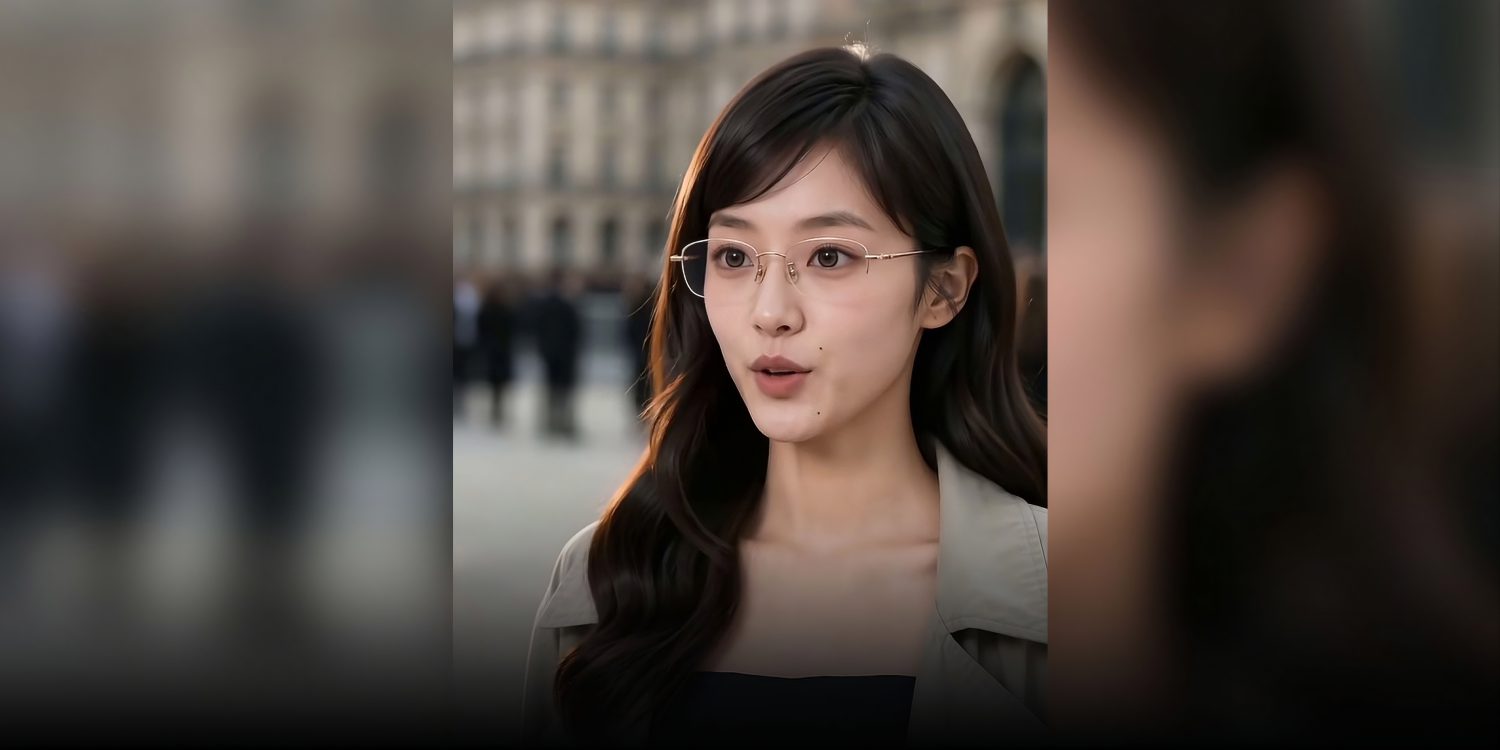
The scene plays out like a relatable short drama. A young woman in glasses complains her contacts hurt. Fang Taozi reaches into her handbag, produces a box of Nutnutlook lenses, and says they’re “comfortable even after wearing them all day” — you can “blink without worry.” Cinematic. Warm. Completely fabricated. Fang Taozi is a fictional AI character. She has no eyes, no corneas, and no nervous system. By early August 2026, the ad was gone — pulled quietly after public backlash and legal scrutiny exposed exactly how far AI influencer marketing has outrun the rules governing it.
The Influencer Who Can’t Blink
China’s most-watched new face exists only in pixels — and that turned out to matter enormously.
Fang Taozi is roughly 20 years old on screen, created by Guangzhou-based World Media Film and TV Culture, and stars in “The Laid-off Girl” — an AI-generated Douyin drama about a small-town woman navigating workplace bullying and modeling ambitions. The series has cleared 250 million views. Her ad rates on Douyin’s influencer platform Juliang Xingtu run from:
- 168,000 yuan for clips under 20 seconds
- 258,000 yuan for anything over a minute
These fees reportedly exceed those of human influencers with 10 million followers.
The legal problem wasn’t subtle. Nutnutlook’s colored contact lenses are classified as Class III medical devices — China’s highest-risk regulatory category — overseen by the National Medical Products Administration. China’s Advertising Law, Article 16, explicitly bans any endorsers from recommending or testifying to medical devices, a prohibition that legal analysts say extends to virtual AI characters. The ad’s claims — “comfortable all day,” “blink without worry” — also constitute banned efficacy and safety assertions under the same statute. Legal expert Ma Lihong of Beijing DHH Law Firm argues the video “could still constitute false advertising” because the AI character fabricates a user experience she cannot have.
After the ad dropped in late July, Chinese netizens didn’t just find it strange — they found it fraudulent. One widely cited reaction: “someone without eyes now has the right to speak about eyes.” Another: “AI doesn’t even know what it feels like to actually wear the product.” Both World Media Film and TV Culture and Nutnutlook said nothing publicly. The ad disappeared from Douyin around August 8–12 without explanation.
A Legal Gray Area With Real Consequences
The escape hatch brands assumed would protect them closes the moment an AI character speaks in the first person.
AI avatars don’t qualify as legal persons, so they technically can’t be formal “endorsers” — but that distinction evaporates fast when the script hands them first-person comfort claims. Entertainment law expert Qiu Zhimiao, cited by China Media Project, calls AI endorsements “a legal gray area” that will only become more common. Nongfu Spring has used AI imagery in bottled water campaigns; virtual hosts run e-commerce livestreams daily. This case stands out because it combined a beloved fictional persona with a Class III medical device and a sensory claim she cannot physically make. It’s the advertising equivalent of a CGI chef telling you a dish tastes good — the performance might be flawless, but the credibility doesn’t survive the premise.
The clearest signal going forward: brands will need to separate AI characters appearing in stories from AI characters testifying to physical experience. For now, the rule this case leaves behind is blunt — if your advertising backlash can’t feel it, she probably shouldn’t say it.