A CPU platform that launched during the first iPhone X era just outpaced every Intel chip on Amazon US, combined. According to TechEpiphany retail-sales tracking reported by WCCFtech, AMD’s AM4 socket moved 13,100 units in October 2026, against Intel’s approximately 7,850 total across all sockets.
AMD’s Dominance by the Numbers
AMD claimed more than four-fifths of tracked desktop CPU unit sales on Amazon US in October 2026.
AMD captured 81.27% of tracked desktop CPU unit sales on Amazon US that month, moving 28,200 units against Intel’s 6,500. That Intel figure rises to roughly 7,850 when Arrow Lake and legacy socket sales are included.
In revenue terms, AMD generated approximately $8.53 million versus Intel’s $2.28 million, from a tracked total of $10.81 million. No independent sales database was available to corroborate these figures at time of publication.
These figures cover Amazon US retail sales only. They do not reflect OEM shipments, enterprise procurement, or global market share.
Two AMD Platforms, One Clear Lead
AM5 topped the platform breakdown, but AM4 trailed by only 2,000 units.
AM5 led with 15,100 units, or 43.52% of all tracked sales, based on the original 34,700-unit denominator. AM4 followed at 13,100 units, representing 37.75% of that same total.
Intel’s strongest platform, LGA 1700, reached approximately 5,350 units. Its newer LGA 1851 managed only about 950 units, with older LGA 115x sockets accounting for a small remainder.
Which CPUs Actually Sold
The Ryzen 7 9800X3D led all individual CPUs, with two AM4 chips close behind.
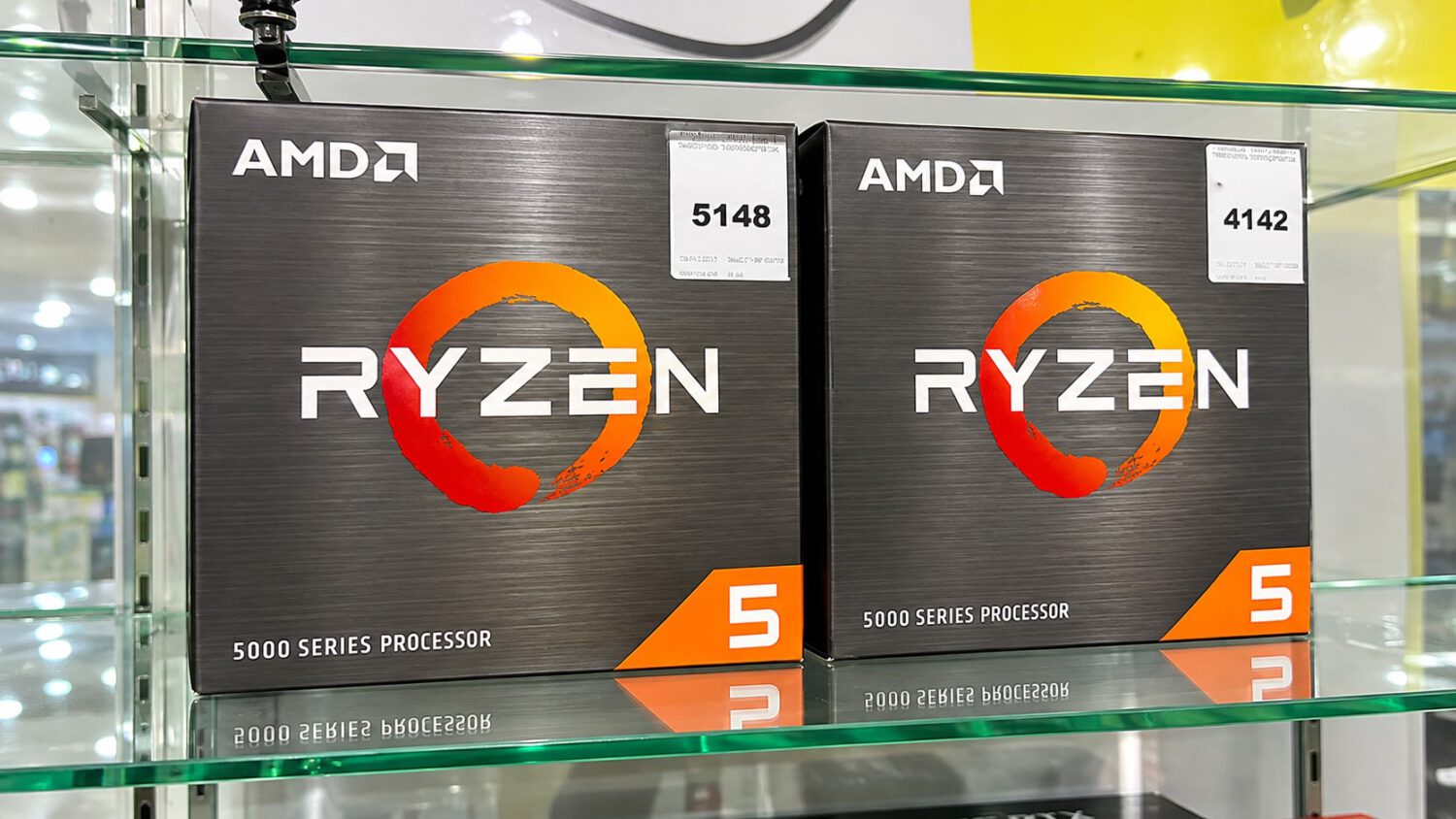
The Ryzen 7 9800X3D topped the chart at 5,000 units, a 14.41% share of the tracked total. The Ryzen 7 5800X3D and Ryzen 7 5700X each moved approximately 3,000 units.
The Ryzen 5 9600X, Ryzen 5 5500, and Intel Core i9-14900K each reached roughly 2,000 units.
Intel’s Older Platform Outran Its Newer One
Within Intel’s own lineup, the established LGA 1700 platform outsold LGA 1851 by a wide margin.
The Core i9-14900K sold approximately twice as many units as the Core Ultra 7 270K Plus. LGA 1700’s continued lead over LGA 1851 mirrors the dynamic on the AMD side, though AMD’s gap between its two platforms is considerably smaller.
Reports suggest LGA 1700’s DDR4 compatibility may attract cost-conscious buyers, but the sales data alone does not establish buyer motivation. That explanation should be treated as interpretation, not a measured finding.
Why AM4 Keeps Selling
Upgrading within AM4 may allow buyers to drop in a new CPU without replacing a motherboard or purchasing DDR5 memory.
Multiple reports cite DDR5 platform-switching costs as a plausible factor in AM4’s resilience, though this dataset does not directly measure that cause. The figures show continued AM4 demand; they do not demonstrate why buyers chose it. For context on how custom silicon rivalries are reshaping platform decisions across the industry, Apple’s chip strategy offers a relevant adjacent story.
What the Snapshot Actually Shows
AMD recorded simultaneous demand across two platforms, while Intel’s newer socket has yet to overtake its predecessor in this retail sample.
Intel’s LGA 1851 has not overtaken LGA 1700 within this Amazon US retail sample. The dataset does not measure installed base, upgrade behavior, or platform inertia, and no causal conclusions should be drawn from the unit counts alone.
This is one month of Amazon US consumer sales. It is a snapshot of retail demand, not a verdict on the broader CPU market.