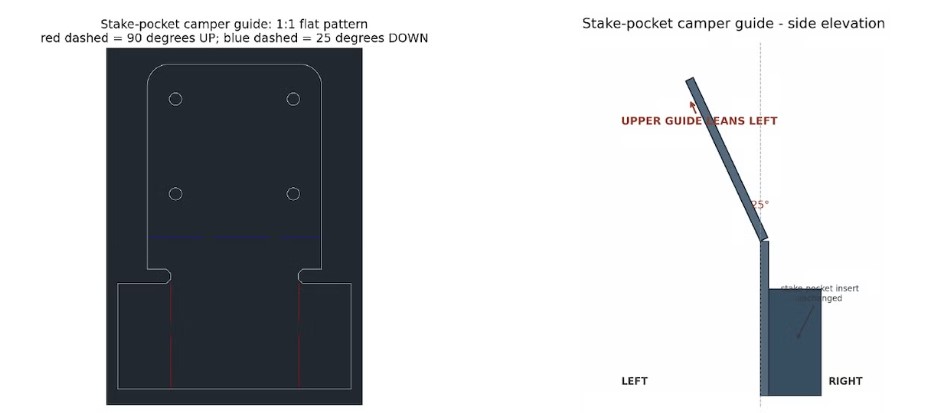
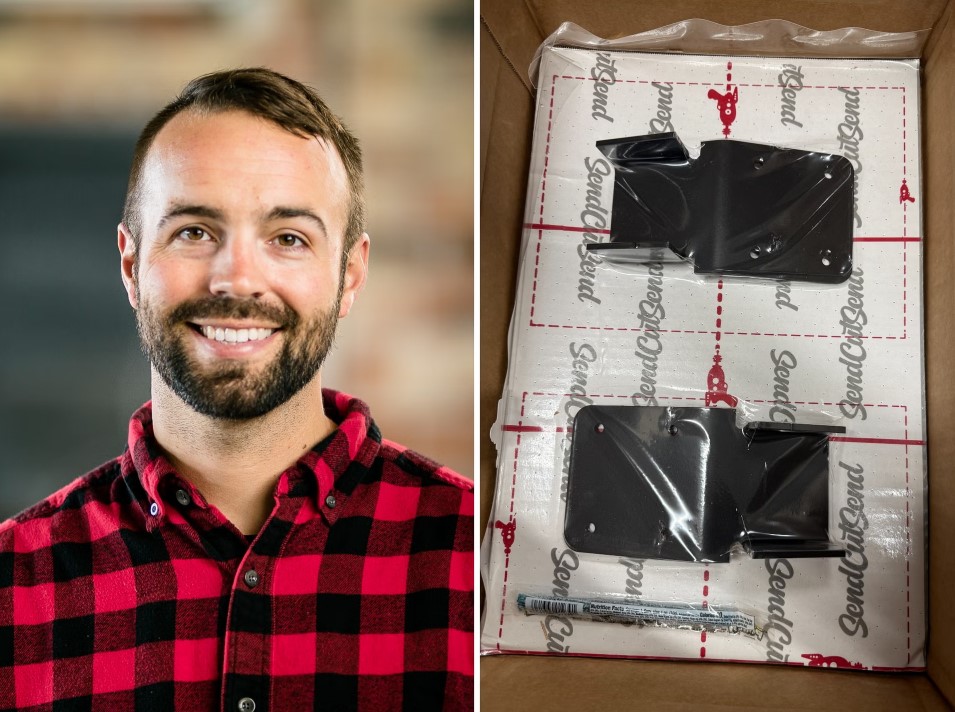
Jeff Deehan, a 42-year-old real estate developer in East Lansing, Michigan, described a small steel component designed to secure a camper to his truck, spoke it into GPT-6 Astra’s voice mode, and watched the AI generate a DXF file, navigate to fabricator SendCutSend, complete the order form, and pay $156 from stored payment details. Ten days later, the part arrived. “In about 10 minutes, I spoke a part out of my mind into existence, without touching my phone,” Deehan told Business Insider.
That sequence is the core of what people are calling vibe manufacturing: natural-language descriptions converted by AI into CAD or fabrication files, then produced by 3D printers, online fabricators, or small-batch manufacturers. The name deliberately echoes vibe coding, the practice of using conversational AI to write software.
Physical Errors Carry Costs That Software Bugs Do Not
Unlike code, a flawed physical design produces an object that fails, costs money to reprint, or poses a safety risk.
The parallel to vibe coding is useful but incomplete. Incorrect tolerances, bad dimensions, or unsuitable materials cost money to reprint and can create genuine safety risks. That gap between a quick description and a reliable object is the central tension every practitioner in this space runs into eventually.
From Robot Arms to MRI Scans to Children’s Toys
A range of makers is already using AI-generated fabrication files for projects spanning robotics, jewelry, medical models, and consumer electronics.
Amy Zhou and Jake Fitzgerald are developing an open-source text-to-CAD tool intended to generate manufacturable designs from natural-language prompts. According to Business Insider, the project had accumulated more than 23,000 GitHub stars at the time of reporting.
Fitzgerald used the tool to design a sheet-metal robot arm with a 0.6-meter reach, fabricated through SendCutSend for roughly $200 in parts. Earlier versions produced compounding failures, where design mistakes cascaded across iterations. Fitzgerald reportedly spent approximately $2,000 on failed parts before the workflow improved.
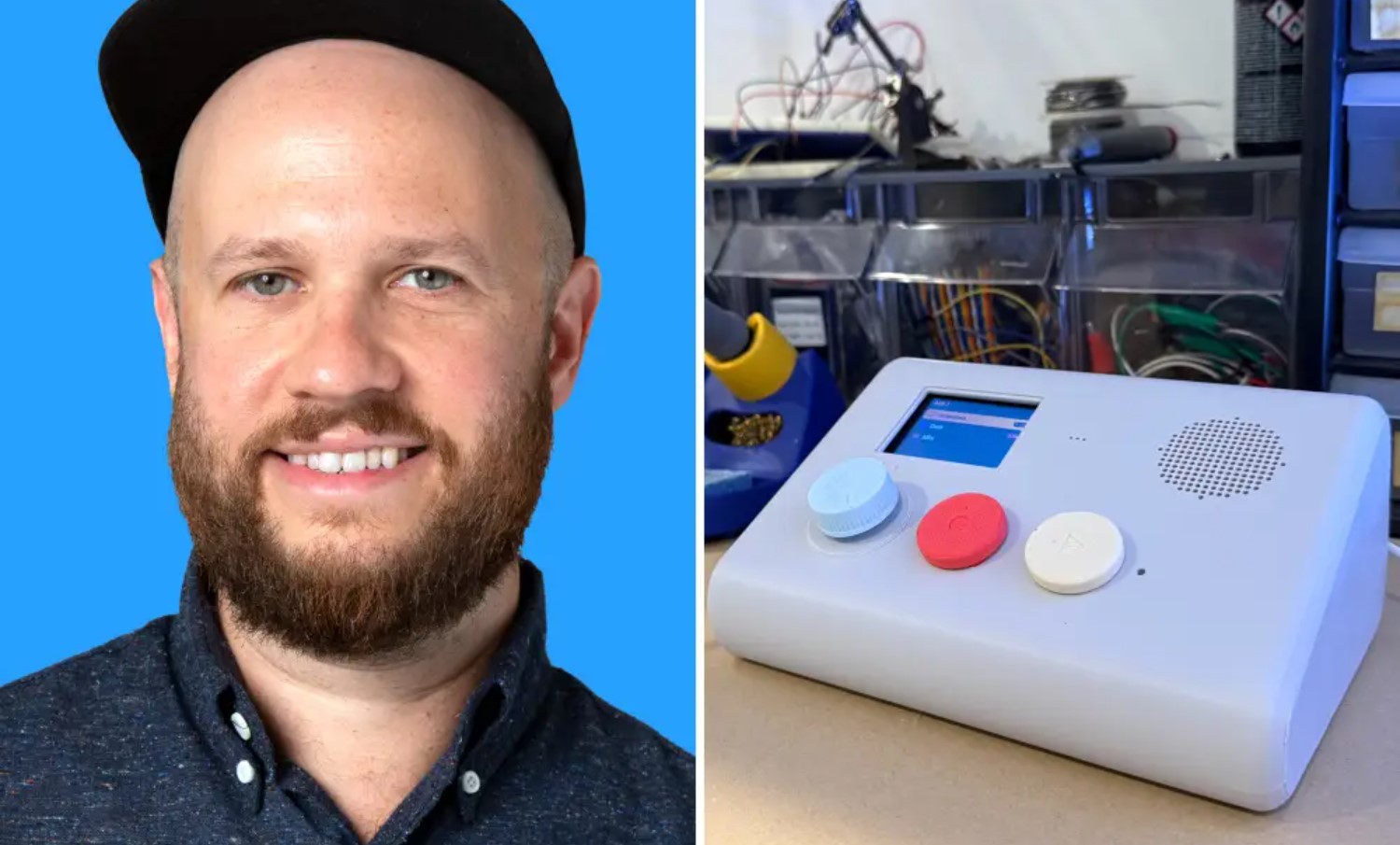
Zhou, who previously worked on Apple’s iPhone-cases team and is now a design engineer at AI-rendering company Vizcom, also uses AI to generate jewelry. She continues work she started at an earlier startup that converted uploaded images into 3D wax-cast charms.
Sourish Sharma, a 20-year-old in London, used AI to convert MRI data into a 3D-printable brain model, printing a life-size version and smaller copies for friends. He told Business Insider the AI workflow required less manual correction than the open-source tool he had used previously. That account reflects a single personal project, not any validated clinical standard.
Arthur Prince, an IT worker near Paris, designed a voice-activated children’s toy that generates stories and images in response to a child’s voice. He used GPT-6 Astra for the hardware design and Claude to critique it, then ordered 10 units from Chinese manufacturer JLCPCB for approximately 500 euros. His daughter tested the first working version.
David Plakon, a tinkerer based near Austin, built a small answering machine using an ESP32 chip, speaker, potentiometer, and 3D-printed enclosure, drawing inspiration from a tin-can telephone. He reprinted the enclosure roughly 15 times while resolving fit and assembly problems. The device works, but Plakon does not consider it ready to send to a factory.
The Gap Between a Prototype and a Safe Product Remains
A functioning first version and a manufacturable, certifiable product are two very different things.
Users remain responsible for verifying tolerances, materials, electrical safety, child-safety requirements, regulatory compliance, and intellectual-property considerations. Fitzgerald’s roughly $2,000 in failed iterations illustrates that point financially, and Plakon’s 15 printed enclosures make it in plastic. Low-friction design does not automatically mean low-cost or low-risk development.
For simple goods, personalized objects, educational robotics, and early-stage prototypes, vibe manufacturing may represent a genuine reduction in the cost of a first experiment. For anything requiring safety certification, production tolerances, or manufacturing scale-up, professional engineering judgment remains the job, and no voice prompt changes that yet.