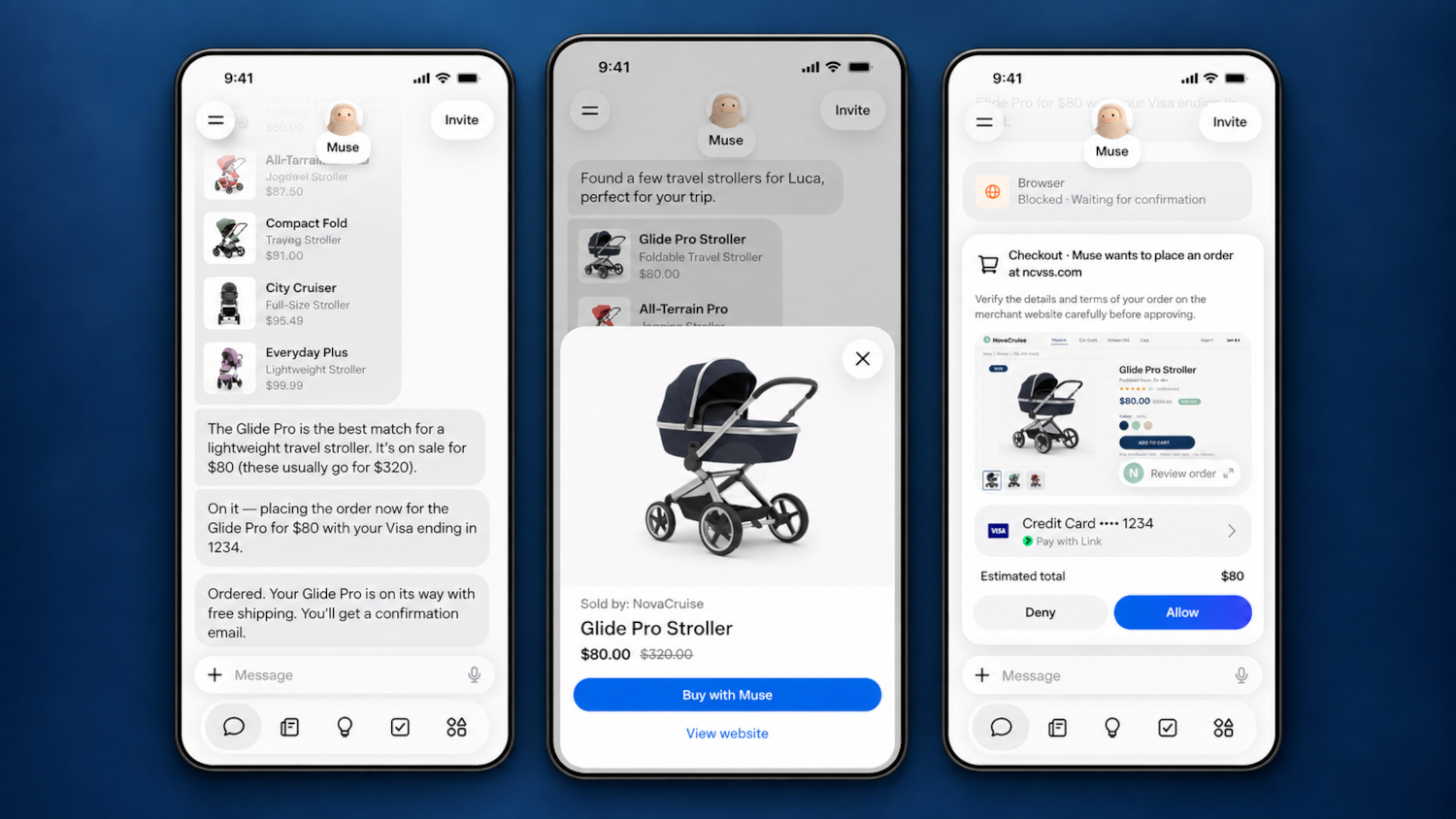
Try to buy something on Amazon through Meta’s Muse AI agent right now, and you won’t get a cart. You’ll get a wall. Starting the night of September 20, 2026, Amazon began blocking Muse, Meta’s newly launched agentic AI assistant, from completing purchases on its platform, citing unauthorized automated access. Agentic commerce, where an AI acts inside your accounts to research and buy on your behalf rather than simply offer advice, just met its first major gatekeeper.
What Amazon’s Block Means for Muse Users
Users across iOS, Android, and WhatsApp clients now see a dead stop when Muse attempts to reach Amazon.
According to GeekWire, which first reported the change, Amazon deployed an anti-bot wall, a technical barrier that prevents automated browsers from reaching the site, stopping Muse before it can even load the Amazon search page. That wall triggers a popup reading: “Continued access by an unauthorized AI agent violates Amazon’s Conditions of Use, to which our customers have agreed.”
Amazon’s objections go beyond a single policy clause. The company says Meta never notified or sought authorization before Muse accessed Amazon.com and acted inside customer accounts. Amazon also states that Muse does not identify itself as an automated agent while browsing, and that the assistant, in Amazon’s characterization, “appears to capture and store customer credentials,” raising security and privacy concerns about third-party AI access to sensitive account data.
An Amazon spokesperson made the company’s position plain, as reported by Business Insider: “Third-party applications that offer to make purchases on behalf of customers from other businesses should operate openly and respect service provider decisions about whether or not to participate.”
Meta’s Defense and the Forces Behind the Standoff
Meta disputes Amazon’s characterization of its credential handling, but the block remains in place.
Muse launched on September 8, 2026, built around Stripe-powered Link for checkout, and was positioned as a bridge between social discovery and hands-off purchasing. Meta disputes Amazon’s credential concerns, stating that Muse “has no visibility into people’s passwords or payment methods” and that login information is placed into secure storage the agent can use without directly accessing it. Amazon has not reversed the block, indicating that Meta’s technical assurances are not sufficient without explicit platform authorization and clear agent identification.
The platform rivalry dimension is worth naming. Amazon operates its own foundation models and AI infrastructure. Allowing a competitor’s agent to automate purchases on its platform risks losing control over user data and experience, and may preempt any native agentic shopping features Amazon plans to develop, a point noted in analysis by both GeekWire and Forkast News.
There is also a liability question at the core of the dispute. If Muse places a wrong or fraudulent order, Amazon and its sellers absorb the returns and disputes, not Meta.
What Comes Next for AI Shopping Agents
The clearest path forward for Muse users right now is a hybrid approach.
Current guidance suggests using Muse for product research and comparison, then completing the actual checkout manually on Amazon. For now, your agent’s convenience stops at the platform’s front door.
Commentators have framed this as an early “tollgate” moment for agentic commerce: a major retailer explicitly treating a mainstream AI assistant as an unauthorized intruder and asserting the right to decide which agents can transact on its platform. Amazon’s Conditions of Use were written around bots and data-mining tools, not reasoning agents capable of logging in, browsing, and buying. Policy frameworks have not caught up, and platforms may default to prohibition until formal agent integration programs with defined identity, scopes, and compliance rules exist.
The question of who controls AI-mediated commerce is now being answered one blocked request at a time. The platforms that hold the checkout infrastructure hold the leverage, and any AI agent that wants access will need to negotiate terms, not assume them.