Your TikTok feed serves up another obviously AI-generated video—plastic-looking influencer hawking miracle skincare with dead eyes and uncanny valley movements. You want to skip all synthetic content, but TikTok only offers a slider to see “less” AI videos. Meanwhile, YouTube slaps “AI-generated” labels everywhere yet provides zero filtering options.
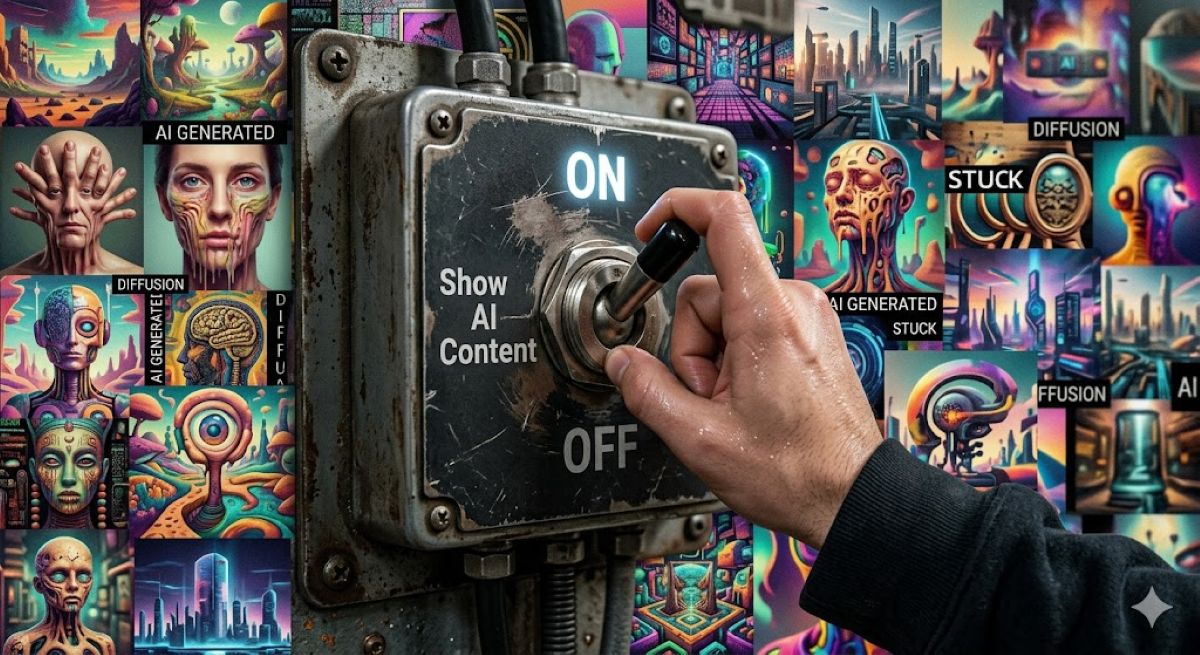
Welcome to the theater of AI transparency, where platforms detect synthetic content with military precision but refuse to give you a simple “no AI” button.
The Weak Controls Actually Available
Current platform filters are deliberately limited and buried in settings.
TikTok’s new AI content slider represents the industry’s most generous attempt at user control—and it’s deliberately toothless. The slider reduces synthetic video frequency but explicitly cannot eliminate it. Pinterest buries “less AI-modified content” toggles deep in settings for specific categories like art and beauty. DeviantArt offers an account-level “Suppress AI” mode that routinely fails to catch obviously synthetic artwork.
YouTube takes the boldest stance: absolutely no filtering capability despite comprehensive AI labeling. Their official support literally tells frustrated users to manually dislike synthetic content and hope the algorithm learns—like training a particularly stubborn golden retriever.
Detection Tech That Actually Works (Sometimes)
Platforms use imperfect AI detection for labeling but won’t expose it for filtering.
The technical limitations excuse falls apart under scrutiny. Yes, AI detection tools score under 80% accuracy in independent studies, and watermarking systems like Google’s SynthID only cover some content sources. But platforms already use these imperfect tools to label millions of posts daily.
If the tech is reliable enough for labeling—which creates legal liability for misidentifying human work as synthetic—it’s reliable enough for optional user filtering. The gap isn’t technical capability; it’s corporate willingness.
Business Incentives Behind the Theater
Companies selling AI tools resist filters that would expose synthetic content volume.
Here’s the uncomfortable truth: companies like Meta, Google, and TikTok aren’t just hosting AI content—they’re selling the tools that create it. A prominent “no AI” filter would expose exactly how much synthetic garbage floods their platforms while simultaneously undermining their generative AI product roadmaps.
That 2024 study showing 52% of consumers disengage when they suspect AI-generated content? Platforms know those numbers. They’re betting you’ll adapt to synthetic feeds rather than abandon their apps entirely.
The Manual Resistance
Users resort to exhausting workarounds to avoid AI content they can easily identify.
Users resort to algorithmic guerrilla warfare—poisoning their own recommendations by disliking AI-looking content, blocking obvious bot accounts, and periodically nuking their watch history. Some deploy browser extensions to hide suspicious thumbnails, though these lack reliable synthetic content signals.
The exhausting reality: fighting AI slop requires more effort than platforms spend detecting it.
As generative models improve and synthetic content becomes indistinguishable by human observation, watermarking and provenance metadata become crucial infrastructure. The question isn’t whether platforms can build better filters—they already have the foundation. The question is whether user revolt or regulatory pressure will force them to flip the switch.