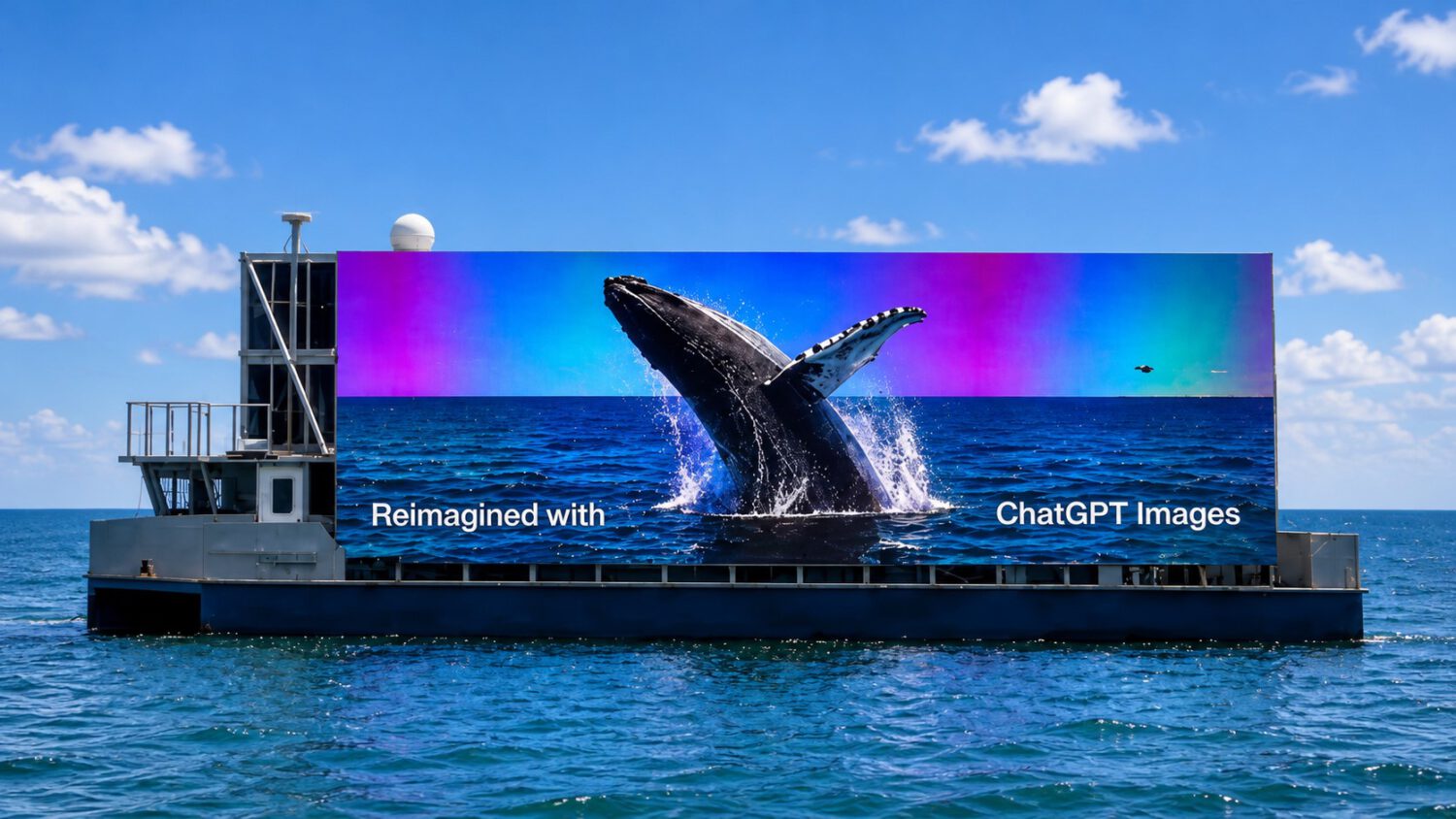
A 20-by-60-foot digital screen rolled past Miami Beach on the water, advertising an AI chatbot, and the footage wen t viral. Reported sightings of a floating vessel displaying a ChatGPT advertisement have reignited a years-long dispute over who controls the view from the shoreline.
The clip reportedly captured a Ballyhoo Media vessel carrying an LED screen promoting ChatGPT, complete with a whale visual, cruising offshore. The advertisement placed a recognizable AI brand in a physical out-of-home format that conventional digital targeting cannot reach.
The Billboard and the Backlash
Online critics called the display dystopian, renewing a debate over whether public beach views should function as advertising inventory.
According to reports, the footage first surfaced in a Reddit post, where the original poster reportedly confirmed its authenticity with a blunt reply: “It’s 100% real unfortunately.” The vessel is reportedly operated by Ballyhoo Media, a Miami-based company that runs floating LED advertising screens described as approximately 20 feet tall and 60 feet wide.
Online reaction ranged from exhausted to genuinely alarmed, according to reported comments. Commenters called the display dystopian and questioned whether ocean views near public beaches should serve as advertising space. Those reactions reflect real frustration, though Reddit comments are not a scientific measure of Miami beachgoer sentiment.
This Isn’t New, and That’s the Problem
Ballyhoo’s floating screens have operated around Miami for years, and the city’s attempts to restrict them have met persistent legal pushback.
Ballyhoo’s vessels are not a recent arrival. The Miami Herald previously reported that the company’s floating screens have carried advertisements for beer, sportswear, nightclubs, airlines, and restaurants, covering routes along the Miami River, downtown Miami, and Miami Beach.
Miami Beach has tried to push back. The city commission previously voted unanimously to restrict floating billboard activity in certain Biscayne Bay waters, but Ballyhoo argued those rules did not extend to ocean waters off the shoreline. Miami-Dade county rules restrict floating structures without a water-dependent purpose. They also place limits on digital billboard technology, according to prior Herald reporting.
Ballyhoo owner Adam Shapiro told the Herald: “All I know is our operation is legal.” The legal status of the specific ChatGPT display shown in the viral footage remains contested and unresolved.
AI in the Wild
The ChatGPT campaign suggests AI brands are expanding beyond conventional digital advertising channels.
The sighting indicates that at least one AI brand has purchased physical out-of-home advertising in a coastal setting. OpenAI was not identified in available reporting as owning or operating the vessel. The documented relationship is that the advertisement promoted ChatGPT and Ballyhoo operated the screen. The contractual arrangement between the two companies is not confirmed in available sources.
The Screen-Free Space Is Getting Smaller
The question of whether public outdoor spaces should remain free from commercial screens has moved from policy debate to lived experience.
This is no longer an abstract regulatory question. It is a question about what you can actually see when you walk to the water. Whether current law permits a floating LED screen to operate within sight of a public beach remains, for now, unresolved.