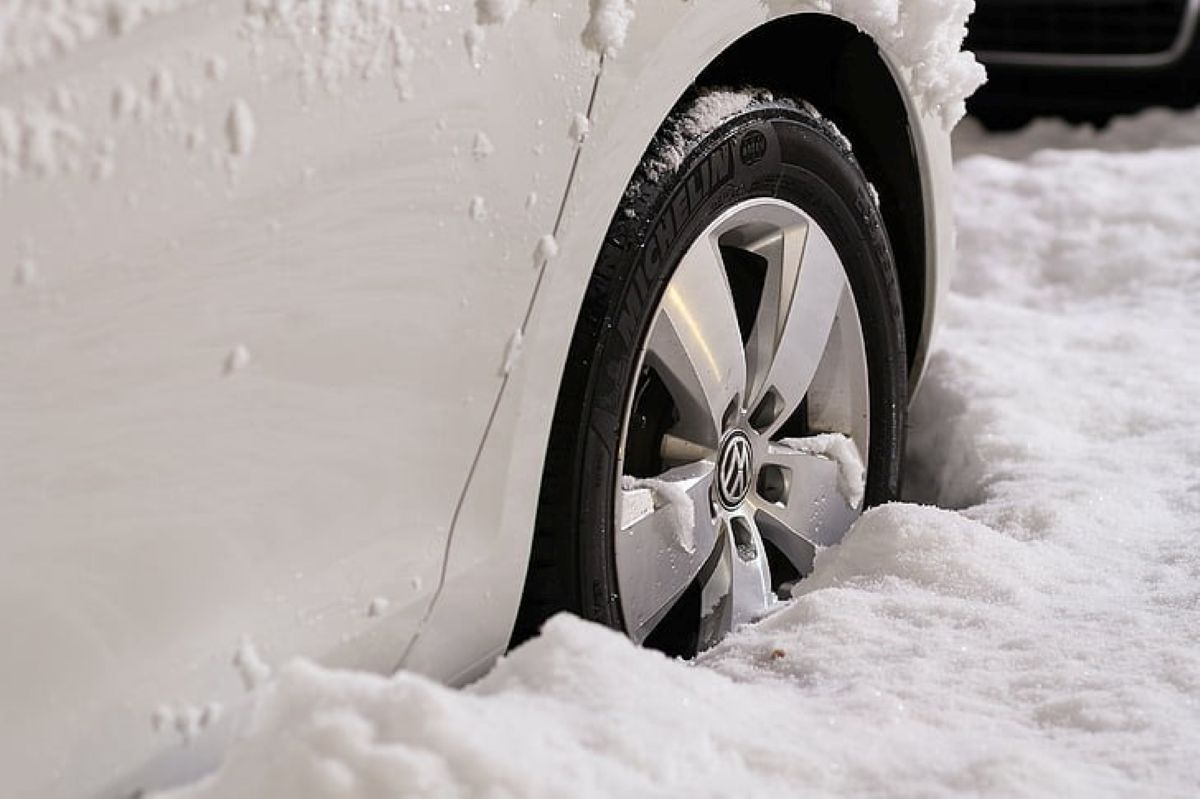
You’re creeping down that icy hill at 15 mph, foot hovering over the brake pedal like you’re defusing a bomb. One gentle press and your car starts that stomach-dropping slide that makes you question every life choice. Your ABS kicks in with its familiar juddering pulse, but you’re still sliding—and suddenly everyone’s an expert claiming ABS makes winter driving more dangerous.
The reality is more nuanced than your sliding experience suggests. NHTSA data shows ABS reduces crashes with other vehicles by 37% in cars and 36% in trucks during wet and snowy conditions. That juddering you feel? It’s preventing your wheels from locking up completely, which would turn your vehicle into a 3,000-pound hockey puck with zero steering control.
The Trade-Off That Automakers Don’t Advertise
Longer stopping distances on loose snow reveal ABS limitations in specific conditions.
The uncomfortable truth is that automakers can increase your stopping distance on soft, loose snow and gravel. Think of it like this: locked wheels on powder snow act like tiny plows, building up material in front of them for extra stopping power. ABS prevents this wheel-locking action, trading some stopping distance for steering control.
This isn’t a design flaw—it’s physics. Your ABS system doesn’t know whether you’re on dry pavement or fresh powder. It just knows those wheels are about to lock up, and it intervenes accordingly.
Black Ice Levels the Playing Field
Extreme conditions make all braking methods equally terrifying.
On black ice, stopping distances stretch over 2.5 times longer than dry pavement—46 meters versus 12 meters. At that point, whether you have ABS or the ability to manually pump your brakes becomes academic. The coefficient of friction is so low that you’re essentially braking on a skating rink.
Testing confirms what winter veterans know: ice doesn’t care about your braking technique. Maximum deceleration drops by 2.6 times compared to dry roads, making distance and speed management your primary survival tools.
The Real Winter Driving Strategy
Understanding ABS limitations means adapting your driving, not disabling the system.
Your ABS might not stop you shorter on fresh snow, but it keeps you pointed in the right direction while you’re sliding. That steering control could mean the difference between a gentle brush with a snowbank and a head-on collision with oncoming traffic.
The solution isn’t defeating your safety system—it’s driving for the conditions. Slower speeds, greater following distances, and understanding that sometimes the best braking technique is not needing to brake at all.