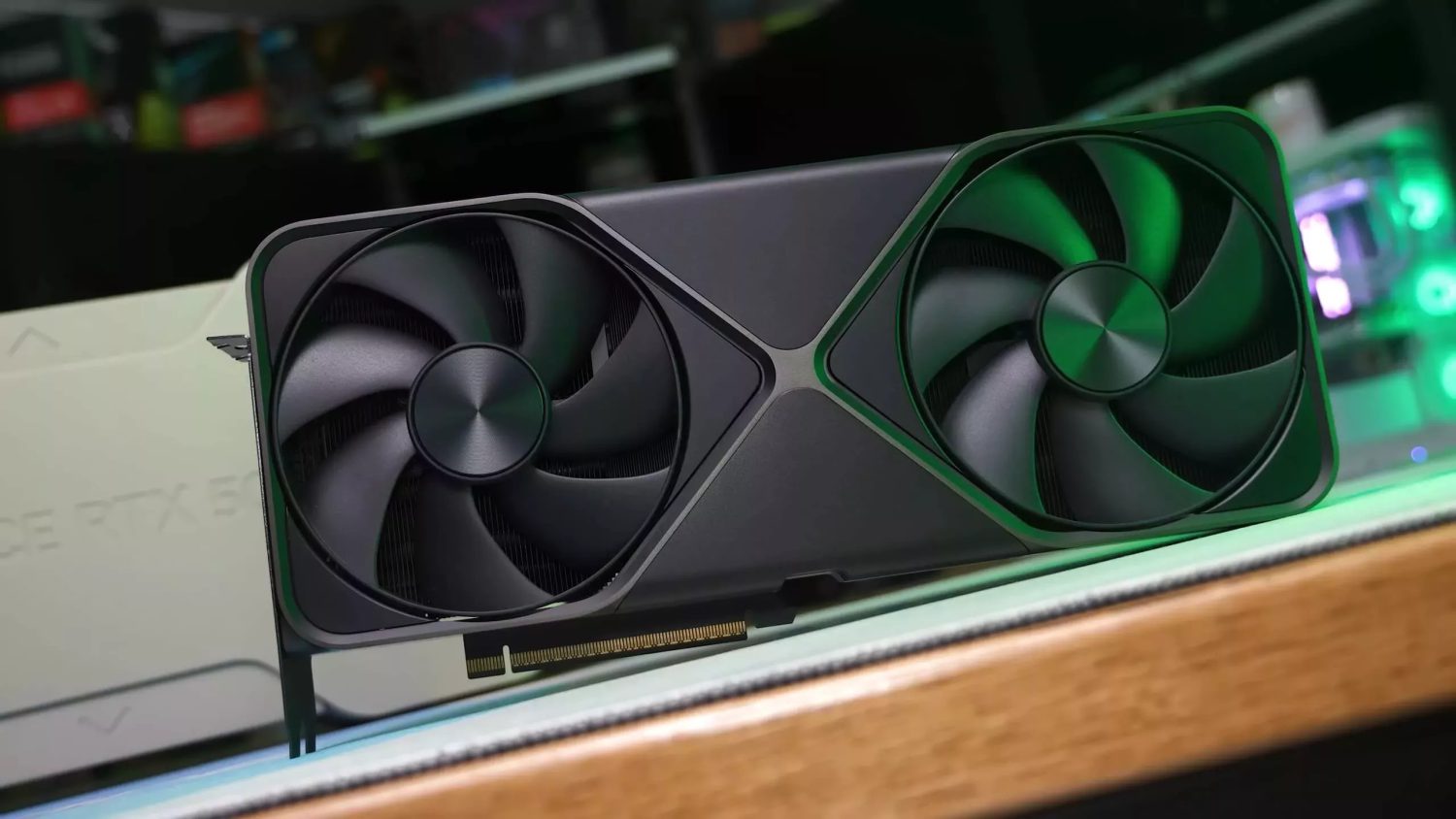
An Asus TUF Gaming RTX 5090 OC appeared at $5,099. Nvidia’s official MSRP is $1,999. The card named itself. That’s not a scalper markup or a rounding error — that’s a standard AIB partner card, listed at a major US retailer, sitting nine dollars shy of its own model number. The GPU pricing market has entered its absurdist era, and the RTX 5090 is its mascot. If you feel like you’re paying too much, you almost certainly are.
The $1,999 Price Tag That Never Existed
Nvidia’s suggested price is doing a lot of suggesting and very little existing.
Anyone browsing Best Buy’s GPU page for the $1,999 Founders Edition will come up empty. What’s actually available starts around $2,699, according to Stockmaid’s RTX 5090 price tracker — $700 over MSRP before you’ve touched a single premium model. Asus set the tone at launch: the ROG Astral LC debuted at $3,099.99, roughly 55% above MSRP, per Tom’s Hardware. The ROG Astral OC followed at $2,799.99. Only one TUF Gaming variant briefly touched $1,999.99 — a “special launch price” that vanished faster than a Supreme drop.
Since then, Asus has raised prices again. The ROG Astral OC now sits around $3,359.99 — $1,361 above MSRP, according to TechRadar. The TUF Gaming RTX 5090 climbed roughly $460 in a single adjustment, landing near $2,759.99, per TechPowerUp. MSRP, as one price-tracking outlet put it, has become “almost fictional.” For those dealing with related computer problems while trying to upgrade, the availability crunch adds another layer of frustration.
RTX 5090 Price Reality Check:
- Nvidia MSRP: $1,999 (Founders Edition)
- Cheapest at major US retailers: ~$2,699 (Stockmaid)
- Asus ROG Astral OC (current): ~$3,359.99
- Asus TUF Gaming RTX 5090 OC: spotted at ~$5,099 — 155% above MSRP, per Guru3D archive data
- Asus Edition 20 / MSI Lightning Z: $5,800–$6,000+, with Newegg marketplace listings reaching $7,999.99
When a GPU Becomes a Luxury Object
Extraordinary hardware, priced for someone else’s expense account.
Partners aren’t wrong that premium models earn their features. The ROG Astral Edition 20 packs a curved AMOLED display, liquid metal cooling, and 800W dual power input. That’s not a GPU — that’s a Michelin-starred tasting menu bolted to your PCIe slot. The craftsmanship is real. The audience is narrow.
The deeper problem is the TUF Gaming card — Asus’s supposedly accessible option — grazing $5,000. Unlike RTX 3000-series inflation, which was driven by crypto demand and supply shocks, this is structural: partner positioning, luxury branding, and persistent demand from AI workload buyers treating these cards like budget data-center hardware. Rational buyers are migrating toward RTX 5080-class cards, and much like evaluating what really costs less in a major purchase, the 5090 is quietly becoming a niche product cosplaying as a mainstream flagship.
Community speculation is already asking whether an RTX 6090 costs $6,090. That’s not confirmed — but the joke lands because the trajectory makes it feel inevitable. The GPU that accidentally priced itself might be the most honest thing to come out of this entire product cycle.