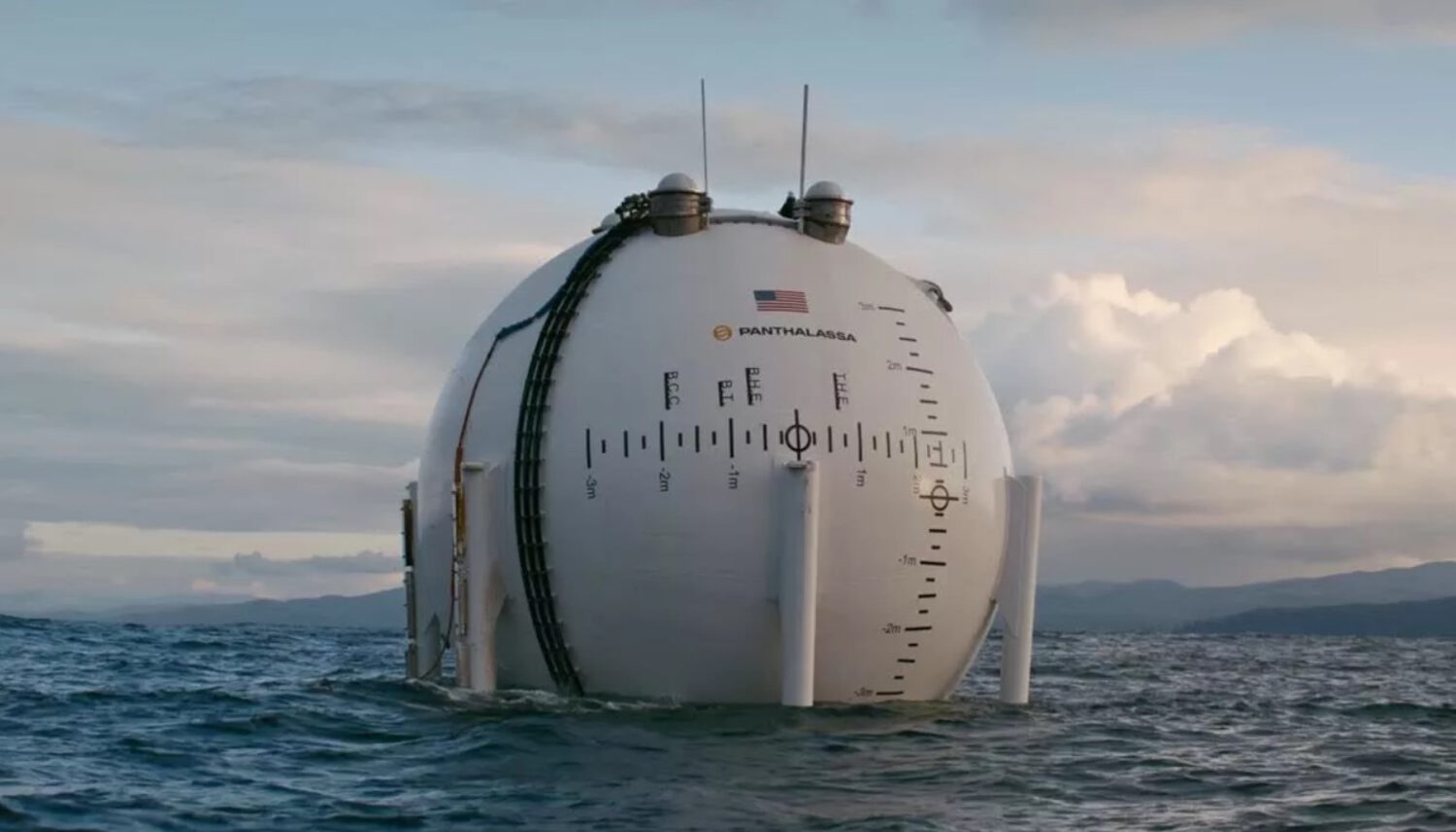
Wave-powered AI computing attracted $140 million in Series B financing this week, with Peter Thiel leading the round for Panthalassa, a Portland, Oregon company building autonomous offshore platforms that generate their own electricity, cool hardware with seawater, and transmit AI outputs by satellite.
The flagship product, Ocean-3, stands approximately 85 meters tall and sits mostly submerged, with a buoyant upper section and a long vertical body that gives it what the company describes as a golf-ball-on-tee profile. As the platform moves with wave motion, internal hydraulics drive seawater through turbines to produce electricity consumed onboard, with no undersea power cable to shore.
AI hardware sits in protected containers below the waterline, where the surrounding ocean acts as a passive heat sink. The company says this arrangement is intended to reduce or avoid reliance on freshwater cooling systems, which represent a significant operating cost and resource constraint for conventional land-based data centers.
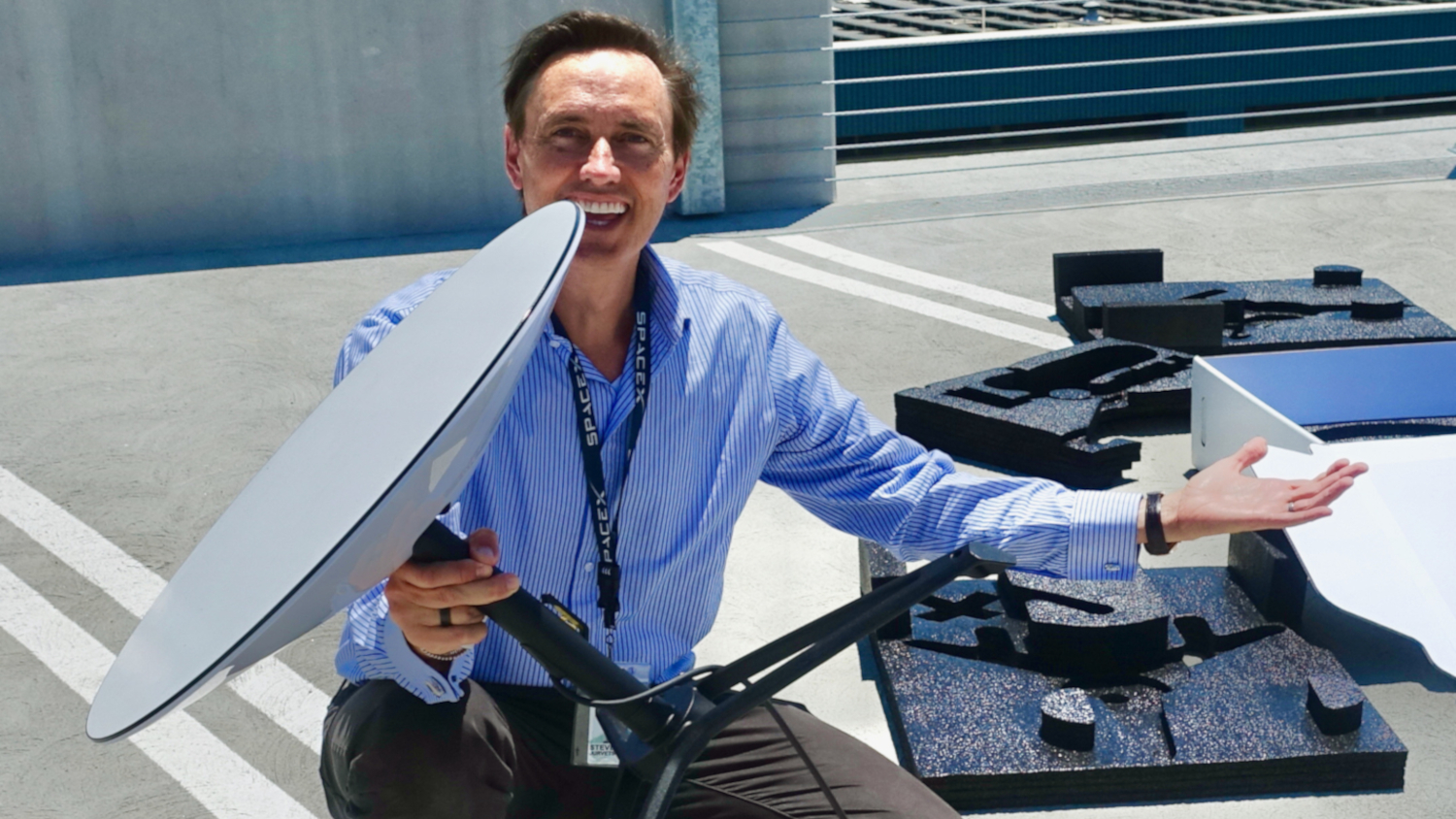
Outputs travel to land via low-Earth-orbit satellite, with Panthalassa citing Starlink as one connectivity option. Satellite links introduce latency and bandwidth limits, making the platform better suited to batch inference and model training than to real-time consumer applications. That constraint reflects the communications architecture, not independently verified Ocean-3 performance data.
The problems Panthalassa is trying to solve are measurable and well documented in the industry. AI infrastructure demand is straining terrestrial electricity grids, consuming industrial land that is increasingly scarce, drawing heavily on freshwater supplies, and generating permitting conflicts in communities near proposed data center sites. An offshore node that generates, consumes, and cools its own power addresses each of those friction points directly, according to company materials.
The company plans a pilot series in the northern Pacific during 2026 to demonstrate AI inference and refine manufacturing processes, with commercial operations targeted for 2027. Panthalassa says the Series B funding will also support completion of a pilot manufacturing facility near Portland. Earlier prototypes include Ocean-1, Ocean-2, and Wave Hopper, but no independently audited data on their power output, uptime, or compute performance is available from the sources reviewed.
The engineering obstacles facing Ocean-3 are substantial. Wave-energy devices endure repeated cyclic mechanical loading and severe storm conditions. Saltwater corrosion and biofouling degrade hardware over time. Panthalassa uses autonomous station-keeping propulsion instead of permanent anchors, which adds operational flexibility but would be expected to introduce moving parts, higher energy draw, and maintenance complexity. Seawater cooling requires rigorous isolation between ocean water and sensitive electronics. Satellite service adds latency, bandwidth constraints, and dependency on third-party infrastructure. Servicing hardware on a floating platform in open ocean could cost more and take longer than a technician visit to a land-based facility.
Panthalassa’s funding announcement describes planned milestones, not demonstrated commercial reliability. The decisive question is whether Ocean-3 can deliver competitive cost-per-compute unit alongside durable, all-weather operation across full seasonal cycles. The planned 2026 northern Pacific pilots should provide an early test of whether the platform can meet those requirements.