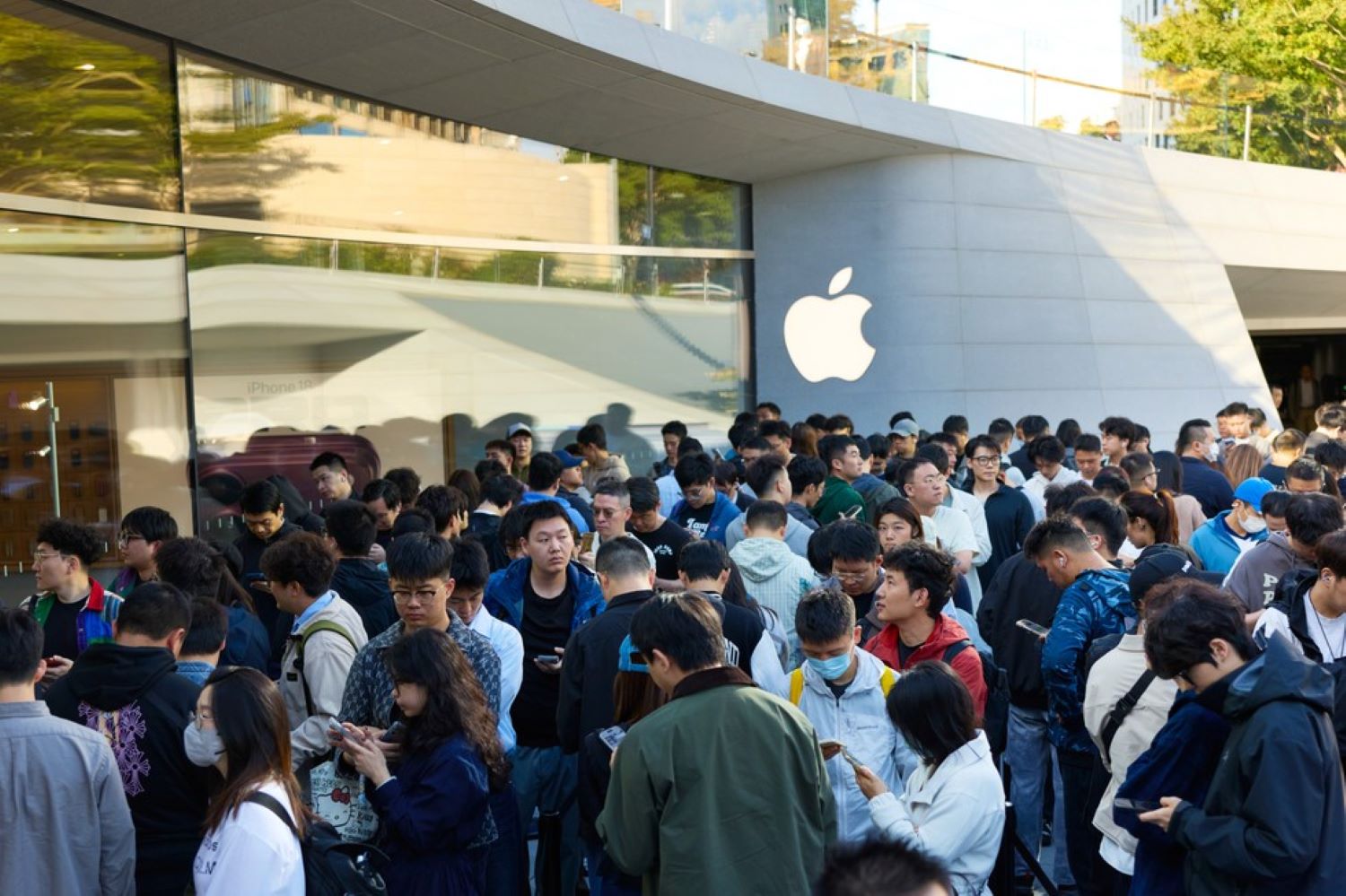
Investor orders reportedly peaked at approximately $31 billion for Apple’s $7.5 billion bond sale, exceeding the initial roughly $7 billion target the company had set when the transaction launched. The order figure came from people familiar with the transaction rather than a formal Apple disclosure, Bloomberg reported.
Apple expects approximately $7.47 billion in net proceeds after underwriting discounts and other offering expenses, according to its SEC filing.
Deal Structure
The offering spreads Apple’s borrowing across seven series of notes with maturities running from 2028 through 2036.
Two tranches carry floating-rate coupons tied to Compounded SOFR: $500 million due 2028 and $750 million due 2029. Five fixed-rate tranches lock in set annual payments, ranging from $1 billion at 4.65% due 2028 up to the largest tranche, $2 billion at 5.35% due 2036, according to 9to5Mac.
The fixed-rate series in full: $1 billion at 4.75% due 2029, $1 billion at 4.90% due 2031, and $1.25 billion at 5.10% due 2033 round out the middle of the structure. Floating-rate coupons adjust with benchmark rates; fixed-rate notes set the coupon at issuance and hold it there.
Use of Proceeds
Apple designated the proceeds for general corporate purposes, leaving management broad discretion over how to deploy nearly $7.5 billion.
Potential uses listed in the filing include share repurchases, dividends, acquisitions, working capital, capital expenditures, and debt repayment. No specific project or acquisition is earmarked.
Spread and Pricing
The 2036 tranche priced at roughly 0.55 percentage points above comparable U.S. Treasuries, a relatively narrow premium for a ten-year-plus technology issuer.
That spread tightened by about 25 basis points from initial guidance, according to Business Times. The compression reflects strong competition among buyers for the longest-dated paper, though spreads also incorporate broader market conditions and liquidity factors beyond credit risk alone.
Market Context
Apple’s sale arrived during a period of heavy technology-sector bond issuance connected to artificial-intelligence investment.
The oversubscription ratio stood out against softer demand for some borrowers whose financing is more directly tied to uncertain AI spending returns. Available reporting did not name specific peer issuers for direct comparison, so the contrast should be read as a general market observation rather than a precise ranking.
A Staggered Repayment Profile
Maturities spread from 2028 through 2036, distributing Apple’s principal obligations across multiple years rather than concentrating them at a single date.
Business Times characterized the transaction as opportunistic, consistent with a company that can access large-scale financing when market conditions are favorable. The filing establishes intended uses for the proceeds but does not disclose Apple’s complete internal financing rationale; the available reporting presents the deal as a reflection of market access rather than a response to any disclosed funding shortfall.