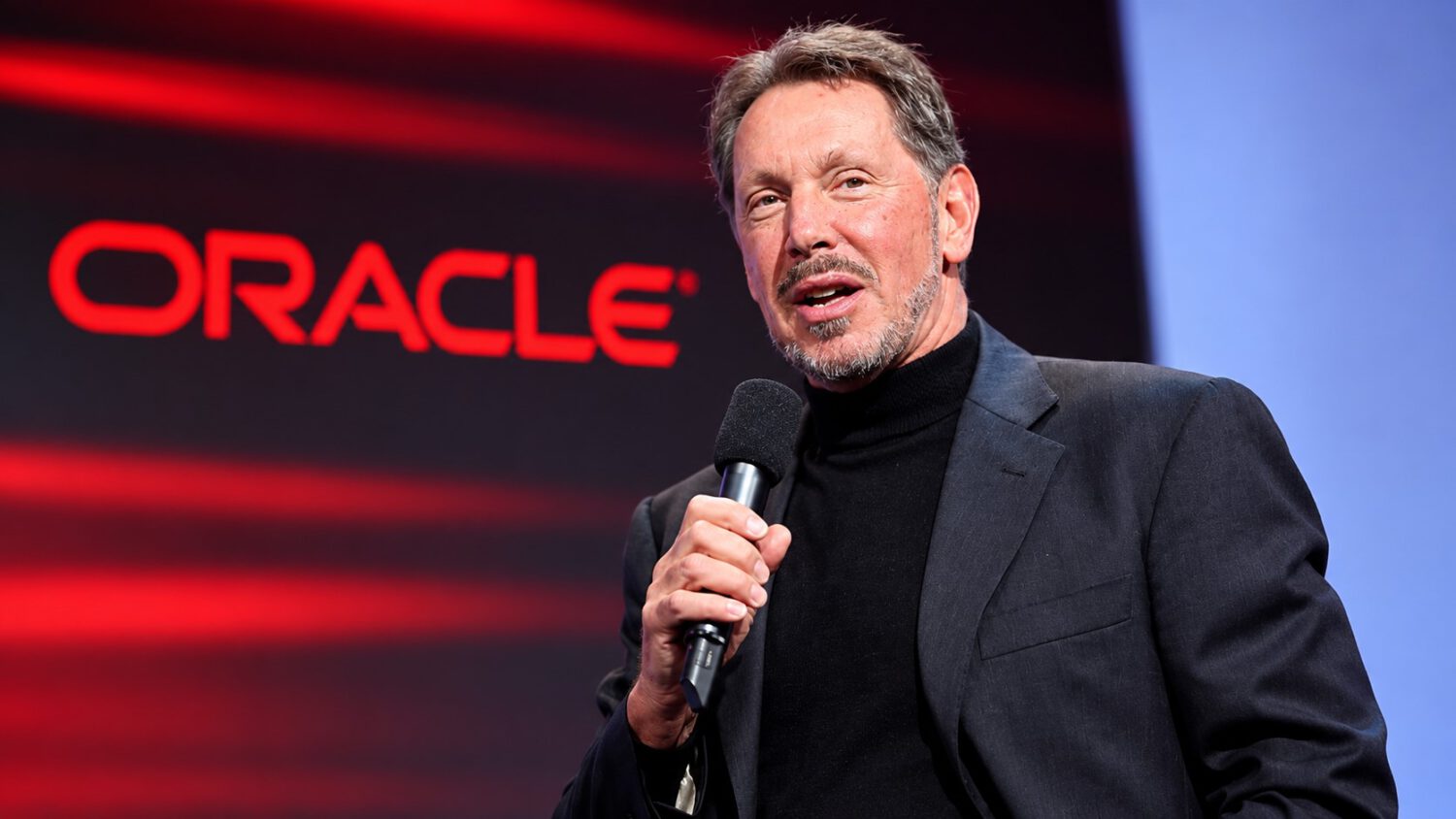
Oracle shares dropped approximately 7% to 7.5% on Nov. 5, 2026, pulling Larry Ellison’s estimated fortune down roughly $11.5 billion to approximately $152.5 billion, according to Forbes’ Real-Time Billionaires list. That single-session loss was the sharpest acceleration in a decline that had already erased more than 30% of Oracle’s share value over the preceding six months, per Forbes reporting.
The drop was enough to push Ellison out of the global top 10, a ranking he had held without interruption in recent memory.
Who Moved Ahead, and Why It’s Complicated
Billionaire rankings shift with market prices, and the gap between Ellison and his new successor measured only about $1.4 billion at the close.
Amancio Ortega, the Spanish fashion executive behind Inditex and Zara, gained approximately $2.1 billion on the same day, lifting his estimated net worth to roughly $153.9 billion and placing him just ahead of Ellison in the rankings. Forbes’ real-time list shifts continuously during market hours, so the change reflects a snapshot rather than a permanent reordering.
The Drop That Set Up the Drop
Nov. 5 was the second significant leg down in less than a week for Oracle shareholders.
Three days earlier, on Nov. 2, Oracle shares fell approximately 8.8% to a four-month low after the company disclosed plans to raise $20 billion: $10 billion through new common stock and $10 billion through bonds. Oracle’s official announcement stated that proceeds would be used for general corporate purposes, which the company listed as potentially including capital expenditures, debt repayment, investments, acquisitions, dividends, and repurchases; Forbes described the offering as potentially funding Oracle’s AI-related infrastructure. That fundraising announcement compounded a slide already well underway, with shares down more than 30% over the preceding six months per Forbes.
What the Market Is Questioning
Investors weighed two immediate consequences of the offering: share dilution and the cost of carrying $10 billion in new debt.
Equity dilution from the new share issuance and the borrowing costs attached to the bond portion were concerns the announcement placed directly before investors. Underlying both is a timing question: AI infrastructure requires capital now, while revenue at the scale needed to justify that spending may take years to materialize. The available sources describe the market reaction to Oracle’s announcement but do not establish those concerns as the only factor driving the decline.
Not Oracle’s Problem Alone
Ellison’s ranking drop was one piece of a broader single-day reckoning across AI-linked technology wealth.
Oracle was not alone in the selloff. Michael Dell and Mark Zuckerberg also recorded significant single-day wealth losses as investors broadly reassessed AI-linked technology stocks following the U.S. midterm elections. Concerns about prospective data-center restrictions and moratoriums added pressure across the sector, framing Ellison’s ranking change as part of a wider recalibration rather than a verdict on Oracle specifically.
The Bet Oracle Is Making
The core question facing Oracle is whether AI-driven cloud revenue will close the gap the market is now demanding.
Oracle’s $20 billion raise signals an aggressive commitment to competing in AI infrastructure, and the market’s reaction over the past six months reflects mounting pressure for evidence that returns will follow. Oracle’s next earnings report will be an early measurable test of whether that revenue is closing the gap investors are watching. Until clearer signals emerge, the stock, and the fortune tied to it, remain exposed to this kind of volatility.