Plaque control is a persistent challenge in dental care, and a research team at Peking University may have found a new way to address it. Their device looks like a standard toothbrush. Its bristles are made from polyvinylidene fluoride (PVDF), a polymer that generates a small electrical charge when physically bent, requiring no battery at all. This kind of work joins a broader wave of experimental biomedical research emerging from university laboratories around the world.
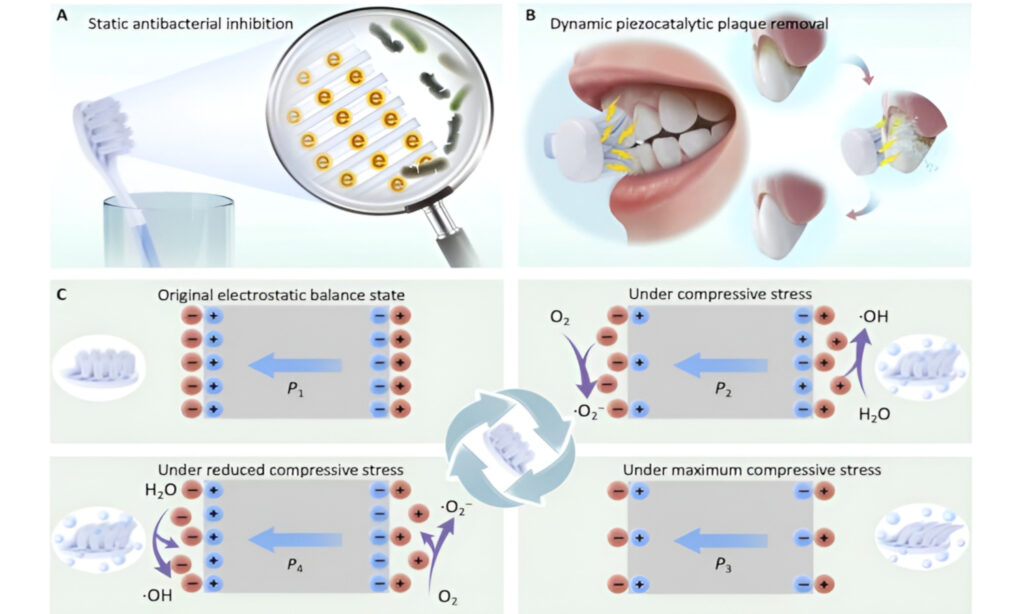
As those bristles flex against teeth and gums, the charges trigger chemical reactions with saliva. Those reactions produce reactive oxygen species, molecules that disrupt and damage bacterial cell membranes, adding a localized antibacterial action to the mechanical removal that any brush provides.
What the Human Trial Found
A three-month clinical study compared the PVDF brush against conventional nylon toothbrushes in 115 recruited adults.
The team, led by Yanhui Lu and colleagues at Peking University, recruited 115 adults for a three-month study published in Science Advances (DOI: 10.1126/sciadv.aeg5744). Participants brushed twice daily, while a comparison group used conventional nylon-bristled toothbrushes. Some reports note that 109 participants appeared in the final analysis, a discrepancy that requires direct review of the published paper to resolve.
Plaque scores among users of the PVDF brush fell by approximately 40%, compared with roughly 15% in the standard-brush group. Those participants also showed reductions in gum inflammation and bleeding, along with lower relative levels of several bacteria associated with oral disease.
The Lab Numbers and What They Mean
Laboratory testing supported the trial results, though controlled conditions differ substantially from years of real-world use.
After three minutes of simulated brushing in laboratory testing, the PVDF bristles removed more than 99% of plaque; conventional nylon removed approximately 80% under the same conditions. The researchers also reported no apparent damage to tooth surfaces and no toxicity to human cells under laboratory conditions.
That finding matters, but it carries a firm limit. Laboratory conditions and a 90-day trial are not substitutes for long-term human safety data, and those results establish a floor of plausibility rather than a ceiling of confidence.
What This Study Cannot Tell You
Three months is enough time to observe plaque and inflammation changes, but far too short to draw conclusions about serious dental disease.
The trial involved a relatively small volunteer pool over three months. That window is too narrow to support conclusions about cavity prevention, periodontitis, or tooth loss, and the available reports do not establish that the device prevents those conditions.
Durability, cost, and sustained effectiveness over years of daily use were not established by this study. Larger trials, longer follow-up periods, and independent replication of safety and efficacy findings would all be necessary before the device could reach widespread clinical use.
Where the Research Stands
The published paper represents a credible early-stage proof of concept, not a clinical recommendation.
The study, titled “Self-charged toothbrush facilitates tooth healthcare maintenance,” documents encouraging short-term signals. The piezoelectric mechanism is scientifically grounded, the clinical results are promising, and the battery-free design removes one practical barrier to adoption. What exists right now is a promising novel engineering prototype backed by a short, small trial: worth watching, not worth overstating.