This article is published in partnership with Nuropod. It reflects my own experience using both devices, alongside publicly available research. It is not medical advice. I may receive compensation for purchases made through links in this article. Individual results may vary.
My Research Goal: I used Pulsetto nightly for several weeks, then switched to Nuropod and have used it nightly since. Both are marketed around the same idea: non-invasive vagus nerve stimulation for better sleep. I wanted to find out whether that idea holds up the same way in practice for both, or whether one falls short in ways most people wouldn’t notice until after they’d already bought it.
If you’ve ever hit snooze four times because you technically slept but never actually recovered, this comparison is for you. Waking up tired isn’t always about hours in bed.
Sometimes it’s about whether your nervous system ever actually got the memo to power down.
I tested both devices the way I’d evaluate any intervention professionally: independent evidence behind the specific device, not just the underlying idea, and whether it actually fits into a life instead of asking for a new one. Five tests, the same five every device in this category should have to pass:
1. Where the device actually reaches the nerve
2. Whether independent evidence exists for the specific device, not just the concept 3. What it asks of you at bedtime
4. What it actually costs over five years
5. How much effort it takes to use, at home and away
Here’s how they compared, test by test.
1. Validated by Independent Institutions, Not Just a Company-Funded Study
Here’s a distinction the entire category tends to blur, and it’s the one I care about the most professionally: general vagus nerve science doesn’t automatically prove any particular device works.
Plenty of products in this space lean on the credibility of vagus nerve research broadly while publishing little to nothing on the actual device you’d be wearing. What matters is who actually ran the research, and whether it maps to the exact device, stimulation site, and settings being sold.
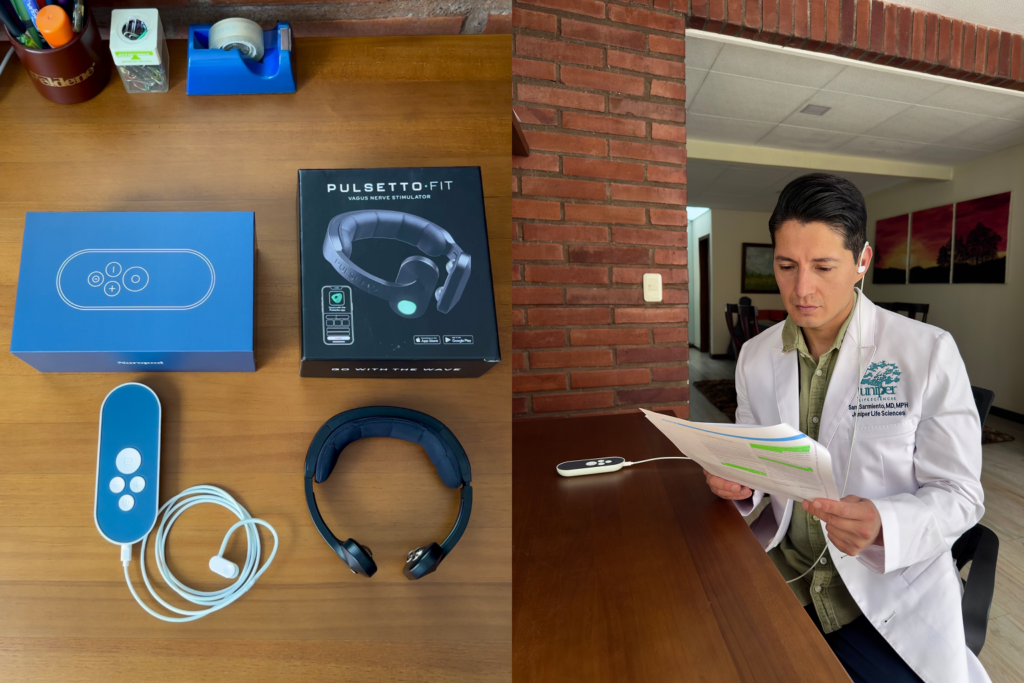
Nuropod comes from Parasym, which has been working specifically in this field for over 10 years. More than 60 completed studies support the underlying AVNT™ (Auricular Vagal Neuromodulation Technology) approach, run independently by research partners including Harvard and UCLA, with over 100 studies currently underway.
Pulsetto’s published, device-specific research is limited at the time of writing. Its marketing points more toward the broader science of vagus nerve stimulation as a concept, which is a real and legitimate field, just not the same thing as independently validated, device-specific evidence.
That evidence gap is the single biggest reason I’d point someone toward Nuropod first, before price, before design, before anything else on this list.
2. Same Nerve, Different Access Point
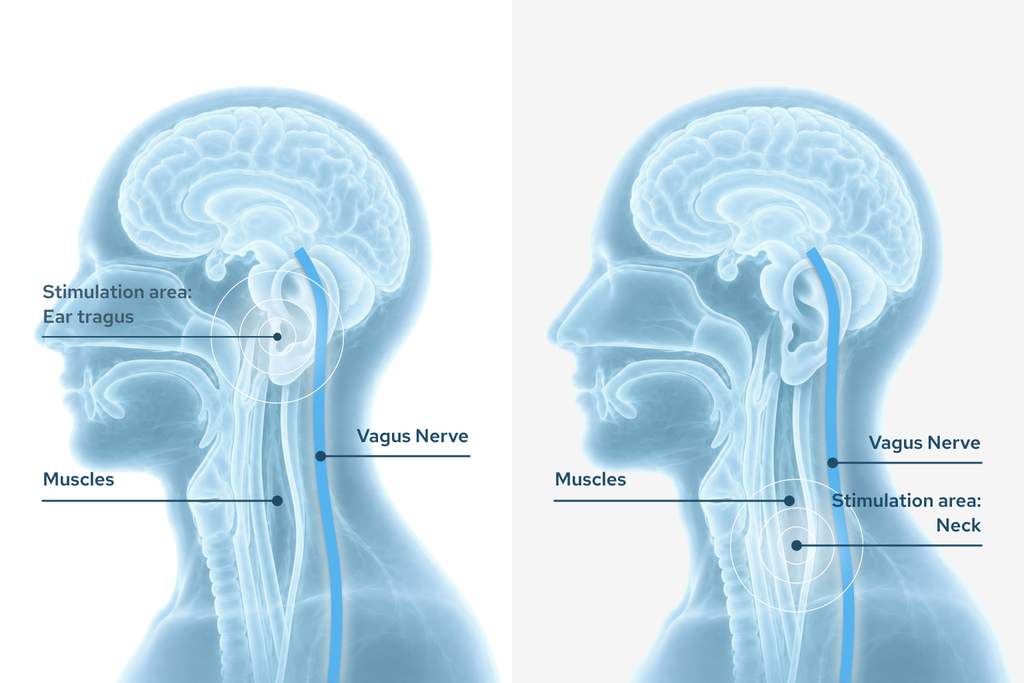
Both devices are built around the same basic idea: non-invasive electrical stimulation intended to engage the vagus nerve. Where they actually reach it is a different story.
Pulsetto sits on the neck, where the vagus nerve runs deep, under muscle, close to major blood vessels. Nuropod clips to the tragus, the small flap of cartilage at the entrance to your ear canal, where a branch of that same nerve comes close to the surface of the body.
This isn’t a minor technical detail. The auricular branch of the vagus nerve can be accessed non-invasively through the outer ear, including the tragus, where nerve fibres lie relatively close to the surface, a fact you can verify yourself, not a marketing claim you have to take on faith.
3. A Paid Monthly App That Wants You Staring at a Screen Before Sleep? No Thanks
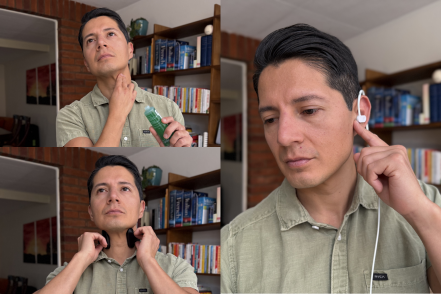
This is where the two genuinely diverge in daily use, and it’s a double problem, not a single one.
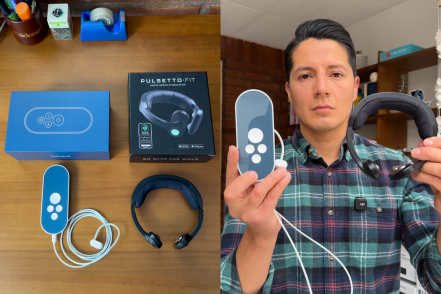
Pulsetto: gel on the neck, collar on, open the companion app, pick a session on your phone.
Nuropod: moisten the tragus, clip it on. That’s the routine.
If you’re deliberately trying to keep your phone out of your bedtime routine, a sleep device that requires you to open an app before every session creates an obvious contradiction. But it’s not just the screen. It’s what comes with it.
A recurring cost, plus another screen in your bedtime routine. Pulsetto’s app isn’t a one-time download; it carries an ongoing paid subscription. So the device that’s supposed to help you wind down also asks you to unlock your phone and pick a session on a lit screen, right when you’re trying to do the opposite. Nuropod doesn’t ask for anything beyond the device itself.
4. The Real Cost Shows Up Over Time, Not on Day One
The upfront price only tells part of the story here.
Nuropod costs $900 upfront. No app subscription, no gel refills, no recurring session costs. Over five years of daily use, the estimated cost stays at $900.
Pulsetto starts at around $224, which looks like the easy budget win at first glance. But that’s only the device. Pulsetto’s Premium app currently costs $139 per year, while its $45 conductive gel box is described as roughly a 4–6 month supply. Using two gel boxes per year and Premium at today’s prices, the estimated five-year cost comes to around $1,369, meaning the cumulative cost overtakes Nuropod during year 3. Premium is optional, but for users who choose the fuller paid experience, that much lower sticker price becomes a very different long-term calculation.
But the money isn’t really the point. It’s the ongoing management of it: gel to replenish, another subscription if you choose Premium, and recurring costs that can change over time. Nuropod is a different kind of commitment: a higher upfront price, but no gel to replace and no paid app subscription to maintain.
Eligible US customers may also be able to purchase Nuropod using HSA or FSA funds, which can reduce the effective cost further through pre-tax healthcare spending.
5. One Takes Zero Effort. The Other Takes a Five-Minute Setup, Every Time.
Nuropod clips on. Moisten the tragus, clip it, done. No setup beyond that, whether you’re at home or away for the night.
Pulsetto asks for gel, the collar positioned correctly, the app opened, and a session picked, every single time, at home or on the road. It’s not that Pulsetto doesn’t fit in a bag; both devices are small enough to travel with. It’s that one requires a small ritual before every session, and the other doesn’t ask for anything beyond putting it on. And don’t get me started on having to wipe the gel off the device, your neck, and your hands. I personally like to reduce friction, not create more of it.
What the Research Shows: Sleep, HRV and Fatigue
A few numbers, since sleep is what this comparison is actually about. These figures come from peer-reviewed studies of the AVNT™ stimulation approach used by Nuropod, and every figure here reflects results in a specific study population, not a guarantee for any individual.
● Sleep quality: up 30% in one study population², measured on the Pittsburgh Sleep Quality Index (PSQI), a standard sleep questionnaire
● HRV (Heart Rate Variability): up 18% in one study population³, RMSSD method, a marker commonly used to assess autonomic regulation and recovery
● HF power: up 61% in one study population³, an HRV-derived marker associated with parasympathetic activity
● Tiredness and fatigue: down 48% in one study population⁴
● Anxious thoughts: down 35% in one study population⁵, potentially relevant to people whose difficulty falling asleep is linked to a mind that stays active at night
Results in specific study populations. Individual results may vary.
I don’t have comparable device-specific figures to report for Pulsetto. That’s not a dig, it’s simply the current state of what’s been published on the device itself.
Quick Comparison
| Nuropod | Pulsetto | |
| Stimulation Site | Ear (tragus) | Neck |
| Setup at bedtime | Clip-on, no app | Gel, collar, phone app required |
| Published research supporting the approach | 60+ completed studies supporting AVNT™/taVNS approach | Limited device-specific research |
| Prescription required | No | No |
| Screen needed to use it | No | Yes |
| Initial cost | $900 | ~$224 |
| Conductive gel | $0 | $45 per box |
| Estimated gel cost over 5 years | $0 | ~$450* |
| Premium app | $0 | $139/year (optional) |
| Estimated Premium cost over 5 years | $0 | ~$695 |
| Estimated 5-year total | ~$900 | ~$1,369 with gel + Premium* |
| Money-back guarantee | 30 days | 30 days |
*Pulsetto Premium is optional and isn’t required for basic device use. Pulsetto describes one $45 gel box as approximately a 4–6 month supply. The five-year estimate above assumes two gel boxes per year ($450 total) plus Premium at the current $139/year price ($695 total): $224 device + $450 gel + $695 Premium = approximately $1,369 over five years. Prices and subscription rates may change.
My Verdict, for Sleep
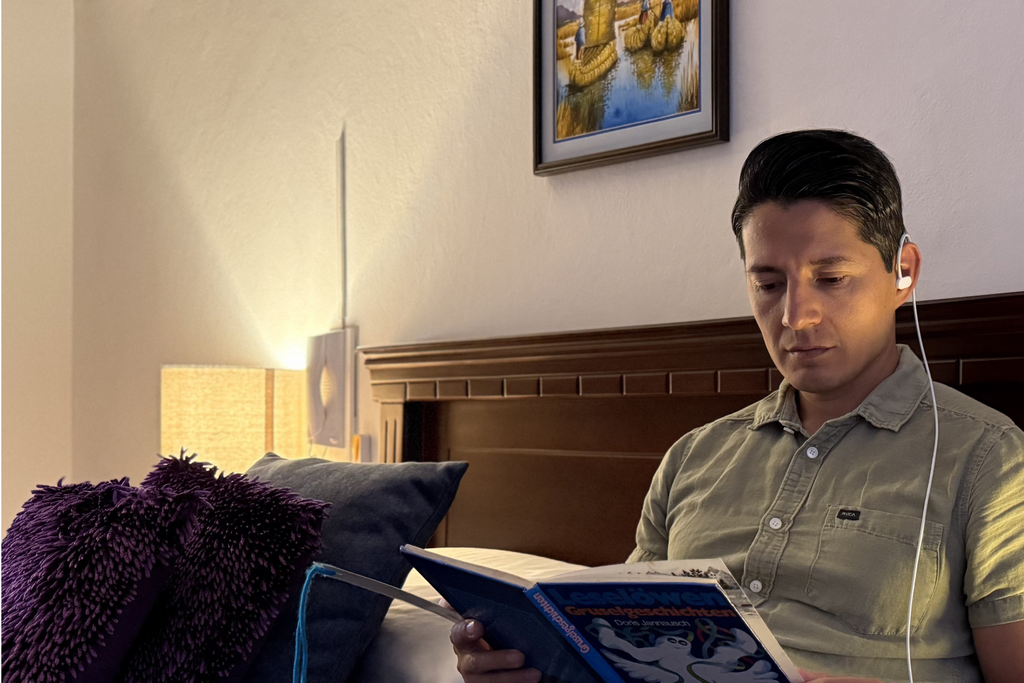
If a device needs my phone at bedtime, I can’t use it, whatever else it might do well. Nuropod doesn’t ask me to bring a screen into the routine. I moisten my ear, I clip it on, I read a few pages of an actual book. Subjectively, I stay asleep through the night more consistently when I use it than when I don’t, though it took a few weeks before I noticed that difference, consistency is what actually matters with this kind of stimulation, not any single session. That’s my own experience, not a clinical claim, and I’d encourage you to check the research yourself and weigh it against what actually matters for your situation.
Pulsetto isn’t a bad device. It’s a legitimate entry point into this category, and the neck-based, app-guided approach may genuinely suit people who don’t share my particular rule about screens before bed. But across the five things I actually checked, where the device reaches the nerve, independent evidence, no screen at bedtime, a cost that doesn’t creep upward, no extra steps at home or away, Pulsetto passed some. Nuropod passed all five.
Who Should Choose Which
Choose Nuropod if:
● You’d rather check published research that maps closely to the device and stimulation approach than take a brand’s word for it
● You want a bedtime routine that never involves a screen or an app ● You prefer a gentler, targeted ear-stimulation experience that can run comfortably in the background of your routine
● Skipping a gel step and one less thing to run out of actually matters for whether you stay consistent
● You’d rather pay once than deal with recurring gel costs or optional paid upgrades over time
● You want zero setup ritual, at home or away, not gel and app steps to repeat every night
Choose Pulsetto instead if:
● You’re comfortable using your phone right before sleep to run the session ● The neck-based, app-guided format suits your routine better than an ear clip ● You prefer a more noticeable, higher-intensity neck-stimulation experience and don’t mind adjusting the intensity to find your comfort level
● You want the lower upfront cost and don’t mind recurring gel costs or paying extra if you choose the Premium app
Do not use if you have a pacemaker or implantable cardiac device, are pregnant, have had a serious cardiac event in the last five years, or are under 18. Always consult a healthcare professional before starting any new intervention.
References
1. Zhang S, et al. Transcutaneous Auricular Vagus Nerve Stimulation for Chronic Insomnia Disorder: A Randomized Clinical Trial. JAMA Network Open. 2024;7(12):e2451217. https://doi.org/10.1001/jamanetworkopen.2024.51217
2. Geng D, et al. The effect of transcutaneous auricular vagus nerve stimulation on HRV in healthy young people. PLoS ONE. 2022. https://doi.org/10.1371/journal.pone.0263833
3. Tarn J, et al. The effects of noninvasive vagus nerve stimulation on tiredness. Neuromodulation. 2023;26(3):681-689. https://doi.org/10.1016/j.neurom.2022.08.461 4. Ferreira LMA, et al. Transcutaneous auricular vagus nerve stimulation modulates masseter muscle activity, pain perception, and anxiety levels: a double-blind, randomized, controlled clinical trial. Frontiers in Integrative Neuroscience. 2024. https://doi.org/10.3389/fnint.2024.1422312
I’ve linked directly to each study so you can read the underlying data yourself rather than take my summary of it on trust.