Forty-seven years after Sony shipped the first Walkman TPS-L2, the headphones that came with it are back at $59.99. The connector has changed from 3.5mm to USB-C, and Sony has added a microphone, in-line remote and updated driver tuning along the way.
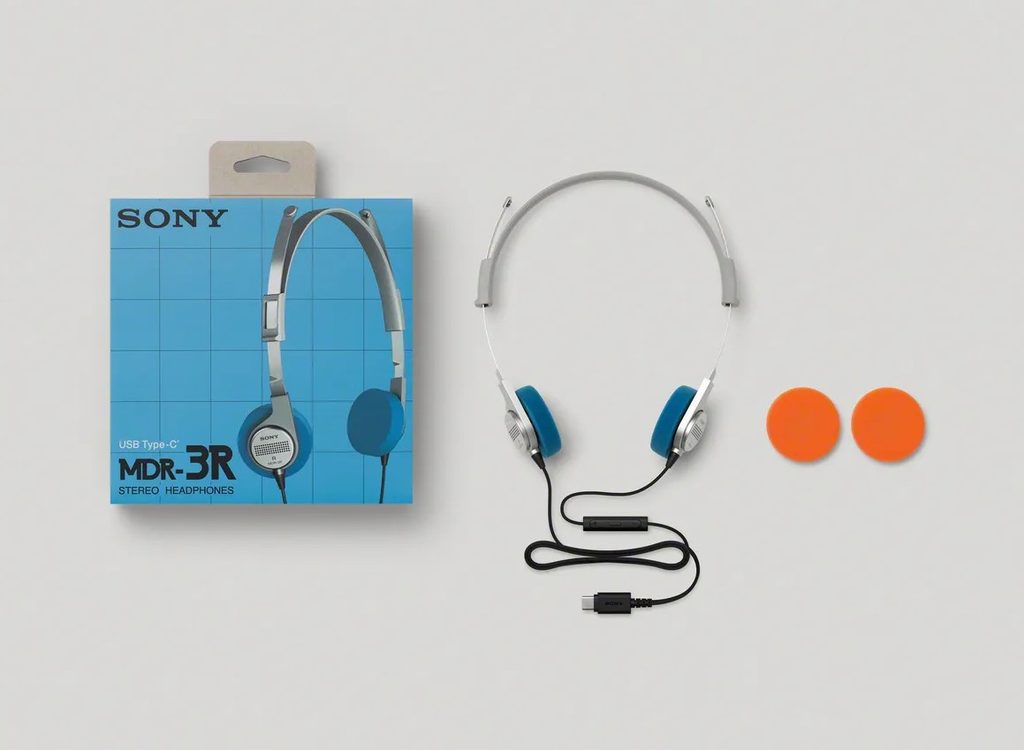
The original MDR-3 set the visual template for portable headphones in 1979. Sony has preserved that look on the MDR-3R: metal headband, square slider hinges, flexible top adjuster and lightweight on-ear foam construction.
Light Enough to Forget You’re Wearing It
At 38 grams, the MDR-3R is one of the lightest on-ear models in Sony’s current lineup, and its retro packaging reinforces the throwback positioning.
The standard model ships with two sets of replacement ear pads in blue and orange, period-appropriate colors that let owners choose their preferred look. The physical construction makes no effort to signal a modern headphone, and that restraint appears to be deliberate.
What Sony Actually Changed
The MDR-3R updates the original’s connector, adds hands-free controls and refines the driver, while keeping the plug-and-play simplicity that defined the first Walkman era.
The USB-C cable carries an microphone and in-line remote with controls for play, stop, track skipping, volume and voice assistant activation. According to Sony, the 23mm driver is based on the original model’s design but has been retuned for broader frequency response, particularly in the bass.
No battery, no pairing sequence and no app are required. Plug it into a USB-C device and it works, though owners of laptops or phones with only a 3.5mm jack will need an adapter.
The Stranger Things Edition Adds a Collectible Tier
A second MDR-3R variant ties the headphone to Netflix’s Stranger Things, targeting fans willing to pay a modest premium for themed branding.
Sony is also releasing an MDR-3R in collaboration with Netflix’s Stranger Things, priced at $79.99. The design uses a black headband with red and black ear pads and themed packaging, referencing the Walkman headphone styling associated with the character Max Mayfield in the show.
The $20 premium over the standard model reflects branding and packaging rather than a hardware difference. Sony’s published descriptions indicate both editions share the core MDR-3R platform.
Wired Audio’s Quiet Return
The MDR-3R enters a market where wired USB-C audio products are drawing fresh attention from both listeners and major manufacturers.
Sony positions the MDR-3R alongside a broader return to wired listening, citing renewed interest in products that require no charging, no Bluetooth pairing and no companion app. Bose has also moved into the USB-C wired category with noise-canceling earbuds, suggesting the segment is attracting renewed product investment.
The appeal is direct for a specific kind of listener: plug in, press play and the headphones work without setup or battery management.
What You’re Actually Buying
No wireless mode, no active noise cancellation: the MDR-3R’s case rests on recognizable design, minimal weight and uncomplicated wired use.
The MDR-3R offers no wireless mode and no active noise cancellation. Its value rests on a recognizable design with nearly five decades of cultural history, a 38-gram build suited to extended wear and wired simplicity that requires nothing beyond the cable.
At $59.99, the price is higher than many basic wired headphones. The MDR-3R is available through Sony’s own store, Amazon and Best Buy.