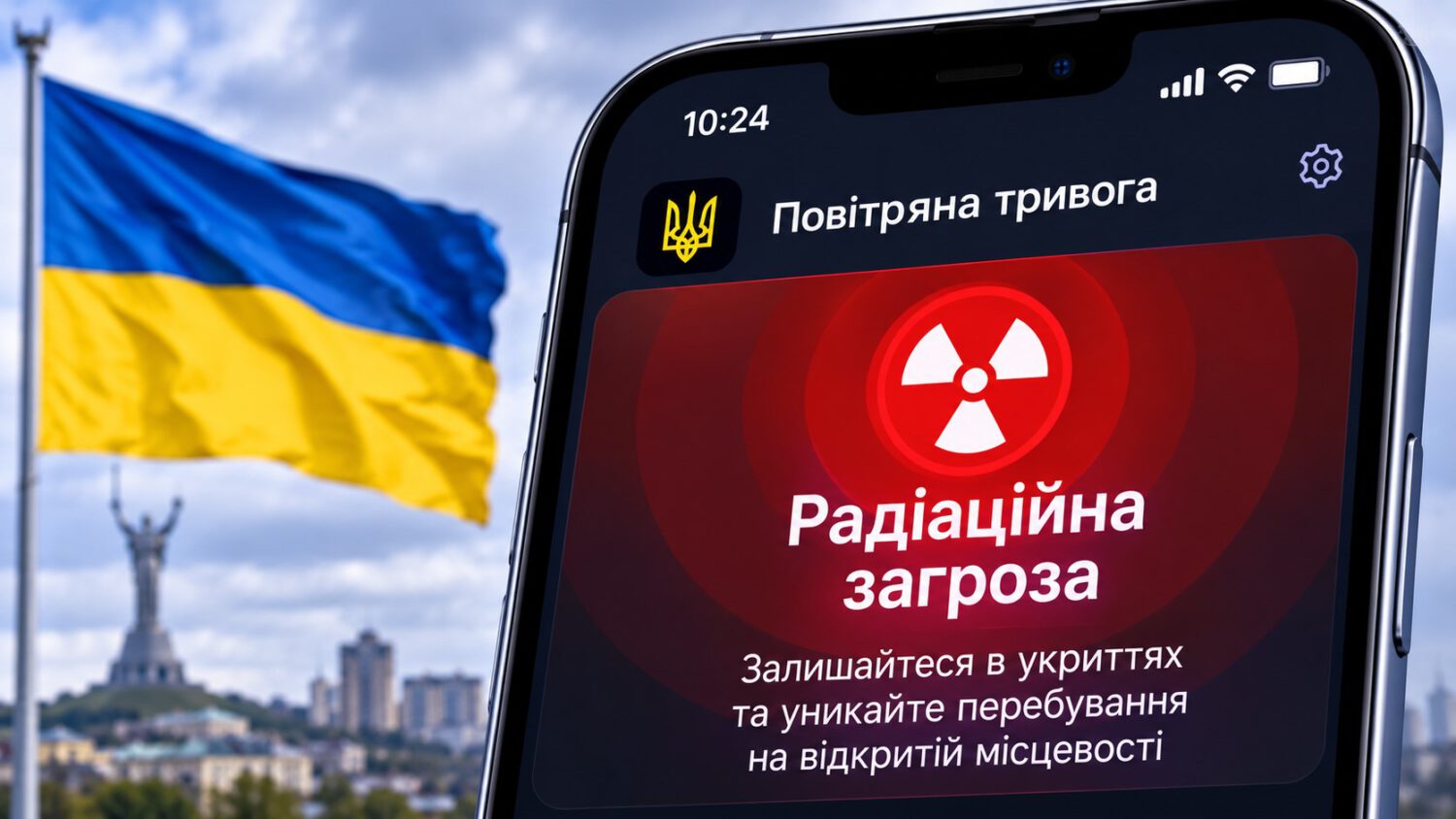
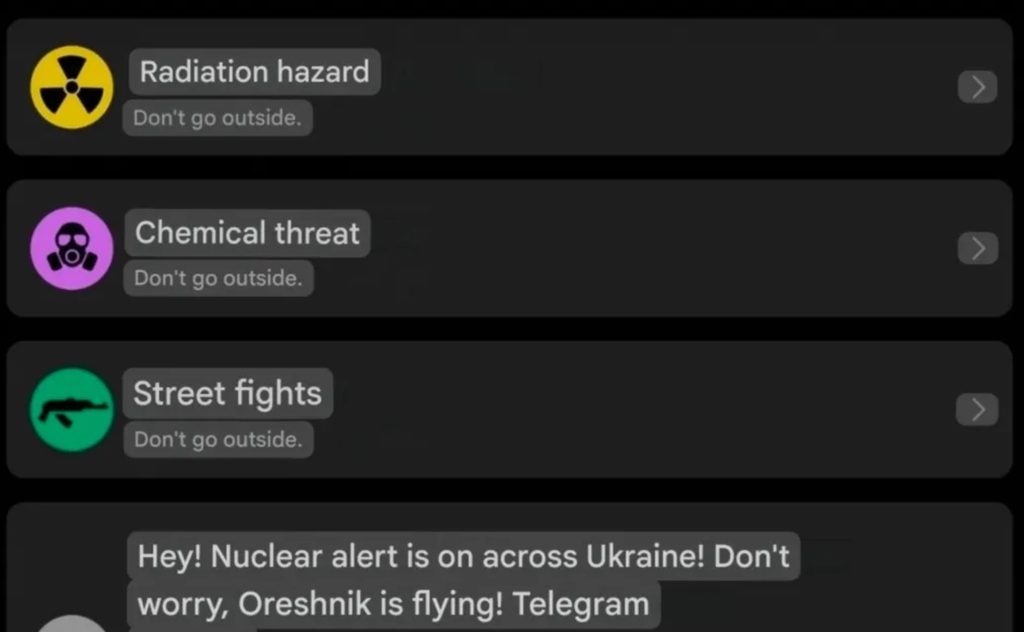
On the night of November 1–2, 2026, Ukraine’s Air Alert app sent false notifications directing users to shelter in place and use protective equipment. One Russian-language message read: “Don’t worry, an Oreshnik is in action,” and claimed a nuclear alert had been activated across Ukraine.
Oreshnik is a Russian hypersonic missile capable of carrying a nuclear warhead. No such strike occurred.
Authorities Moved Quickly to Contain the Panic
The Ukrainian Air Force denied any radiation threat and urged residents to rely on official channels.
The Ukrainian Air Force responded directly on Telegram: “The air alert app appears to have been subjected to enemy influence. There is no radiation threat! Stay calm and follow our updates on our channel.” The statement was reported by Reuters and corroborated by BBC and NBC News.
Ukraine’s air-raid sirens continued functioning during the incident. Other public warning channels remained operational throughout.
What Air Alert Is, and What Went Wrong
The civilian app was developed separately from Ukraine’s military warning systems.
Air Alert is a location-based civilian notification service built by Ajax Systems and Stfalcon, with support from Ukraine’s Ministry of Digital Transformation. According to the Ukrainian Air Force, it operates independently from military command infrastructure.
The app’s developers said unauthorized third parties had interfered with its operation. Push notifications were suspended, security measures were introduced, and the service was gradually restored.
Attribution Remains Unresolved
Ukrainian officials described suspected enemy interference, but responsibility has not been independently established.
Ukrainian officials and several reports characterized the incident as suspected Russian interference. That characterization has not been independently verified, and no official publicly confirmed who was responsible.
Hours after the Ukrainian incident, Russia’s own emergency-information app reportedly distributed similar false nuclear-attack warnings. Whether the two events were connected remains unclear.
Why Compromising an Alert App Is Its Own Kind of Attack
False warnings erode civilian trust in legitimate future alerts.
Disrupting a trusted civil-defense platform carries consequences beyond the immediate scare. A false nuclear warning can make residents less likely to respond to a genuine alert in the future.
The fabricated alerts combined multiple threats at once: nuclear warnings, radiation exposure, chemical danger, and reported street combat in Kyiv. Some notifications reportedly included links to a surveillance app channel. A cybersecurity expert quoted by the BBC flagged those links as a potential phishing or disinformation vector, though that risk was not confirmed as an established consequence of this incident.
Reuters reported that the false alerts were broadcast in Russian, which Ukrainian officials noted as an anomaly, since official communications are issued in Ukrainian. Language alone does not establish who carried out the intrusion.
Who was responsible remains officially unanswered. Millions of civilians rely on the app during an active war, and no public attribution has been made.