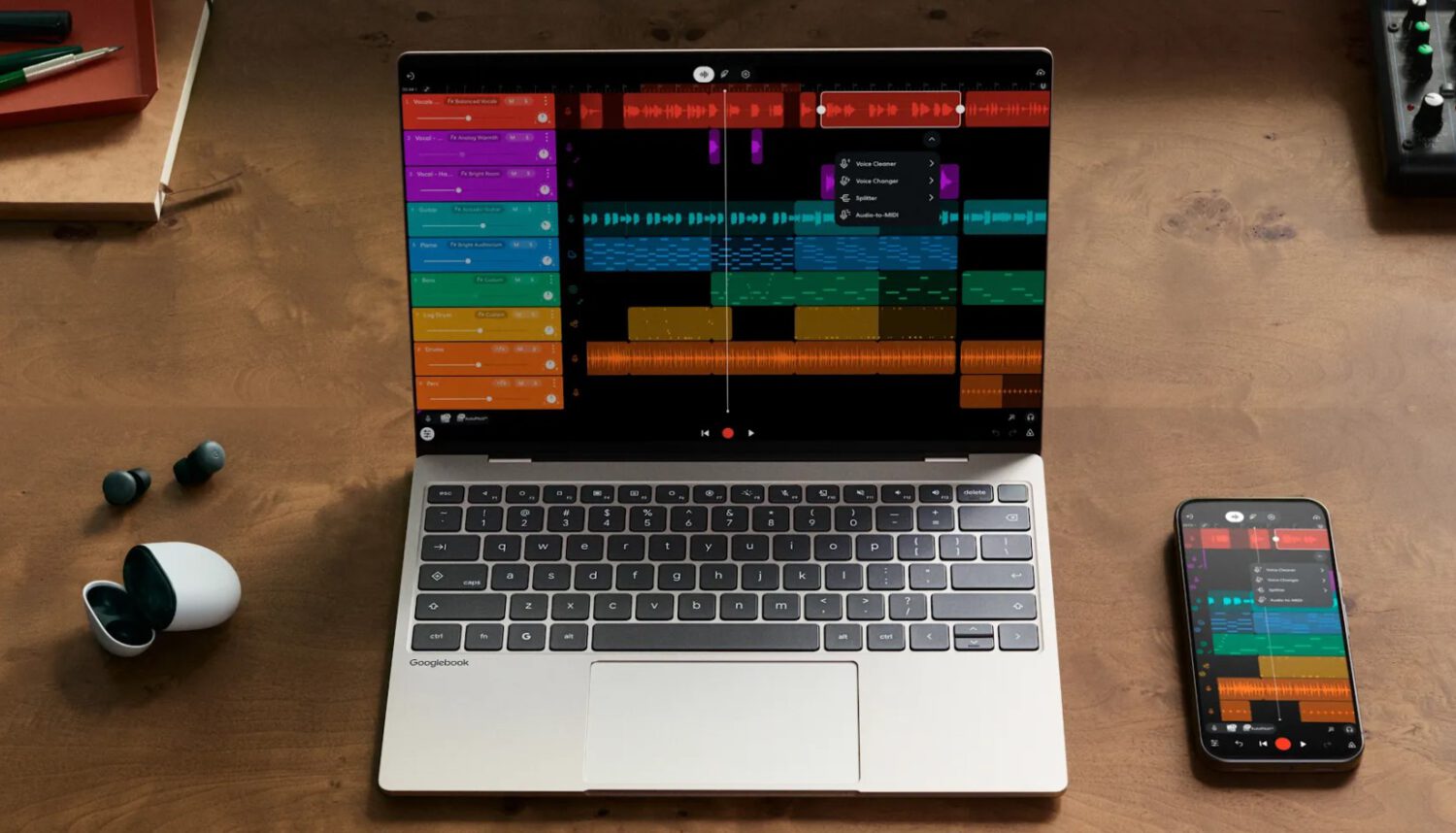
At Android Dev Summit 2026, Google reportedly confirmed that Googlebook OS will expand across “clamshells, convertibles, and soon detachables.” That single word, “soon,” is doing a lot of heavy lifting: no product name, price, launch date, or finalized specification accompanied the announcement.
Not a Convertible, Not a Tablet
The distinction matters more than it sounds.
A detachable is a tablet with a keyboard you can physically remove. A convertible keeps its keyboard permanently attached through a 360-degree hinge. For Googlebook OS, this is a meaningful shift: the platform has been designed around keyboard-and-trackpad input, and a detachable format demands it work equally well without either.
Lenovo’s Googlebook Duet m Is the Leading Candidate
Leaks paint a compelling picture; Lenovo has not confirmed a word of it.
Reports identify the Lenovo Googlebook Duet m as the likely first detachable Googlebook, though Lenovo has not announced the device. Leaks reportedly describe a 13-inch OLED display, 16 GB of RAM, and a MediaTek Dimensity CX C10 Max processor, though the processor name has been reported inconsistently across sources. Reported accessories include dual USB-C ports, a detachable keyboard with an integrated kickstand, magnetic wireless stylus charging, and a Glowbar near the camera.
FCC filings for a Lenovo detachable keyboard and stylus provide some regulatory evidence that accessories are in development. FCC certification does not confirm a commercial launch or lock in final specifications.
Portrait Mode Is Still a Problem
Googlebook OS handles tablet orientation unevenly, and that gap matters considerably without a keyboard attached.
Current Googlebook OS handles portrait orientation unevenly. Apps can open full-screen in portrait, but the home screen, Overview interface, and app tray remain locked to landscape. Detach the keyboard, hold the device vertically, and the core navigation layer still behaves like a laptop. Google and Lenovo have not announced a timeline for addressing this, and the limitation raises questions about whether the software will be ready when the hardware arrives. Readers evaluating platform readiness may recognize these as familiar computer problems.
Premium Positioning, Unverified Price
If the leaked specs hold, this device lands far above entry-level Chromebook territory.
A 13-inch OLED panel, active stylus, and 16 GB of RAM would place the rumored Duet m in the same conversation as premium Android tablets, iPad keyboard combinations, and Microsoft Surface devices. Reporting also suggests that MediaTek-based hardware could improve Android app compatibility compared to Intel-powered Googlebooks, though that remains an inference while the specifications are unverified.
Laptop With a Removable Keyboard, or a Real Tablet?
The answer depends on software Google has not yet delivered.
Google and Lenovo have not announced a launch date or price for a detachable Googlebook. What does exist is a confirmed platform direction and a collection of leaks pointing at a single Lenovo device. The central question for buyers: will Googlebook OS be genuinely optimized for keyboard-free tablet use by the time a detachable reaches shelves? Or will the OS still behave as though it is waiting for something to plug in?