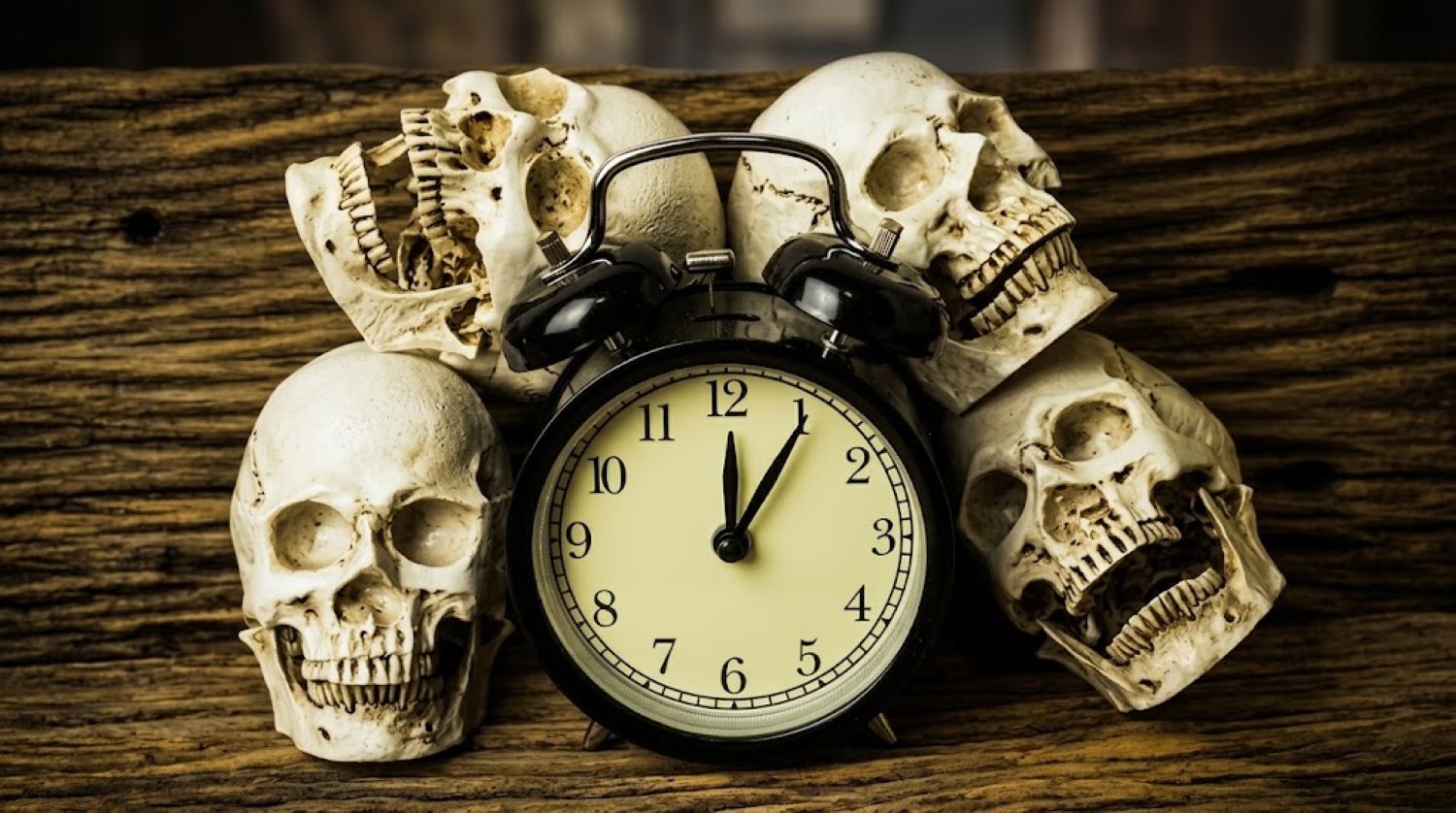
Death Clock asks users to input health habits and lifestyle data, generates a projected death date, and offers recommendations intended to extend their lifespan. Operating under the slogan “Know your date, change your fate,” the app positions mortality as a metric that can be tracked and improved.
What the App Actually Does
The experience combines a longevity countdown with biomarker testing drawn from a network of established lab providers.
The company says its AI draws on more than 1,200 longevity studies, actuarial data from life-insurance companies, and life-expectancy tables. Users can track biomarkers including cholesterol, blood sugar, inflammation, kidney function, and heart rate; their projected lifespan updates as those measures change, according to the App Store listing.
Blood testing is available through a $69 annual subscription covering a basic panel, according to reporting by The Verge; additional panels covering thyroid, heart and artery health, and liver function are available at higher cost. The company’s Life Lab offering runs testing through Quest, Labcorp, and BioReference locations, with packages beginning around $99, according to a Death Clock press release.
To illustrate the experience: one writer’s initial estimate landed at August 10, 2060, according to the article brief, which did not specify the writer’s birth year. Entering a family history of diabetes dropped the projection by one year, and logging behaviors including strength training, avoiding alcohol, and improving sleep added 5.8 years to the estimate, according to the same brief. These results are unverified anecdotal accounts and do not represent validated product performance.
Where the Science Diverges
Expert criticism focuses on the gap between population-level statistics and any individual’s actual lifespan.
Mike Ludkovski, a researcher at the University of California, Santa Barbara whose work includes longevity analysis, has said that individual lifespan cannot be forecast with true precision because the events leading to death are inherently random, according to Wired. A 2024 study published in Aging Cell identified meaningful limitations in epigenetic aging clocks, though the study’s direct URL was not available for independent verification and its conclusions should not be overstated.
Death Clock CEO Brent Franson has acknowledged that large-scale blood testing can produce false positives and confusion in people without symptoms, according to The Verge. The app implicitly makes three distinct claims. It assesses health risk, motivates behavior change, and predicts an individual death date; the first has precedent in validated clinical medicine, while the third does not.
The Psychological Question
Whether a mortality countdown encourages healthier habits or simply intensifies anxiety is a question behavioral research has not resolved.
Measuring a health variable can create the feeling that an outcome is controllable even when the underlying outcome is not, according to the research brief; no independently verified source for that claim was available. Fear alone may increase anxiety rather than produce durable behavior change, according to the same brief.
A Crowded Market
Death Clock competes in a growing field of AI-driven longevity platforms that blend biomarker testing with personalized health guidance.
Death Clock operates alongside services such as Doctronic, Superpower, Lifeforce, and Twin Health, though those companies offer materially different products and should not be treated as interchangeable. A market figure of $8 trillion by 2030 has been cited for the longevity sector, but the source and methodology behind that estimate were not available in the research materials and the figure should be treated as unverified. Scientists have also explored adjacent frontiers in extending life, such as reviving frozen brain tissue after extended deep freezes.
What Remains Useful
The app’s most defensible value may lie in its standard preventive recommendations rather than in the precision of its countdown.
The recommendations Death Clock offers, including improved sleep, regular exercise, appropriate screening, and blood-pressure management, reflect broadly accepted preventive medicine. Whether a projected death date is the right mechanism for delivering those recommendations remains an open question that current research does not answer. Consumers evaluating such tools may also find value in reviewing AI-powered websites that address health and productivity more broadly.