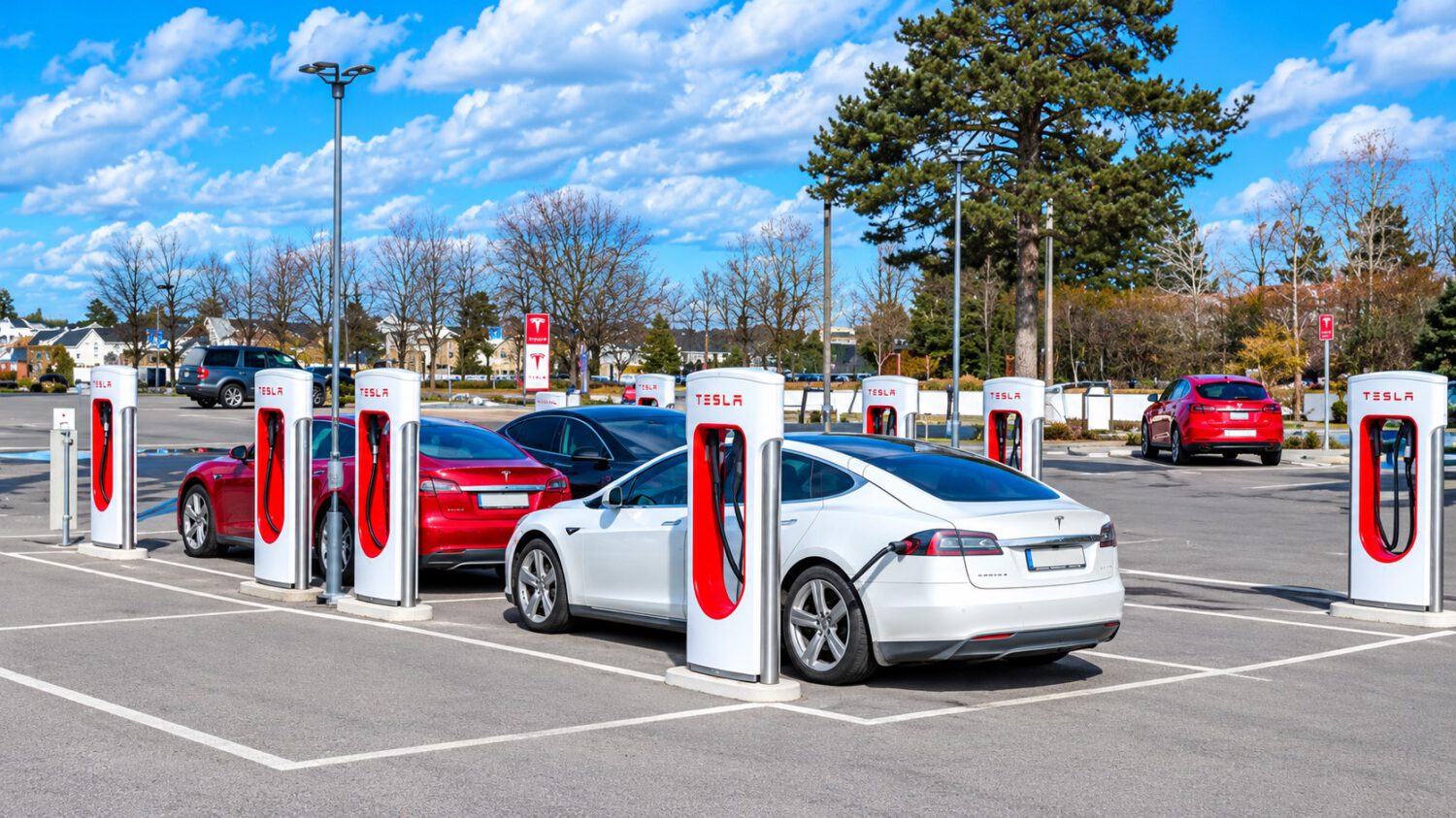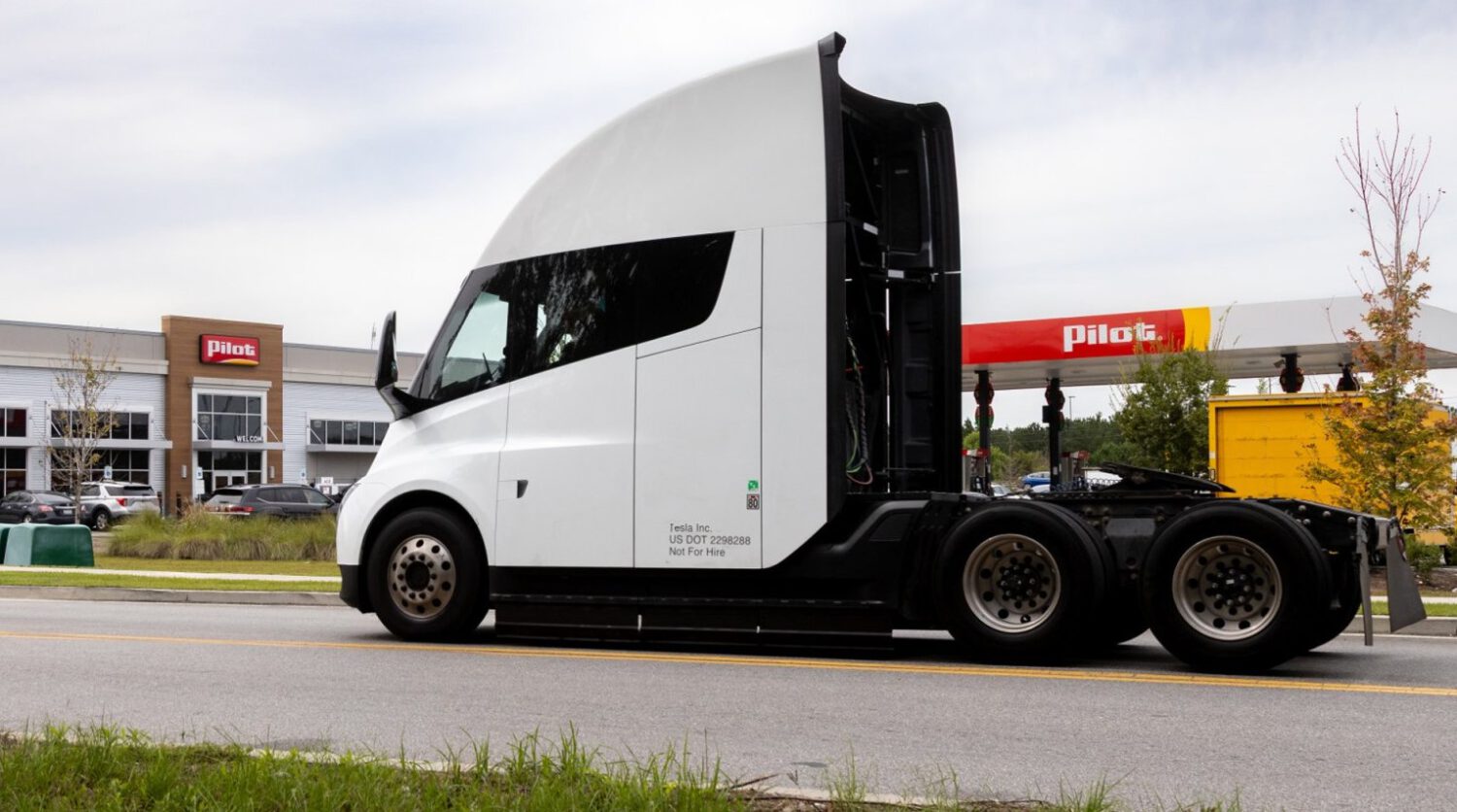
Pilot Travel Center #1390 in Ellabell, Georgia, became the first public Megacharger site for the driverless Tesla Semi outside California, opening six high-power stalls at an established truck stop on a major East Coast freight route. A Flying J location in Tulare, California, followed the next day.
Until this rollout, Tesla Semi charging was largely concentrated at company depots, fleet facilities, and a handful of customer-facing sites within California. Placing Megachargers at Pilot and Flying J centers puts them where truck drivers already stop: freight corridors with fuel, food, rest facilities, and vehicle services.
What the Chargers Actually Deliver
Tesla’s charging claims align neatly with federal rest requirements, though peak figures come with real-world caveats.
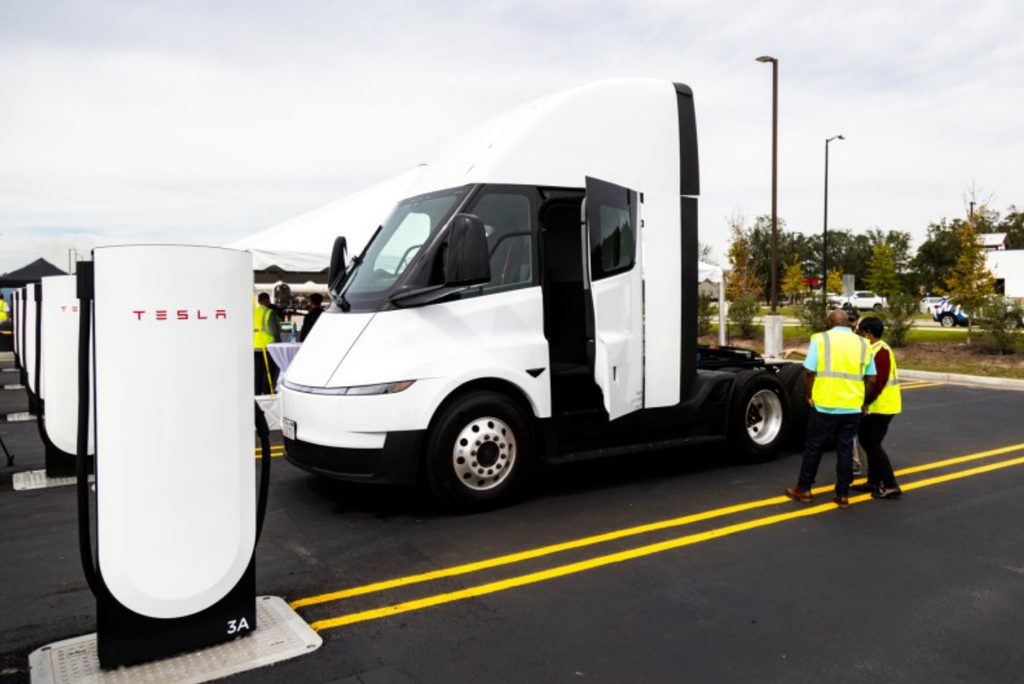
Each Megacharger is rated at up to 1.2 megawatts and can restore approximately 60% of a Semi’s battery capacity in 30 minutes, according to Tesla. Federal hours-of-service rules generally require a 30-minute interruption after eight cumulative hours of driving, creating a window where charging and rest could run concurrently.
The 1.2-megawatt figure is a peak capacity, not a guaranteed session rate. Actual delivery depends on battery state, thermal conditions, charger availability, and the vehicle’s own limits.
The Rollout Map
Fort Stockton and North Las Vegas are next, as Pilot reports a dozen more heavy-duty charging locations already under construction.
Fort Stockton, Texas, and North Las Vegas, Nevada, are next in the pipeline, both under construction when Ellabell opened. Pilot also reported 12 additional heavy-duty charging locations under construction at that point.
Tesla’s broader targets, as reported by The Drive and attributed in part to Semi program lead Dan Priestley, call for approximately 37 Megacharger sites operational in 2026, rising to 46 by early 2027, with more than 200 megawatt-capable posts running by the end of 2026. Those figures have not been confirmed by a Tesla filing or official announcement and should be treated as reported targets rather than verified commitments.
The Compatibility Question
The chargers use an emerging heavy-duty standard, but access today is limited to Tesla vehicles only.
Secondary reporting identifies the Pilot and Flying J chargers as using the Megawatt Charging System connector, an emerging heavy-duty standard, though the primary Pilot announcement describes Tesla V4 cabinets and 1.2-megawatt output without explicitly naming the MCS connector. Daimler and Volvo are also developing electric trucks built around MCS-compatible charging, giving this infrastructure potential relevance beyond Tesla’s own fleet.
Current sites are Tesla-exclusive. Tesla has indicated, per reporting by The Drive, that other manufacturers could eventually gain access, but neither Tesla nor Pilot has announced a timeline or commercial terms for expanded use.
What Still Needs to Work
Geographic continuity, charger uptime, and access for non-Tesla trucks remain the tests that matter most to fleet operators.
The Ellabell site is reported to use a back-in configuration rather than a pull-through layout, a detail worth attention for fleet operators evaluating site usability under tight schedules. That configuration can add maneuvering time and complexity for some tractor-trailer combinations, though the layout has not been confirmed by an official site plan or Tesla documentation.
Geographic continuity remains the larger test. A handful of high-powered locations cannot support long-haul routes unless drivers can reliably reach the next charger with meaningful reserve capacity.
The operational Tesla Semi fleet is still limited in size, meaning the infrastructure buildout may be running ahead of current vehicle demand. Whether MCS sites eventually open to Daimler, Volvo, and other electric-truck makers will determine how quickly utilization grows and whether Pilot’s investment in heavy-duty charging pays off beyond a single manufacturer’s fleet.