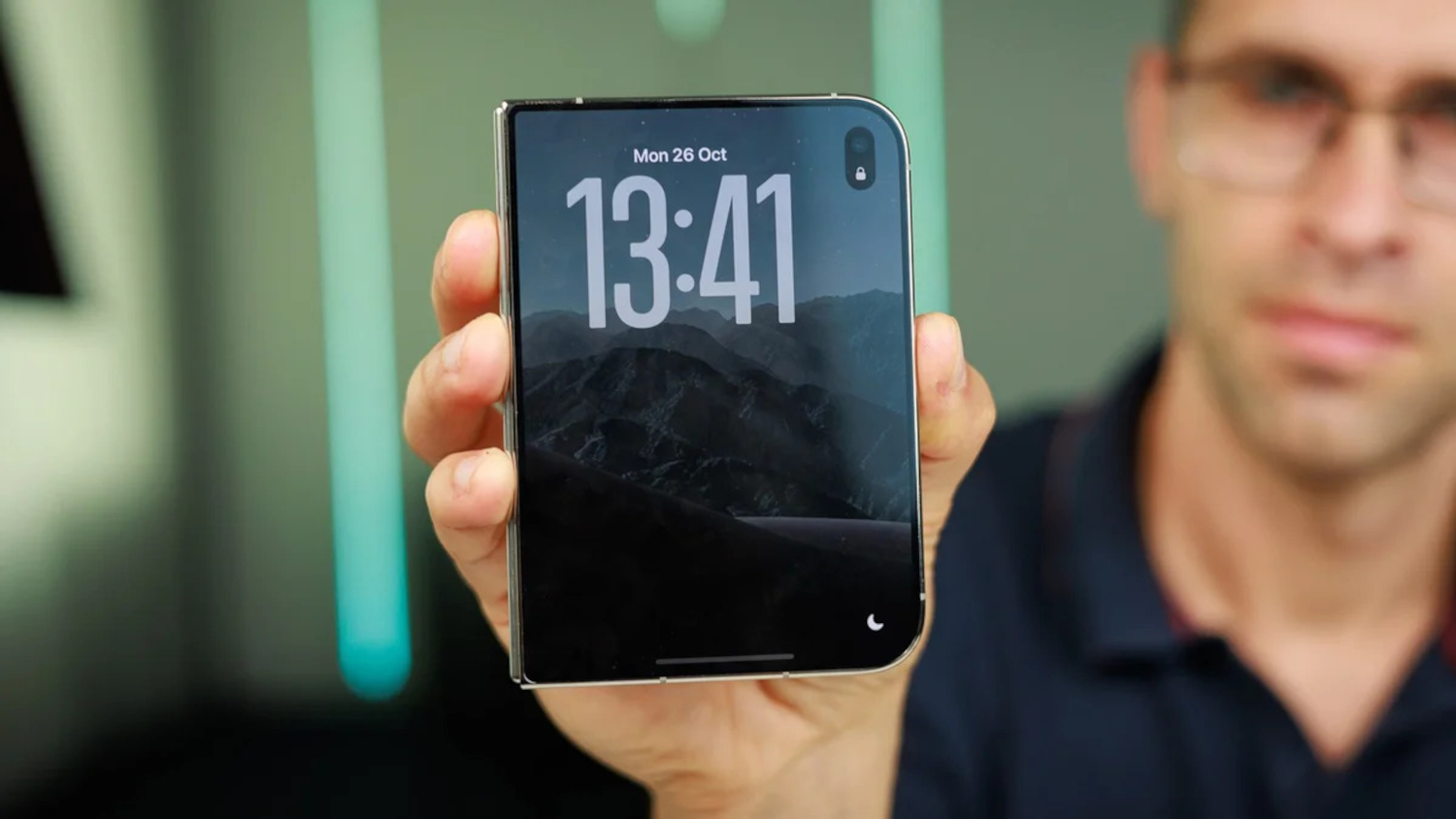
For the first time in Mac history, the display you stare at all day responds when you touch it. Apple announced the MacBook Pro with PROLED XDR Display on October 28, 2026, combining Touch input, a tandem OLED panel, M5-series processors, and a lighter chassis into what the company is calling a ground-up redesign of the professional notebook.
This is not a feature update. Apple is presenting the MacBook Pro as a unified platform where display quality, direct manipulation, local AI, and portability reinforce each other rather than compete for priority. Readers comparing Apple silicon options may also want to look at the Mac Mini and Mac Studio announcements.
A Display Built for People Who Get Paid to Care About Color
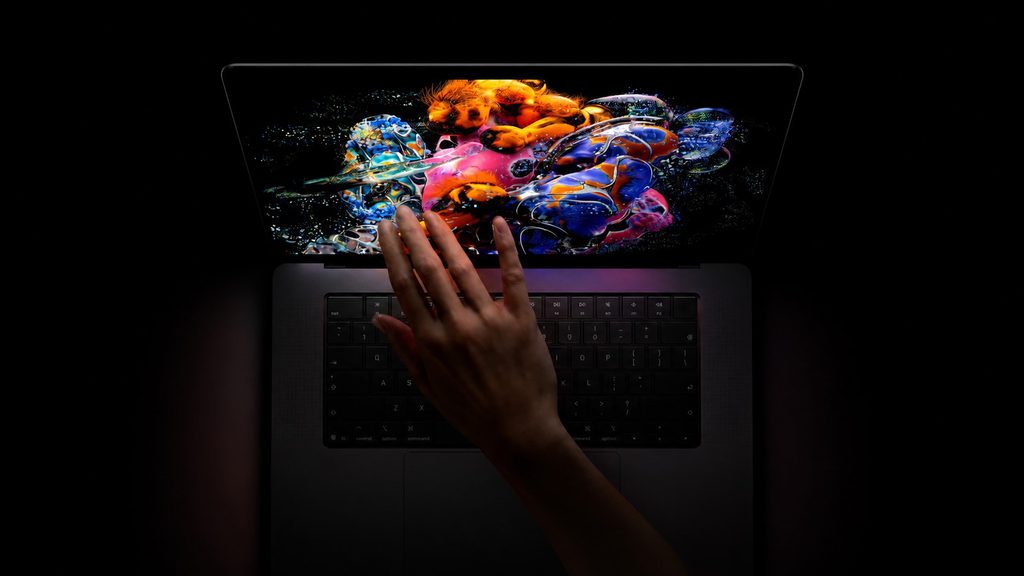
The PROLED XDR panel targets color-critical professionals with Apple’s highest-ever contrast and brightness figures.
The PROLED XDR panel uses tandem OLED technology, stacking two self-illuminating pixel layers to reach what Apple claims is 2,000 nits of peak HDR and SDR brightness with a 10,000,000:1 contrast ratio. ProMotion keeps the refresh rate adaptive between 10Hz and 120Hz depending on what you are doing. Advances in OLED technology have made panels like this possible.
For colorists and photographers, the panel covers the color spaces P3 and Adobe RGB and more than 80 percent of the Rec. 2020 gamut. That puts it squarely inside the range HDR delivery pipelines and high-end print workflows demand.
Touch Arrives on Mac, and It Is Baked In
Apple built Touch directly into the display panel, which the company says reduces input latency compared to a layered approach.
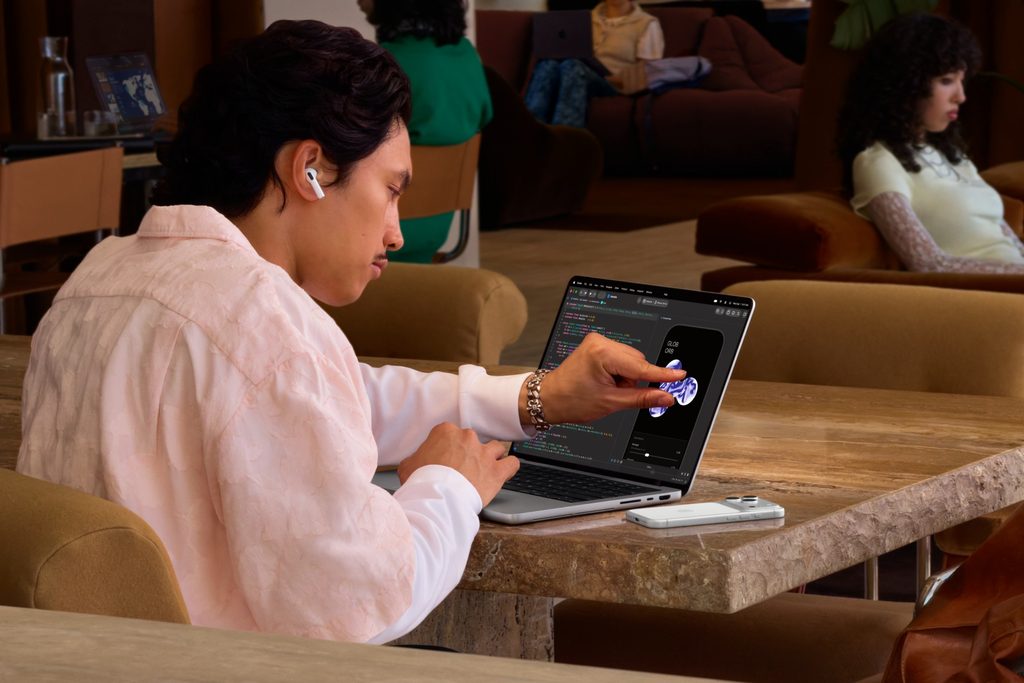
Apple integrated Touch directly into the display panel rather than adding it as a separate layer on top. The practical result: scrolling, zooming, drawing, and playing software instruments in Logic Pro all happen on the same glass surface you are already looking at.
If you have ever manipulated a color node in DaVinci Resolve on an iPad, the workflow implication is immediate. That same directness now runs on a machine with desktop-class processing behind it.
Apple says compatibility extends to Final Cut Pro, Adobe Lightroom, Blender, Cinema 4D, ZBrush, and Microsoft Office, among others. The company also says macOS translates many touches into standard clicks automatically, and that developer APIs allow apps to build touch-specific interactions from the ground up.
M5 Chips and Local AI for Sensitive Workflows
Apple’s M5 Pro and M5 Max chips power the new MacBook Pro, with the M5 Max capable of running large language models entirely on-device, according to Apple.
Configurations scale to 128GB of unified memory and 16TB of storage. Apple’s investment in custom silicon means the M5 Max can run large language models with hundreds of billions of parameters entirely on-device, which addresses a real operational concern for production studios or research environments where sending data to an external cloud is not an option. All performance figures are Apple’s manufacturer claims; independent benchmarks are not yet available.
Lighter, Longer-Lasting, and Well-Connected
Both models arrive thinner and lighter than their predecessors, with Apple claiming up to 24 hours of battery life.
The 14-inch model weighs 3 pounds and the 16-inch model weighs 4 pounds, reductions of half a pound and 0.7 pounds respectively over the previous generation, according to Apple. Both models carry Apple’s claim of up to 24 hours of battery life. Connectivity includes three Thunderbolt 5 ports, HDMI, an SDXC card slot, MagSafe, Wi-Fi 7, and Bluetooth 6, and the machines ship with macOS 27, which Apple is calling Golden Gate.
Pricing and Availability
Pre-orders opened October 28, with the 14-inch M5 Pro starting at $2,899 and shipments beginning November 6.
The 16-inch M5 Pro starts at $3,399. The 14-inch M5 Max starts at $4,499, while the 16-inch M5 Max starts at $4,799.
If your current MacBook Pro handles your workload without complaint, the upgrade math is hard. If your daily work lives inside color-critical or touch-adjacent creative tools, the calculus just got more interesting.