Tesla executives have described a future where Optimus participates in logistics and last-mile delivery. Amazon has already deployed more than 1 million robots supporting its fulfillment operations today.
The gap between those two realities is the most important thing to understand about Tesla’s latest robotics pitch.
In a recent Munro Live interview, Tesla executives Lars Moravy and Eric Earley described Optimus as a potential component of a broader transportation stack, one that includes Cybercab, Robo Van, and Tesla Semi. The concept positions Semi for long-distance freight, autonomous vehicles for movement, and Optimus for flexible physical tasks that fixed warehouse machinery cannot handle.
The Vision Tesla Is Selling
Moravy and Earley outlined a staged role for Optimus, moving from controlled fleet environments toward eventual delivery applications.
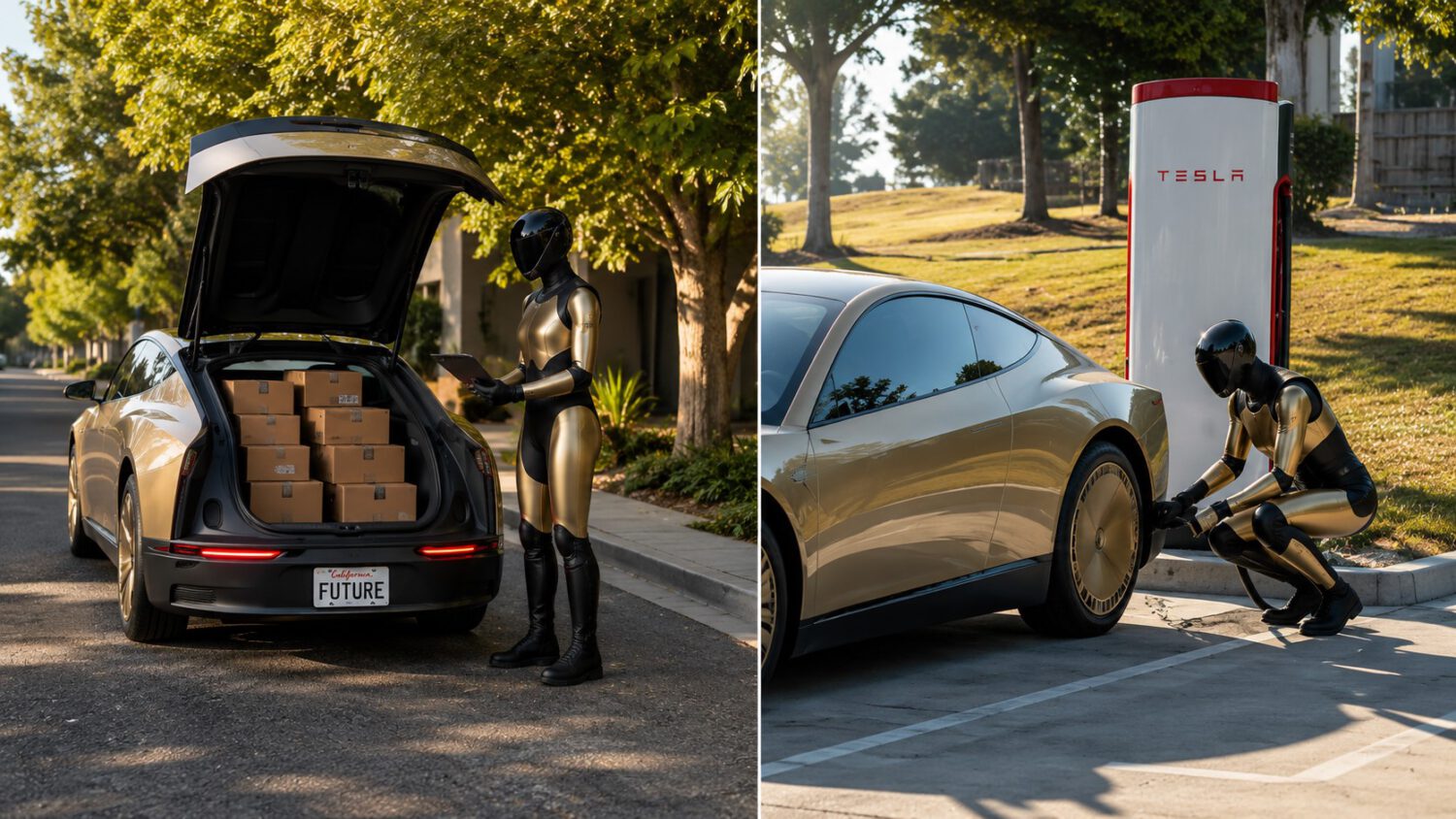
The executives described Optimus starting by charging Tesla’s robotaxi fleet inside controlled environments, then potentially moving into vehicle servicing. Further out, they suggested the robot might “add in the delivery space,” according to the Munro Live interview paraphrase. These remarks represent executive speculation, not a confirmed product, customer contract, or launch timeline.
A general-purpose humanoid robot capable of loading cargo and navigating varied physical environments offers something purpose-built warehouse machines cannot. That flexibility would directly complement Tesla’s autonomous vehicle ambitions.
What Amazon Already Built
Amazon’s fulfillment network, with more than 1 million coordinated robots, represents a scale that Optimus has not approached.
Amazon’s logistics operation runs more than 1 million robots across its fulfillment network, coordinated through its DeepFleet fleet-management system, according to Amazon’s corporate reporting. Those robots are purpose-built for specific warehouse tasks, including transport, sorting, and fulfillment-center movement.
Here is the sharpest factual contrast in this story. Agility Robotics’ Digit, not Optimus, is the humanoid robot with documented warehouse deployments: Digit has been deployed with GXO Logistics in warehouse operations, while Amazon-related activity has been described as a pilot or trial rather than a confirmed commercial arrangement. Tesla has not publicly demonstrated a comparable deployment of any kind.
The comparison is not between two equivalent delivery networks. It is between an operating infrastructure and a proposed one.
The Hardware Reality
Optimus carries a roughly 2.5 kWh battery module, but delivery work would demand capabilities the robot has not yet publicly demonstrated.
Moravy and Earley noted that Optimus runs on a single battery module of roughly 2.5 kWh. They also said the battery represents a relatively small share of the robot’s total cost, unlike an EV pack that can account for a quarter to a third of vehicle cost. Both claims come from the Munro Live interview paraphrase and have not been independently verified from a primary source.
Delivery work, however, demands far more than controlled charging environments. Sustained outdoor operation involves lifting varied package sizes, navigating sidewalks and curbs, managing weather exposure, and handling frequent stops. No publicly documented Tesla demonstration has covered a complete Optimus-powered delivery workflow across those requirements.
What Would Need to Change
Reliable outdoor autonomy, battery endurance, and regulatory clearance are among the thresholds Optimus has not yet publicly cleared.
Before Optimus could credibly enter the delivery space, Tesla would need to demonstrate reliable autonomous operation outside controlled factory environments. Battery endurance for practical work shifts remains unproven at scale.
Consistent manipulation of packages with varied shapes, weights, and materials would also need to follow. So would regulatory clearance for public-space operation, which varies by jurisdiction and has not been established for Optimus in delivery contexts. Broader questions around workplace safety for robots operating alongside humans also remain unresolved.
The unit economics would need to compete with existing combinations of human labor, delivery vans, and specialized warehouse systems that logistics companies have refined over years. No publicly available evidence suggests those thresholds have been met.
What This Means for You
Tesla’s delivery vision for Optimus is a credible long-term signal, but execution is the part that does not yet exist.
If you follow Tesla closely, the Munro Live interview indicates where the company wants to take Optimus beyond factory automation. Whether that ambition translates into an operating logistics rival for Amazon depends on execution that remains prospective. Optimus deployment data from Tesla’s own facilities will be the earliest honest indicator of whether the delivery vision has any foundation beneath it.