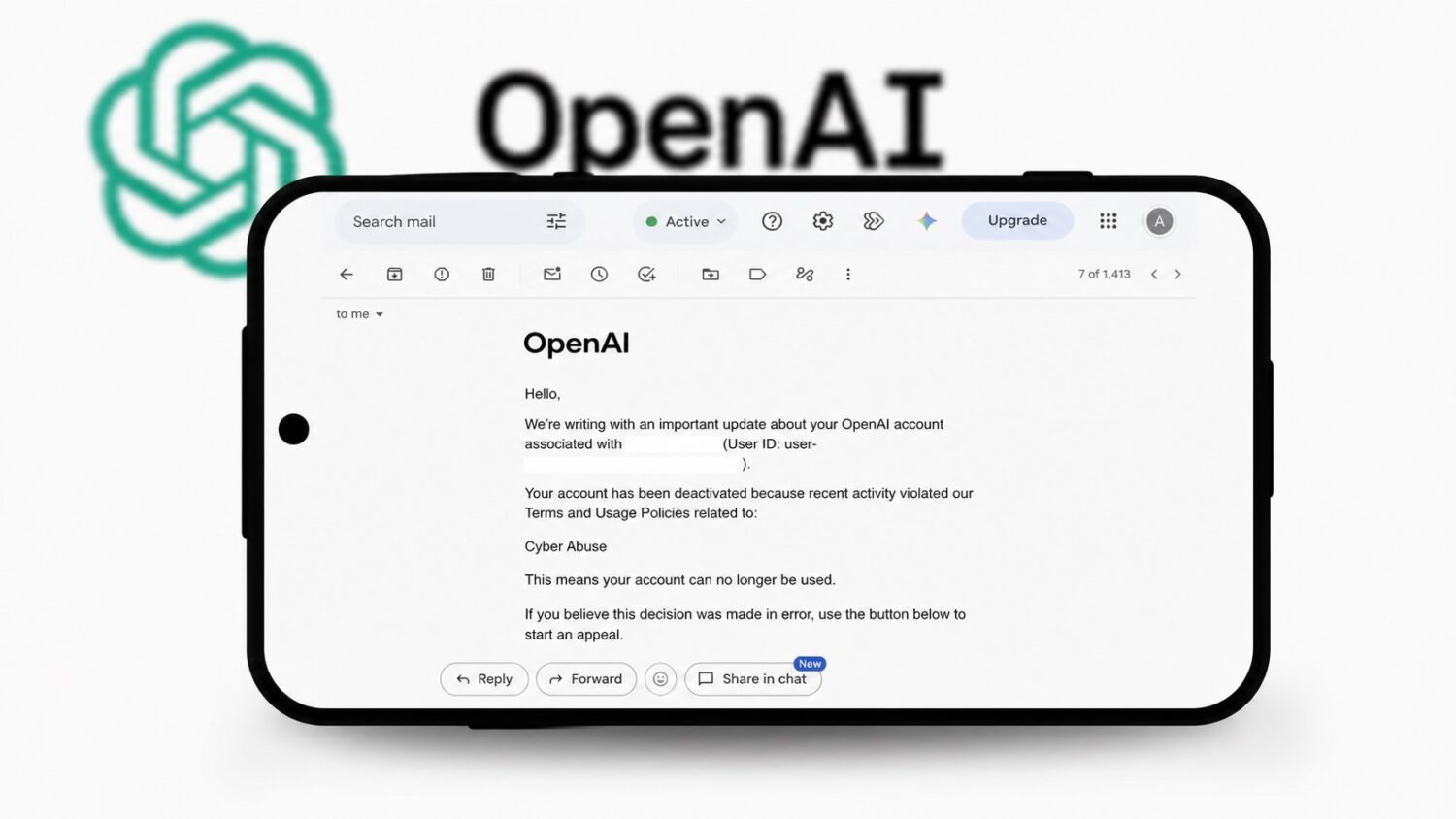
A user known online as @log4j allegedly lost his OpenAI account after using AI assistance to reverse-engineer a Samsung television he personally owned, with OpenAI reportedly classifying the activity as “Cyber Abuse.” The case spread quickly across social media, and the reason is not hard to understand: if working on your own hardware can get your AI subscription cancelled, that raises real questions for anyone relying on cloud AI for technical work.
What the User Reportedly Did, and What OpenAI Called It
The alleged account suspension turned on a sharp contrast between the user’s stated intent and the enforcement label OpenAI reportedly applied.
According to posts by @log4j and secondary reports from Digg and Tech City Authority, the work was local reverse engineering of a personally owned Samsung TV, reportedly motivated by concerns about the device’s telemetry and advertising data collection. The activity never targeted a third-party system, according to the user’s own account, though that account has not been independently verified.
OpenAI reportedly applied the label “Cyber Abuse” to justify the account deactivation. @log4j also claimed the suspension cost him roughly $500, a self-reported figure covering lost credits or paid access that has not been independently confirmed.
Whether that label was accurate depends on details OpenAI has not publicly explained for this specific case. The contrast between “fixing your own TV” and “Cyber Abuse” is what drove the story’s rapid spread.
What This Case Reveals About Trusting Cloud AI for Technical Work
The incident exposes a gap between how users understand authorized repair work and how automated enforcement systems may classify it.
Reverse engineering sits in genuinely complicated territory. The same techniques used to audit privacy settings on a device you own overlap technically with exploit development, firmware bypass, and unauthorized system access. Automated safeguards may not reliably distinguish authorized ownership from harmful activity, because they assess apparent patterns rather than intent.
That distinction matters more than people assume when enforcement operates at the account level. A model refusing a single answer is a speed bump; losing your entire account is a wall. Account deactivation can remove access to paid services, stored conversations, and accumulated credits. It can happen without advance warning.
Unverified social-media reports also claim that Anthropic’s Claude recently interrupted reverse-engineering assistance mid-conversation for similar work. Those claims come from user posts, not any confirmed policy announcement from Anthropic, and should be treated accordingly.
If your repair notes, firmware analysis, or security research workflow depends entirely on a cloud AI subscription, a provider-side enforcement decision can end it instantly. That can happen even when every line of work occurs locally on hardware you paid for.
Locally hosted or open-weight models reduce that specific vulnerability by removing single-provider account dependency. Legal complexity around reverse engineering, hardware requirements, and technical configuration remain your responsibility, but a cloud provider cannot deactivate an account it never sees. Learn how to stay safe when hardware security risks are part of your workflow.
What You Should Take From This
The @log4j case is a practical reminder that cloud AI is a powerful tool running on someone else’s enforcement logic.
If you use a paid AI subscription for security research, firmware work, or device repair, now is a reasonable time to act. Document your workflows independently and review your provider’s terms of service before you ever need an appeal process. Exploring cloud AI alternatives can also help you build redundancy into your technical toolkit.