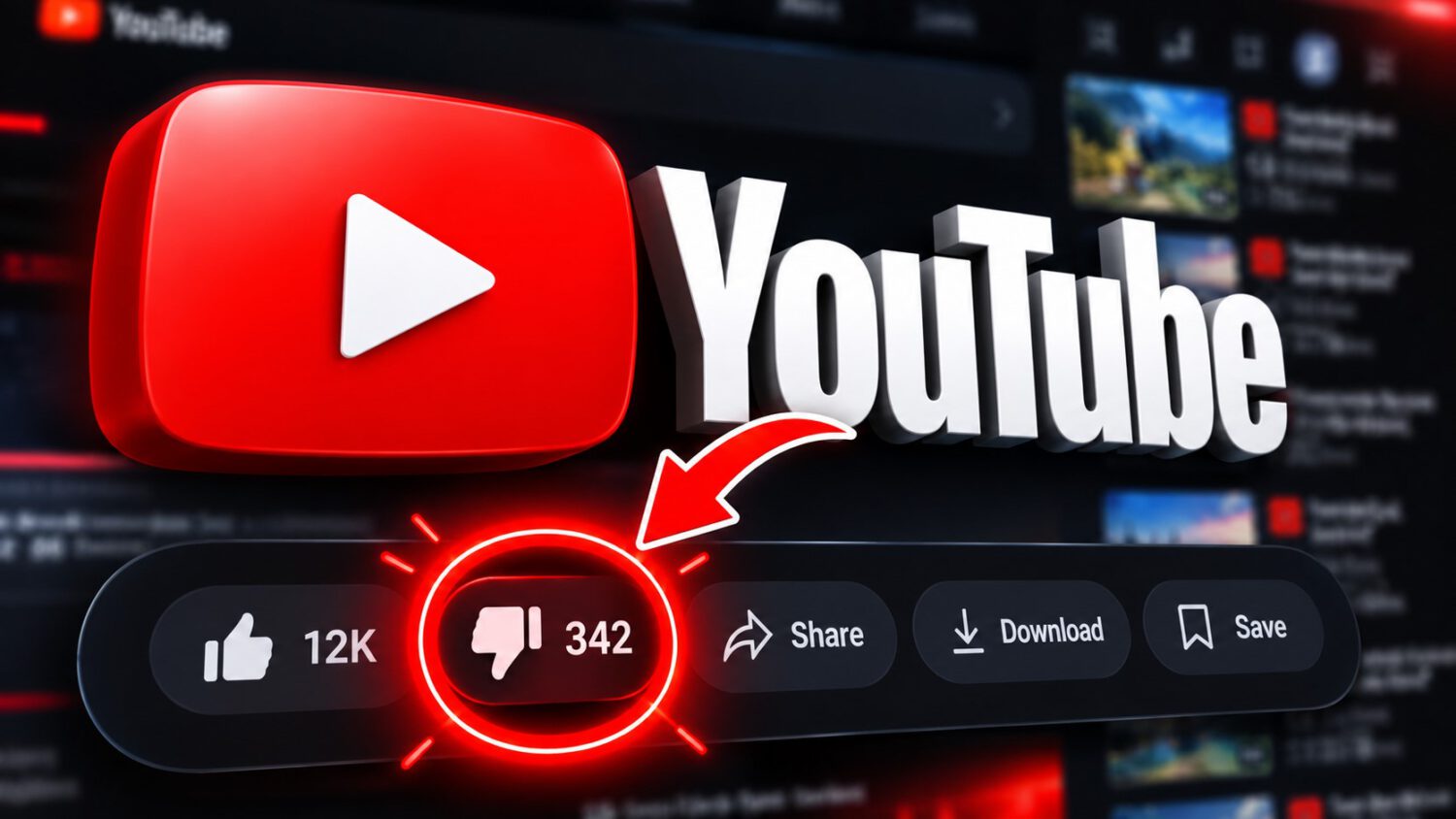
Some desktop users may find that the Dislike button is no longer where it used to be. That is the experience YouTube is reportedly testing right now, and the reaction from viewers and creators has not been positive.
A limited interface experiment appears to move the Dislike button out of the main video-control row and into the three-dot overflow menu, according to reporting by 9to5Google. The Like button remains in the primary control row, visible beside Share and Save, while Dislike reportedly appears next to Report in that secondary menu.
This is not a platform-wide removal. Reports indicate that many users still see Dislike in its usual position.
What the Test Actually Shows
The available evidence confirms a limited test, not a permanent redesign.
Here is what reporting does and does not establish:
- Dislike reportedly appears inside the three-dot overflow menu on desktop, next to Report, for some users
- Like remains in the primary control row
- Screenshots and user reports surfaced on Reddit and X, though outside observers have not consistently reproduced the layout
- YouTube has made no public announcement and has not confirmed a rollout timeline
- The test appears limited in scope and is not a confirmed permanent change
Reddit users in r/youtube have expressed confusion and criticism over the change. Some viewers interpreted the missing icon as a full removal and described the change as a blow to audience feedback. Others flagged a more specific concern: placing Dislike next to Report visually associates criticism with flagging content for violations, even if that is not YouTube’s stated intent.
Why This Keeps Happening
The current test is one step in a longer pattern of reducing negative-feedback visibility.
In November 2021, YouTube made dislike counts private across the platform. The button itself stayed, and creators retained access to their exact dislike totals inside YouTube Studio. YouTube’s stated rationale at the time was that hiding public counts reduced coordinated dislike attacks, particularly those targeted at smaller creators.
That 2021 decision touched the count. This test touches the button’s location.
Adding a step between a viewer and a feedback control could reduce the number of users who submit dislikes. Creators who rely on private dislike data to gauge whether their content is confusing or misleading could end up with a less representative signal. The feature has not disappeared; the path to it has simply grown longer for affected users.
Each step in this progression makes negative feedback slightly harder to register without eliminating it entirely. Whether the current test reflects an effort to reduce harassment, a preference for a cleaner interface, or something else, YouTube has not said.
What Comes Next
YouTube conducts platform testing regularly, and the outcome of this one remains unconfirmed.
This experiment could expand to all desktop users, be quietly modified, or disappear without explanation. That is how platform testing works.
For now, the Dislike function still exists for users who encounter this layout, accessible through the overflow menu with one additional click. Whether that extra step becomes permanent is something nobody outside YouTube currently knows.