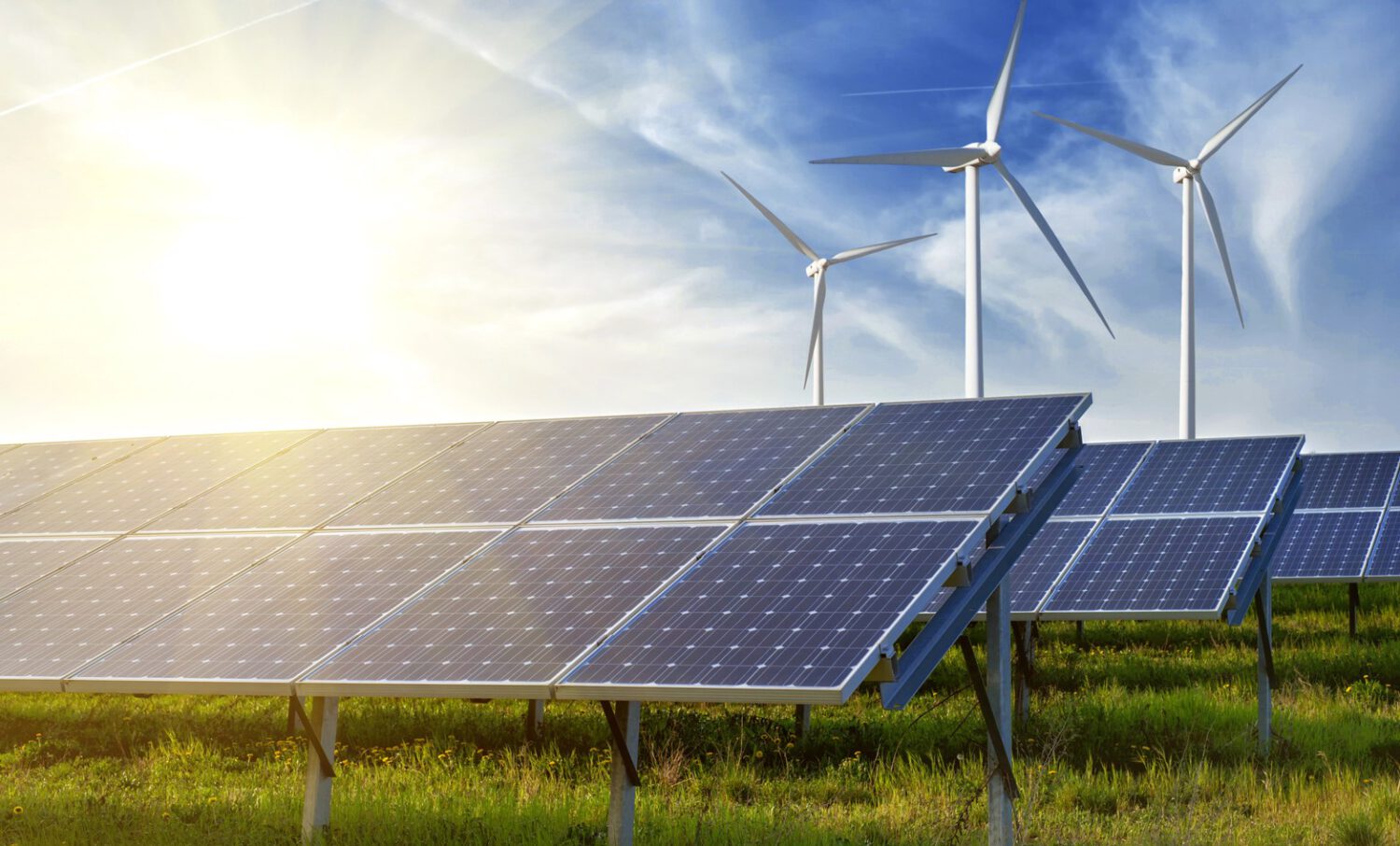
For the first time in history, solar power generated more electricity globally than nuclear in a single year. That is the headline finding from the World Nuclear Industry Status Report 2026, published September 29. Solar generation climbed roughly 30% in 2025 while nuclear output grew just 1.1%, and the gap in deployment momentum between the two technologies has rarely looked wider.
The Numbers Behind the Shift
Solar and wind crossed the monthly nuclear generation threshold repeatedly throughout 2025 and into 2026, marking a sustained shift in which technologies are actually producing electricity at scale.
Wind exceeded global nuclear generation on a monthly basis in March 2025; solar followed in April. From March 2025 through June 2026, either solar or wind individually exceeded nuclear output every single month. In March, April, and May 2026, both solar and wind independently exceeded nuclear generation in the same months.
Key capacity figures from WNISR 2026 put the scale of that expansion in context:
- Solar capacity grew 510 GW to 2,383 GW, a 27% year-over-year increase
- Wind capacity grew 159 GW to 1,291 GW, a 14% increase
- Nuclear operating capacity declined 0.5 GW to 368.6 GW
- Grid-scale batteries added 104 GW and 257 GWh in 2025, with more than 78% of all cumulative battery storage installed between 2023 and 2025
Nuclear’s global electricity share fell to 8.8%, reportedly its lowest level in roughly 45 years and about half its 1996 peak of 17.5%. The sector still set a generation record in 2025, though the IAEA’s official data and WNISR’s figures reflect different datasets and accounting boundaries; readers should treat the precise generation total as subject to methodology.
IEA Photovoltaic Power Systems Programme data put 2025 solar additions closer to 690 GW, above WNISR’s more conservative figure. The difference reflects distinct methodologies and datasets, not conflicting measurements.
Nuclear’s Slow Build
Four reactors started generating power in 2025 while seven shut down, producing a net negative reactor balance for the first time since 2021.
Seventy-three reactors were under construction as of July 1, 2026, the highest reported count since 1987. Nine of every ten sit in Asia or Eastern Europe, and China alone accounts for 37 of them. Outside China, global nuclear generation declined 0.2% in 2025; China supplied essentially all meaningful growth in the sector.
Construction timelines remain the industry’s persistent liability. None of the 16 reactors connected to the grid between 2023 and 2025 finished on schedule, and their average construction period was 10.9 years. Of 13 reactors scheduled to begin generating power in 2025, only four did so.
Construction starts did reach 12 reactors in 2025, the highest annual total since 2010, with nine in China, two in Russia, and one in South Korea. Between 2006 and 2025, China recorded 53 reactor startups and no closures, while the rest of the world posted a net decline of 55 reactors.
What This Actually Means
The crossover reflects a difference in deployment speed, not operational equivalence; solar and nuclear serve different grid functions.
Solar output varies by time of day, season, and weather, while nuclear plants are generally designed to generate steadily around the clock. These are different products serving different grid needs, and the annual generation comparison does not change that. Falling battery costs are identified in WNISR 2026 as one enabling factor for continued solar expansion, though storage does not eliminate the need for dispatchable generation, transmission buildout, or demand management.
WNISR 2026 questions whether small modular reactors have delivered on longstanding promises of lower costs and faster construction. The report argues that some SMR designs could produce between two and 30 times more nuclear waste than larger reactors, citing analysis it does not fully detail in the available secondary coverage. Projects are advancing in Canada, China, Russia, the Czech Republic, Sweden, the UK, and the US; commercial deployment, however, still depends on financing, licensing, and builds that have yet to prove those promises at scale.
The clearest signal from 2025 is one of relative momentum. Solar and wind capacity and generation are expanding rapidly, while the global nuclear fleet is growing slowly and remains concentrated in a small number of countries. That gap in deployment speed is already shaping grid investment decisions, climate policy discussions, and energy infrastructure planning across major electricity markets, and its influence will compound over the coming decade.