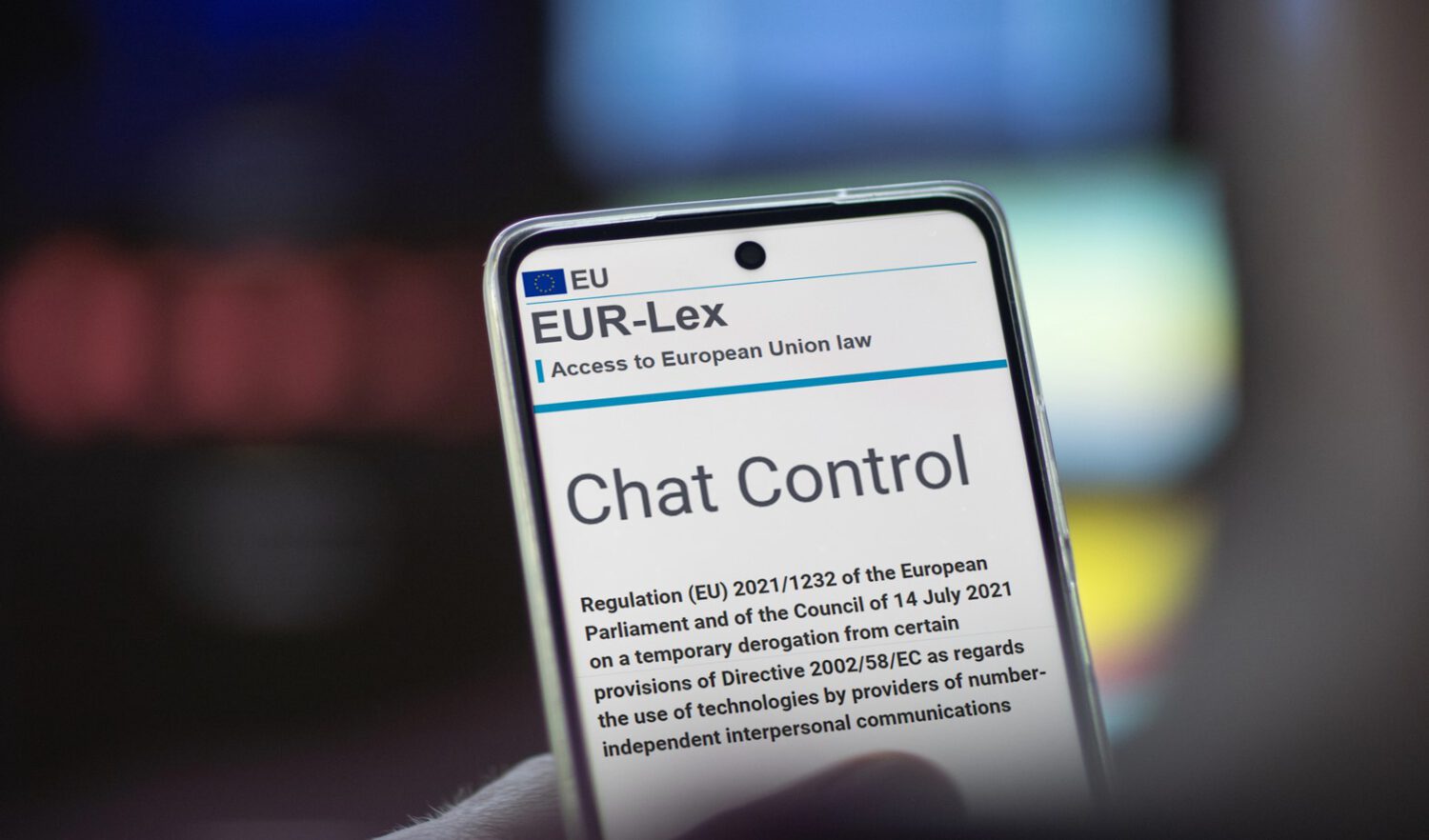
More MEPs voted to reject Chat Control 1.0 than voted to keep it. It became law anyway. That is not a hot take. It is the procedural reality behind Regulation (EU) 2026/1881, a temporary measure that permits qualifying online providers to voluntarily detect, report, and remove child sexual abuse material. The European Commission frames it as a necessary child-protection tool. Privacy and civil-liberties critics describe it as a surveillance framework that advanced through a procedural loophole. Both descriptions tell you something true.
If you use an encrypted messaging app, the policy debate this regulation represents is now your business. If you use a surveillance app, the stakes are even more immediate.
How a Majority Became a Losing Vote
The mechanics of EU second-reading procedure turned a clear majority against the measure into a legal defeat for opponents.
Parliament had already rejected an earlier extension on 26 March 2026, voting 228 in favor of rejection and 311 against. The prior temporary regime expired on 3 April 2026.
The Council then adopted its own position and returned the file to Parliament.
In that second reading, 314 MEPs voted to reject the Council position, while 276 voted against rejection and 17 abstained. By any ordinary reading of the room, opposition had the numbers.
The catch: EU second-reading rules require an absolute majority of the full Parliament to block a Council position. The opposition reached 314 votes, but blocking required clearing a threshold that the available sources report as approximately 360 votes.
That gap is why Regulation (EU) 2026/1881 applies until 3 April 2028.
The regulation advanced not because supporters won a conventional affirmative vote, but because opponents fell short of a procedural bar that most people outside Brussels had never heard of. Critics, including those quoted in Euronews coverage of the July 2026 vote, characterize this route as a “back door.” Legally, the measure proceeded because the threshold for rejecting the Council position was not met.
What Chat Control 1.0 Actually Does
Before the criticism lands fairly, the facts need to be clear.
- Permits qualifying providers to voluntarily detect, report, and remove child sexual abuse material
- Creates a temporary derogation from ePrivacy Directive confidentiality rules
- Excludes interpersonal communications to which end-to-end encryption “has been, is, or will be applied,” per an amendment Parliament added and the Council accepted
- Does not mandate that every provider deploy scanning technology
- Applies until 3 April 2028, with permanent legislation still under negotiation
The Encryption Carve-Out Does Not End the Debate
Parliament secured a meaningful concession on encryption, but the practical scope of that carve-out remains genuinely unresolved.
Parliament’s amended position excluded communications to which end-to-end encryption “has been, is, or will be applied.” The Commission confirmed the Council accepted that language, and supporters presented it as a real privacy safeguard.
It is a concession worth acknowledging, and then immediately interrogating.
How a provider identifies which services qualify remains a contested practical question. So does whether the wording protects entire communication channels or only specific messages within them. Privacy and digital-rights critics, including organizations such as EDRi, argue that normalizing exceptional scanning powers, even voluntary ones, erodes the confidentiality baseline that encrypted communications depend on. Concerns about platforms secretly tracking users underscore why that baseline matters.
The core tension is legitimate on both sides. EU institutions describe a tool for protecting children from documented, serious harm. Critics warn that imprecise statutory language in a temporary measure tends to become the template for the permanent one. Collapsing that tension into a simple verdict would miss what makes this regulation genuinely difficult.
What the encryption carve-out needs, before Chat Control 2.0 negotiations conclude, is sharper and enforceable definition. Vague wording that passes through a temporary measure under procedural pressure should not quietly become the foundation of permanent law affecting hundreds of millions of users.
What the Next Two Years Actually Decide
The 3 April 2028 deadline is not a sunset on this debate; it is a deadline for negotiators to resolve what the temporary measure left open.
The permanent framework negotiations now carry significant weight. They inherit the contested encryption language, the precedent of a measure advancing without affirmative majority endorsement, and the unresolved question of whether detection architecture can coexist with strong end-to-end encryption without gradually degrading it.
The procedural rules that produced this outcome also deserve direct scrutiny. A measure affecting the private communications of hundreds of millions of people can advance under EU second-reading procedure without an affirmative majority, because blocking requires an absolute majority of the full chamber rather than a simple majority of those voting. That is a democratic accountability gap worth naming clearly, regardless of where you stand on the substance. Europe Restricts major cloud providers from handling sensitive government data under a parallel regulatory logic that raises similar accountability questions.
The gap between majority sentiment and legal outcome here was not a rounding error. It is the number that Chat Control 2.0 negotiators now work in the shadow of, and it should inform how the permanent framework is debated, drafted, and ultimately voted on.