Hydrogen and oxygen ions escaping Earth’s upper atmosphere could be reaching the Moon and bonding into water molecules in lunar soil, according to researchers. The finding reframes the Moon not just as a destination but as a long-running chemical recipient of Earth itself.
The Moon May Be Catching What Earth Leaks
Earth’s atmosphere loses charged particles to space constantly, and researchers now propose that some of those particles reach the Moon. Hydrogen and oxygen ions can travel through a region called the magnetotail, become embedded in lunar soil, and potentially bond into water molecules or hydroxyl compounds, according to work from the University of Alaska Fairbanks Geophysical Institute.
Five Days a Month, the Pathway Opens
The Moon spends roughly five days of each monthly orbit inside Earth’s magnetotail, a region containing ions that originated in Earth’s ionosphere. During that window, the Moon’s near-complete lack of atmosphere means incoming particles encounter the surface directly, interacting with oxygen-bearing minerals already present in the soil.
A Big Number That Deserves Careful Handling
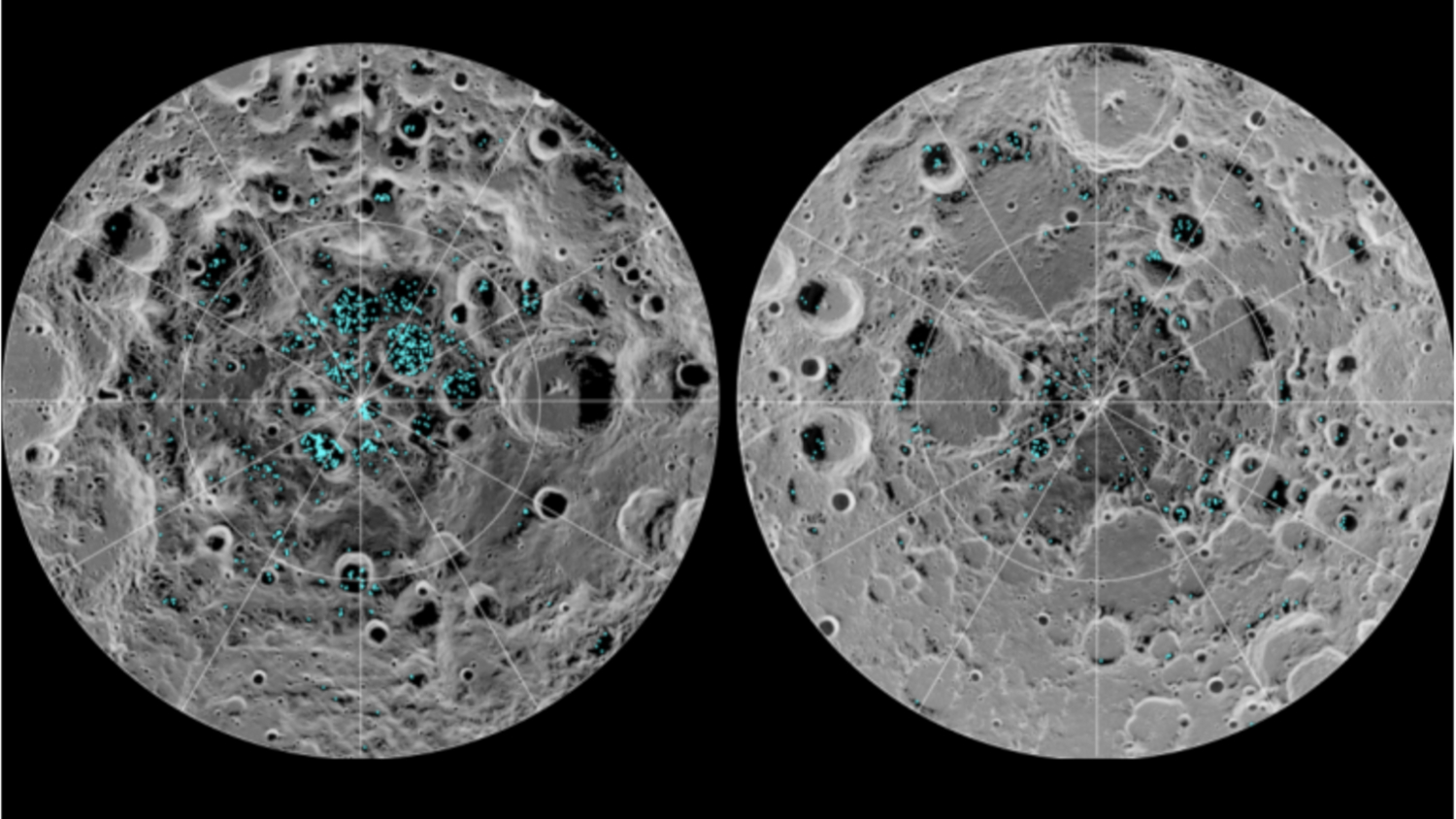
A study published in Scientific Reports in March 2022 estimated that as much as approximately 3,500 cubic kilometers of terrestrial-derived water-related material could have accumulated in lunar polar soil under the model’s assumptions. That figure reflects a scenario where roughly 1% of escaping terrestrial atmospheric material reaches the Moon, making it a model-dependent upper estimate, not a confirmed measured reservoir.
The term “water phase” in the study refers to ice or water-bearing material trapped in pore spaces and fractured terrain. Hydroxyl, a chemically distinct compound from molecular water, may also be present; the study does not establish that a subsurface ocean exists beneath the lunar poles.
Earth Is Not the Only Candidate
The terrestrial-ion pathway is physically plausible, but it competes with a well-supported rival mechanism. Solar wind delivers hydrogen that reacts with oxygen-bearing lunar silicates to form hydroxyl and water, a process supported by laboratory simulations and NASA research.
Cometary impacts and internal volcanic processes are also recognized contributors. Identifying Earth’s specific share requires isotopic and chemical fingerprinting that has not yet been performed at scale across the lunar surface.
Apollo Samples Hinted at This, Without Confirming It
Apollo lunar samples contained volatiles including water, carbon dioxide, helium, and nitrogen, though attributing those compounds to one origin is difficult, partly because handling and contamination complicate interpretation. Orbital observations did detect oxygen ions in the lunar environment during magnetotail passes, which supports the physical possibility of terrestrial ion transfer.
Separate modeling work published in 2025 examined how Earth’s present-day magnetic field conditions could be especially effective at facilitating this particle transfer. That finding adds another layer of support to the proposed mechanism.
What This Actually Means for Future Missions
Hydrogen and oxygen in any accessible form can support life-support systems, fuel production, and operations at a future lunar base. Lunar soil may also serve as a long-term archive of Earth’s own atmospheric history, a geological record written across another world’s surface.
Any extraction strategy requires direct sampling, isotope analysis to confirm the source, and on-site processing tests before Earth-derived water could be treated as a dependable supply. The model is a compelling starting point. It is not a blueprint.