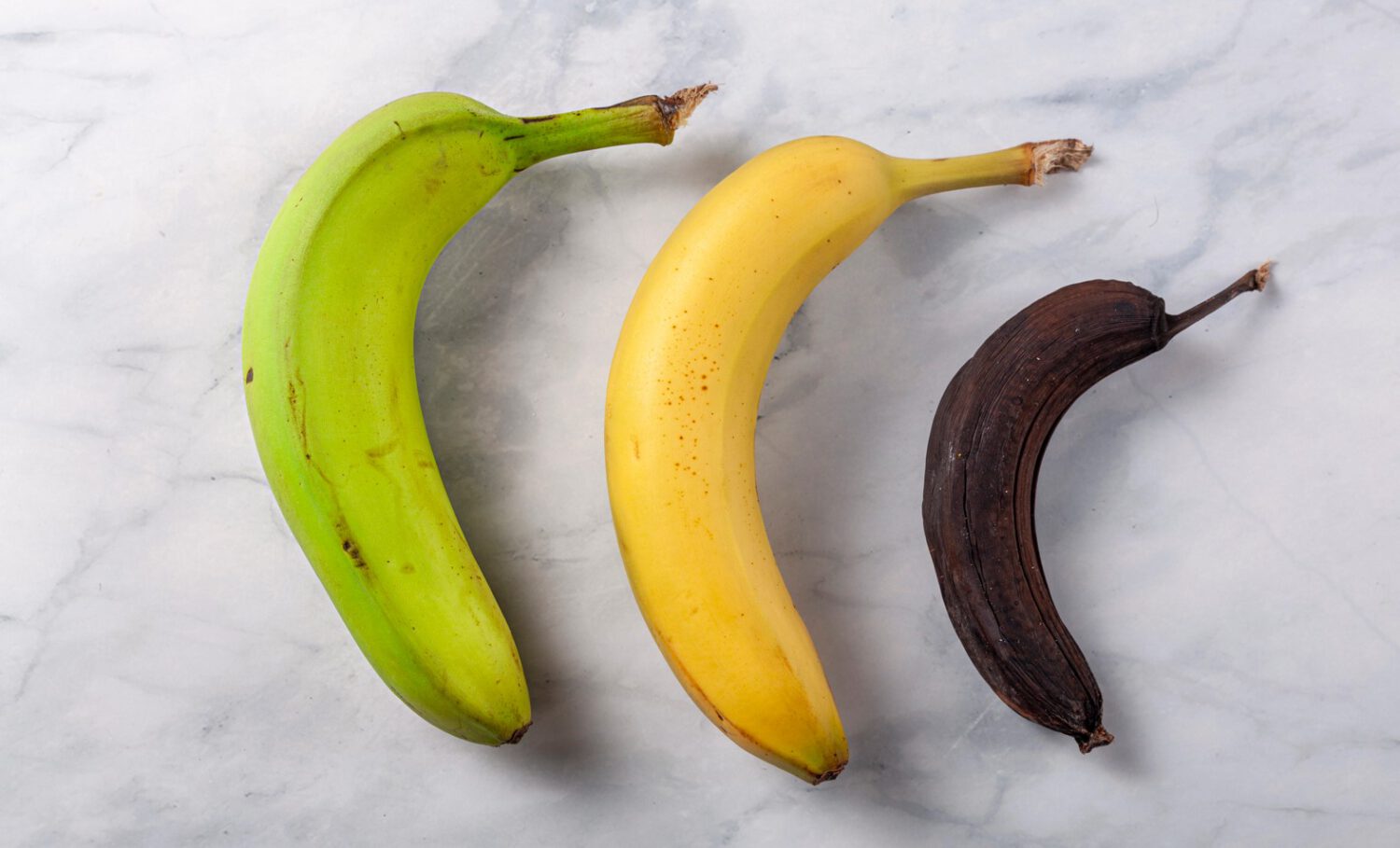
A gene-edited banana engineered to stay yellow and firm after slicing has passed England’s first regulatory gate, but it cannot be sold here yet. Defra confirmed on 17 July 2026 that the variety, developed by Norwich-based Tropic Biosciences, qualifies as “precision bred” under the Genetic Technology (Precision Breeding) Act 2023. That classification is a legal determination, not permission to sell the fruit as food: the Food Standards Agency must still complete its own safety review before any retailer can stock it.
How Browning Works
Cut a banana and a well-documented chemical process begins, turning appealing yellow flesh into something far less marketable.
When peeling or slicing damages banana cells, the exposed tissue reacts with oxygen. An enzyme called polyphenol oxidase drives the browning reaction; it is encoded by the PPO1 gene.
Tropic used CRISPR/Cas9 to introduce targeted insertions and deletions across PPO1 gene copies in Cavendish banana cells. The goal was to prevent the plant from producing a functional PPO1 enzyme, reducing browning after cutting. The editing components were introduced temporarily rather than incorporated into the plant’s permanent genome; Tropic reports that testing found no residual editing DNA in the resulting plants, though that claim has not been independently confirmed from the supplied evidence.
What Tropic Claims
The company attributes a set of specific performance figures to the edited variety, though none have been independently verified.
Tropic says the edited fruit shows 30% less browning in the first 24 hours after peeling and that slices can remain firm for up to 48 hours. The company also estimates that browning contributes to roughly 20% of banana yield losses. All three figures are company claims and should be understood as such.
The Regulatory Picture
England’s precision-breeding framework creates a two-step process, and the banana has cleared only the first.
The framework applies to plants whose genetic changes could have occurred naturally or through conventional breeding, with no DNA added from another species. Defra accepted Tropic’s marketing notice after receiving advice from the Advisory Committee on Releases to the Environment. That acceptance moves the banana to the next stage, not the finish line.
The FSA’s food-safety assessment is a separate and required step before the variety can reach English consumers. Tropic has already received approvals in other markets: regulators in Japan and Brazil approved the banana for import, sale, and consumption in April 2026, with Brazil also permitting cultivation. The company reports regulatory determinations, notifications, or exemptions across 11 countries, including the United States, Canada, and the Philippines. Those figures come from Tropic’s own announcement rather than independent regulatory documents.
“These approvals represent a major step forward in bringing innovative, waste-reducing produce to consumers worldwide.” Gilad Gershon, CEO of Tropic Biosciences, commenting on the company’s approvals in Japan and Brazil.
Wider Context
The non-browning variety is part of a broader effort to modernize what is, commercially speaking, a very old fruit.
Tropic describes the variety as the first new commercial Cavendish banana in more than 75 years, a promotional claim the company attributes to how little the dominant global banana has changed since it replaced the Gros Michel in large-scale trade. Because Cavendish bananas are propagated through shoots and tissue culture rather than seeds, the company reports that the edited traits remained stable across several generations.
A separate development in Tropic’s pipeline carries higher agricultural stakes. The company is working on Fusarium wilt resistance targeting Tropical Race 4, a strain of Panama disease that Tropic says has spread to more than 20 countries and threatens Cavendish supply chains worldwide. That work, if successful, would address a structural vulnerability that the non-browning trait does not touch.
The FSA’s review will determine whether England joins Japan and Brazil in approving the banana for market, or whether this milestone remains a regulatory step without a supermarket aisle to follow it.