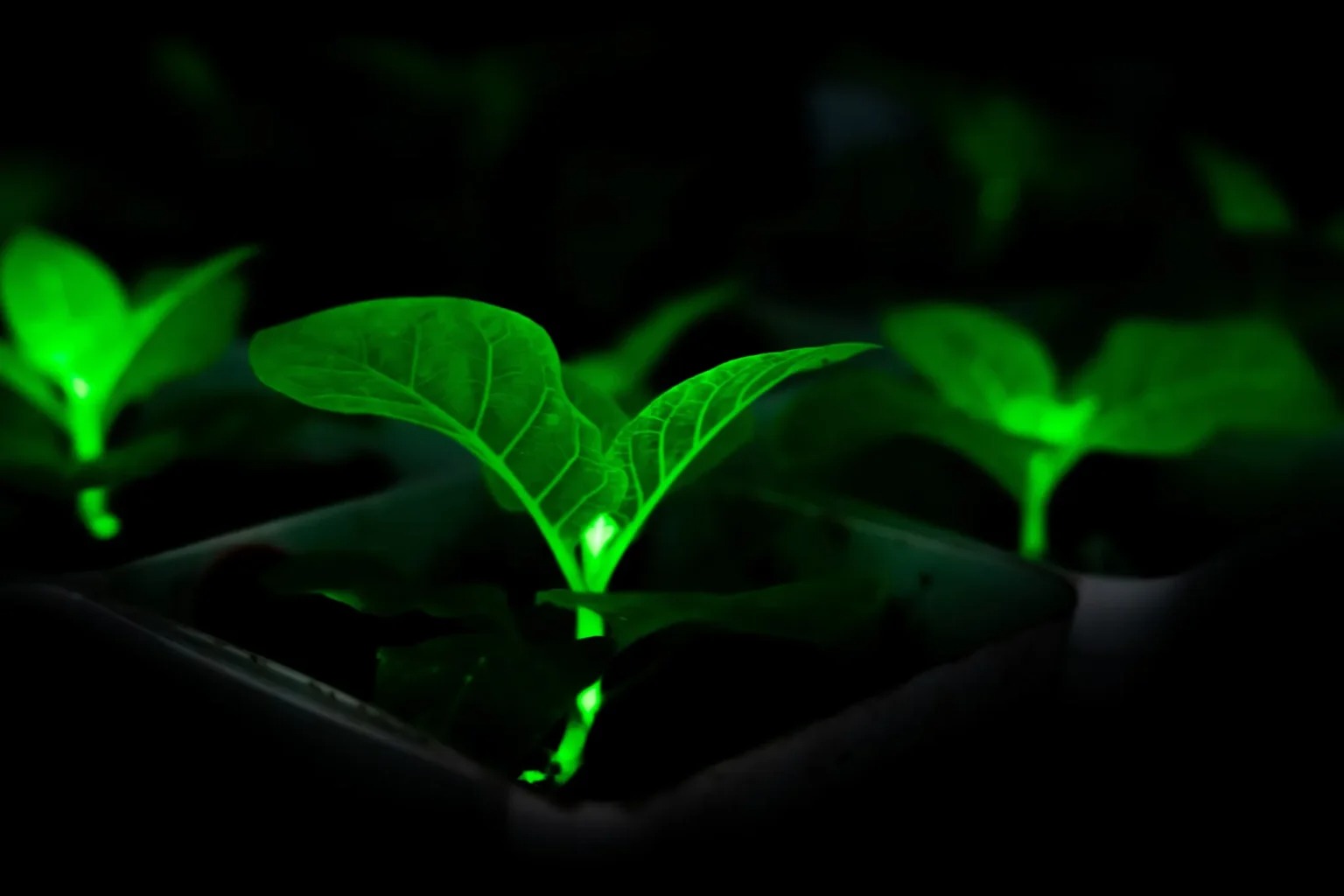
Researchers spliced firefly and fungal genes into more than twenty plant species, producing a visible glow — though closer to a night-light than a lamp post.
Walk through a park at midnight and the orchids are glowing. No bulbs. No wires. Just photons produced by something alive. That’s the pitch from Magicpen Bio, a Chinese biotech outfit that reportedly engineered over twenty plant species — orchids, sunflowers, chrysanthemums — to emit soft light using gene fragments from fireflies and bioluminescent fungi. The specimens were showcased at Beijing’s Zhongguancun Forum, where attendees could see the glow firsthand. The catch? That glow is ambient at best. Think spa candle, not highway interchange.
The science itself is genuinely clever. Gene fragments get inserted into plant cells, triggering a light-producing cycle that runs on caffeic acid — a compound plants already make naturally. Unlike earlier MIT experiments that relied on nanoparticle solutions sprayed onto leaves (temporary, like a glow stick at a concert), this approach embeds bioluminescence directly into the plant’s DNA. The glow, in theory, gets inherited.
Here’s what you actually need to know:
- Species engineered include orchids, sunflowers, and chrysanthemums — over twenty varieties total
- The showcase took place at the Zhongguancun Forum in Beijing
- The closest consumer precedent is Light Bio’s Firefly Petunia, which uses fungal genes and was recognized by the Royal Horticultural Society as the first commercially available glow-in-the-dark plant
- Realistic near-term applications are parks, tourism districts, and themed landscapes — not municipal streetlighting
That gap matters. The decorative applications are legitimate — think of a botanical garden that becomes a living light-art installation after dark — but nobody’s ripping out sodium vapor lamps anytime soon.
Beautiful Science, Unfinished Homework
Brightness limitations and unresolved ecological questions stand between glowing gardens and anything resembling urban infrastructure.
Brightness remains the fundamental bottleneck. Ecological questions haven’t been publicly addressed either: what happens to nocturnal insects drawn to an engineered glow? Can modified plants be reliably contained, or do they eventually spread beyond intended zones? A future where engineered flora completely biodegrades harmlessly remains an open question for biotech at large.
Nobody has answered those yet.
The most honest path forward isn’t streetlight replacement — it’s something quieter. Think urban spaces where ambiance matters more than lumens: tourism corridors, night markets, designed parkways. Your future park bench might sit beneath something softly alive. Whether that light ever grows bright enough to read by is a question the science still owes you an answer to — much like the niche innovations that pave the way for technologies we eventually take for granted.