


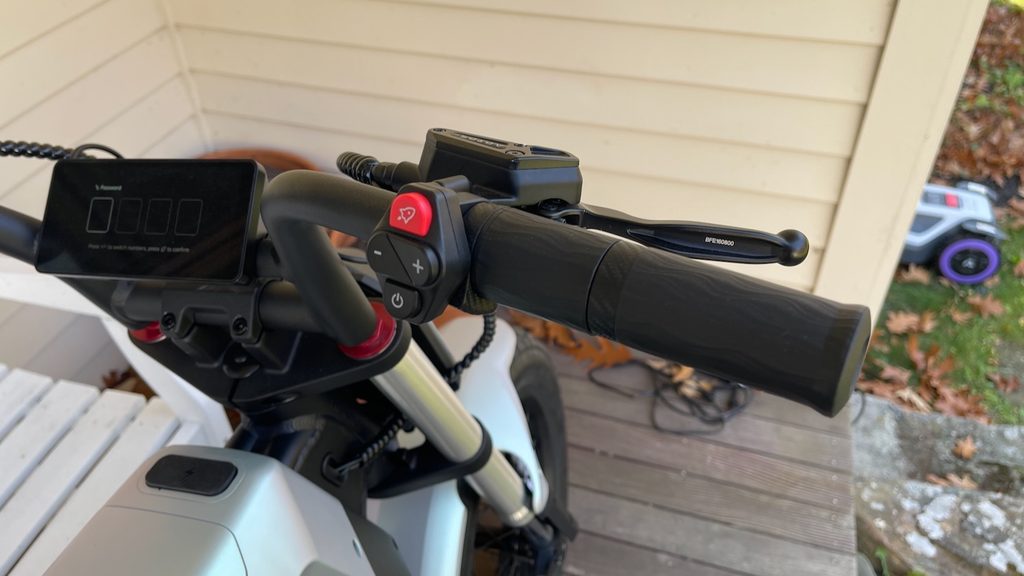
You know that feeling when something new shows up and you can’t wait to get it on the road? That was me on the first sunny afternoon after I finished building the Aotos Flux X26 Pro. I rolled it up to the top of our road, right where our driveway meets the street. Then the whole bike went dark.
My first thought was that I’d bumped the power switch. I hadn’t. I opened the app and found a string of error codes waiting for me. So I did the usual routine. I held down the power button, punched in my 4-digit PIN, and the bike woke up like nothing had happened.
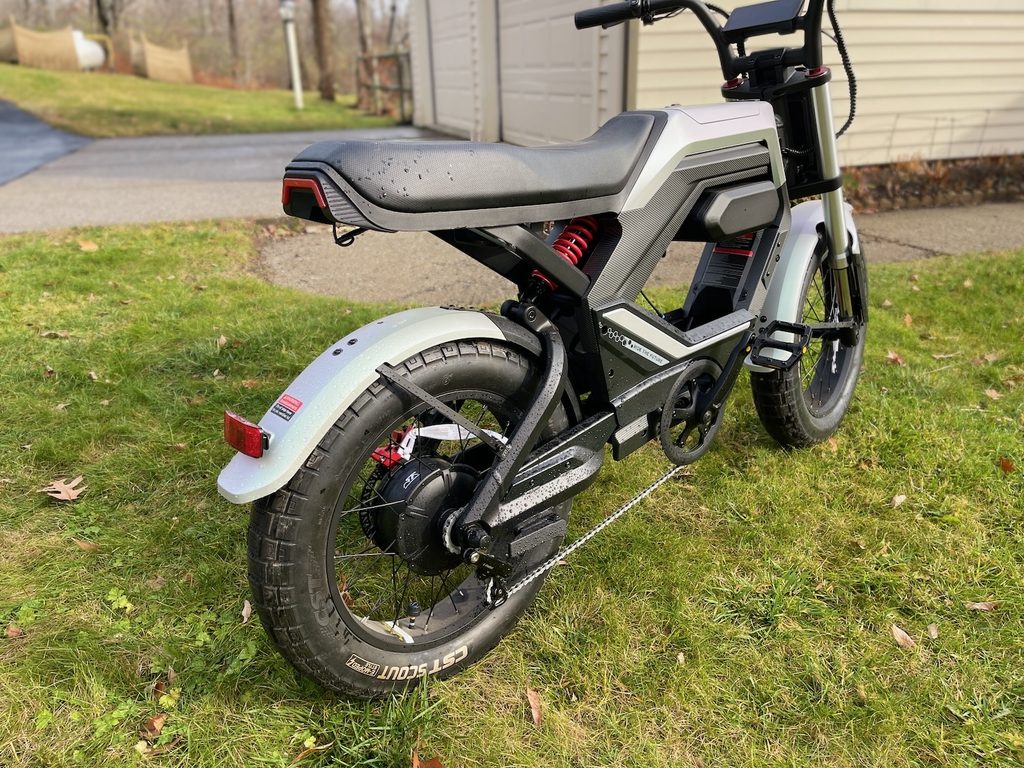
It’s been mostly well behaved since then. Still, that first ride says a lot about this bike. It’s a blast to ride, and it’s loaded with tech. It also has a few rough edges, which makes sense for a company that only launched it on Kickstarter this spring.
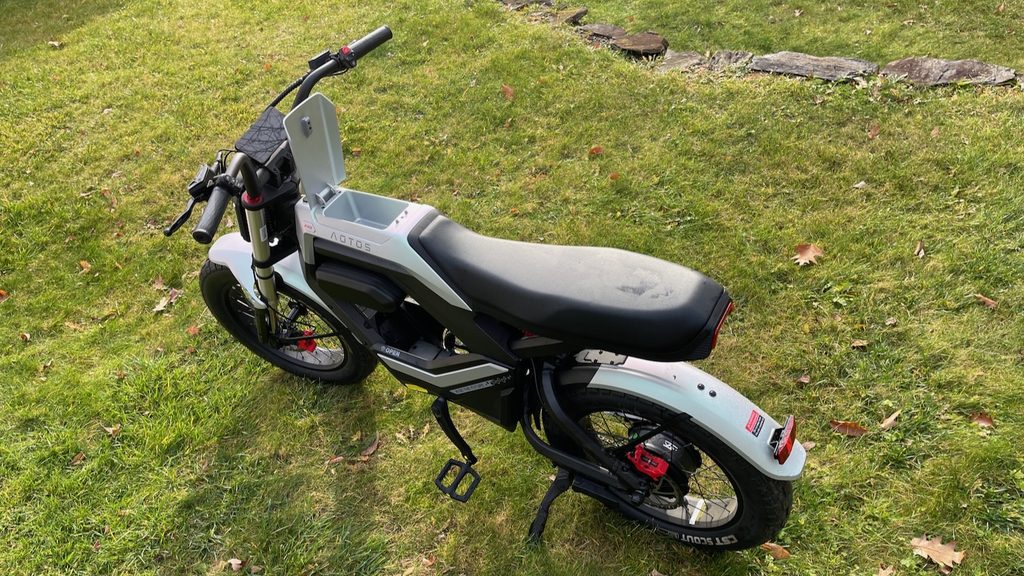
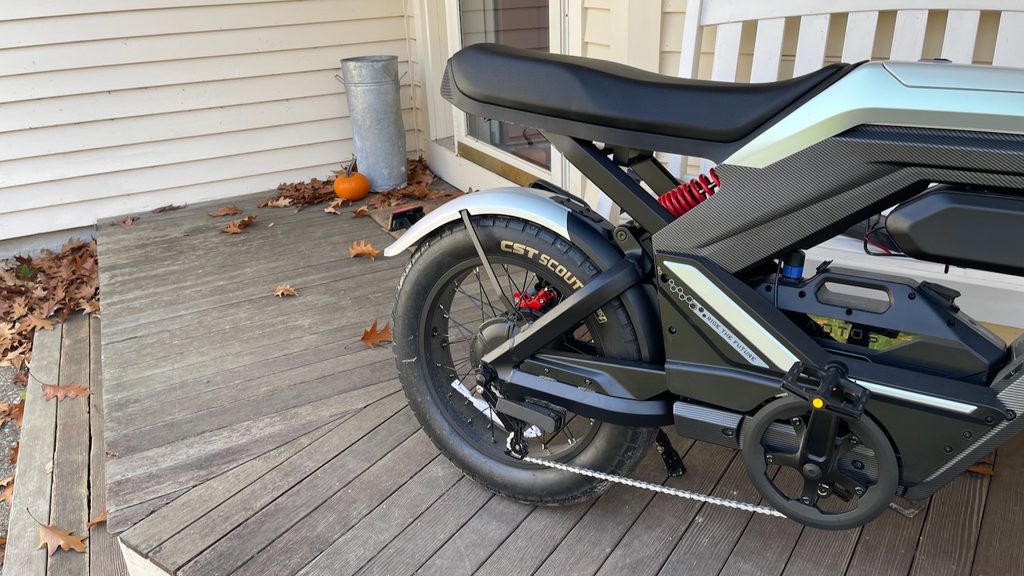
Aotos calls it an e-bike, and legally it is one. Ride it for a day and you’ll feel like you’re on a scooter with pedals. You get a hub motor, a throttle on the handlebar and a single gear. You also get passenger pegs and a seat long enough for two. The pedals are there to keep it legal, and on flat ground you’ll barely use them.
Where the Flux X26 Pro Fits
Aotos sells two versions. The standard Flux X26 lists for $1,699, and the Pro I tested lists for $2,299 on Aotos’ site. You can also find it at Walmart. Kickstarter backers paid as little as $1,599 when the campaign launched in March.
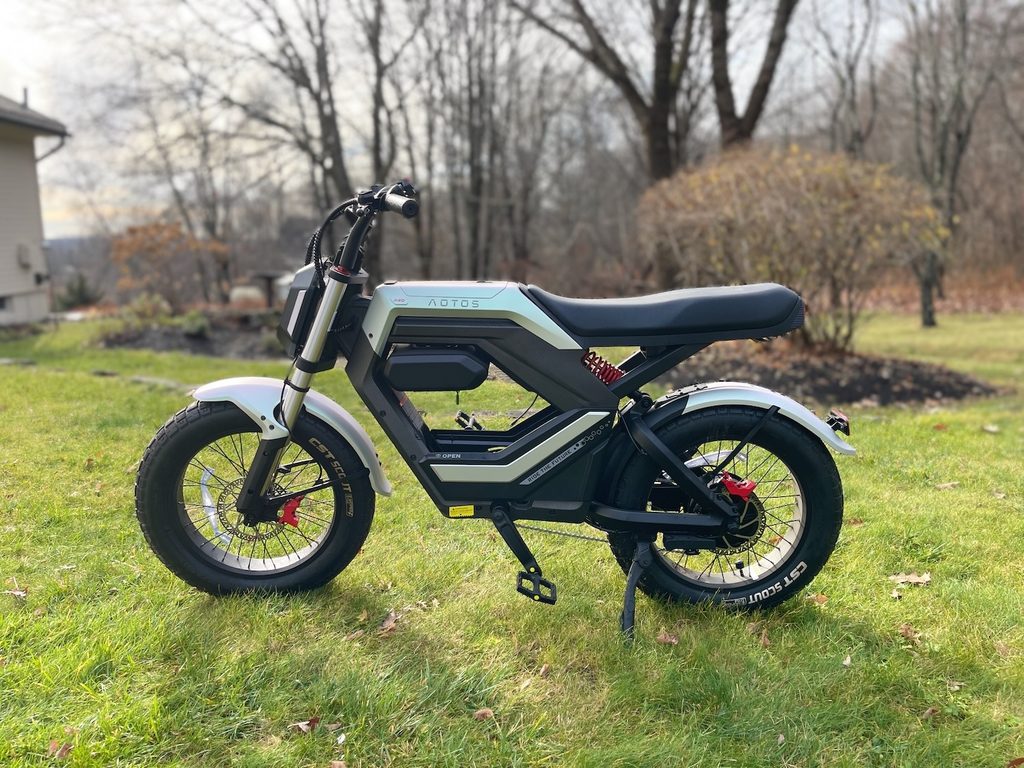
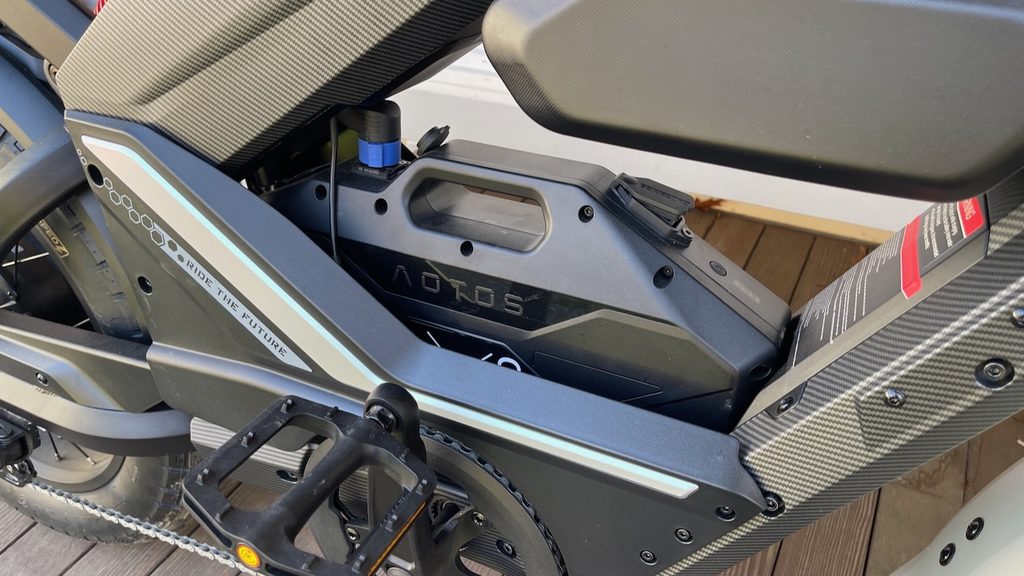
The extra $600 gets you more of everything. According to Aotos’ official specs, the Pro peaks at 2,000W in Boost mode to the standard model’s 1,200W. It has 100 Nm of torque to the standard’s 80, and a bigger 48V 21Ah battery that Aotos rates for up to 70 miles (the standard claims 50). Aotos also packed tire pressure sensors, an under-frame storage bag, a physical lock and 4G GPS tracking into the Pro.
Both versions share a 750W rated motor, 20 x 4 inch fat tires and hydraulic disc brakes. Both have dual suspension and a 330 lb max load. Aotos lists the weight at 97 lb. When TailHappyTV put the Pro on a scale in his hands-on video, it came in at 95 lb without the battery and about 109 lb with it.
Aotos says the Flux ships as a Class 2 e-bike, capped at 20 mph. To unlock 28 mph, which is Class 3 speed, you hold the brake lever and twist the throttle three or more times. Mine hit 28 mph out of the box with no adjustments at all, and I left it in Sport mode at 28 for almost every ride.
You’ve got plenty of other options at this price, and a lot of them look alike. Per Tom’s Guide pricing, the Ride1Up Revv 1 lists at $2,295 and the Super73-R at $3,995. The Engwe M20 3.0 is the cheaper rival with a similar look.
The closest match is Segway’s Xyber, which costs about $3,000. If you’ve been eyeing one, the Flux X26 Pro gets you most of the same tech, from the color navigation screen to 4G tracking, plus tire pressure sensors in the box, for about $700 less. It’s also still a legal e-bike. Segway calls the Xyber an unclassified electric vehicle, which limits where you can ride it.
Aotos didn’t just bolt a generic motor into a fancy frame either. The geared hub motor in the rear wheel carries the Aotos name, and many budget moto-style bikes use off-the-shelf hub motors from outside suppliers.
Building It on the Deck at Sunset
The Flux arrived in a crate with a wooden base and cardboard walls, which is pretty standard for an e-bike this size. I built it on our deck in front of the house as the sun was going down. The light was fading, but there was enough to see what I was doing.
The printed instructions were mostly clear. Aotos’ official assembly video filled in the rest. If you buy one, watch that video before you start.
The rear wheel and battery come already installed. You’ll mount the handlebars, the front fender and the front wheel. The front wheel is where I needed my wife. She held the fork up while I lined up the tire. You also have to pull a small plastic spacer out of the front brake caliper before the rotor will slide in. Honestly, I couldn’t have done that part alone, so line up a second set of hands before you start.
The seat was the most frustrating part. Aotos includes a lock, which is a nice touch. It lives in a metal cage under the seat, and that cage blocks the bolts you need to tighten the seat down. So I took the lock off, finished the seat and put the lock back on. Other reviewers point out a strip of double-sided tape under the seat. If you peel it off only after the nuts are tight, you won’t have to fight it like I did.
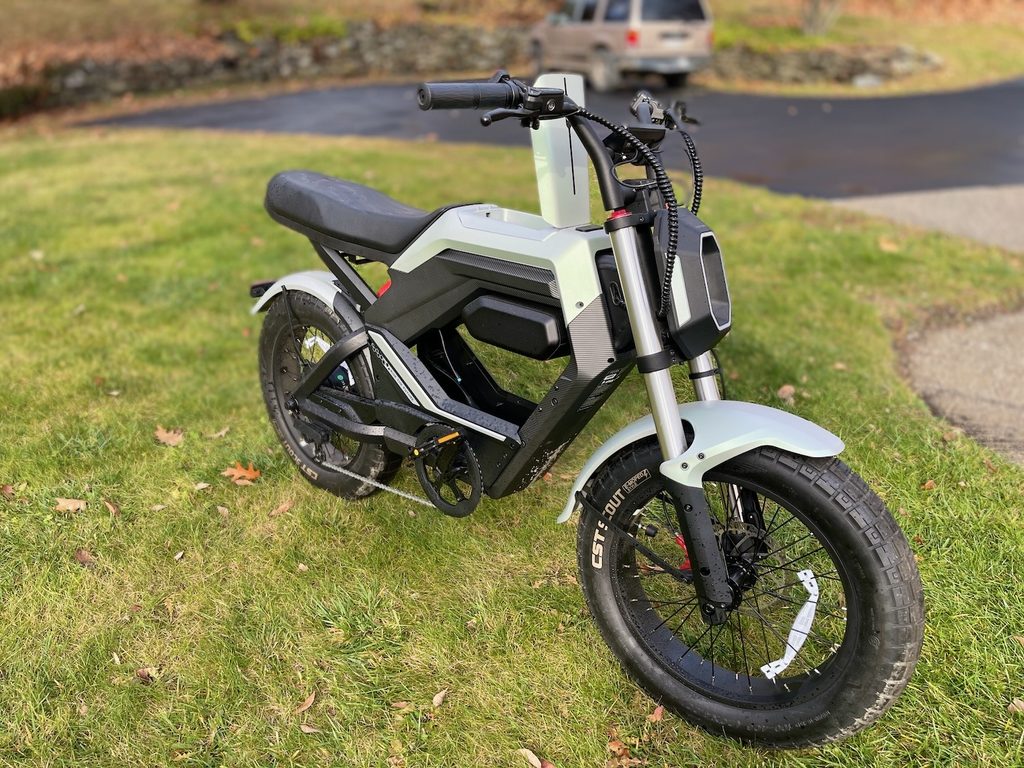
All in, it took me about an hour and a half. There aren’t many parts. They’re just fiddly. The brake levers on the handlebars also came out of the box at slightly different angles. Lining them back up only takes a few minutes with the included tools, but you shouldn’t have to do it on a $2,299 bike. Still, it’s hardly a dealbreaker.
28 MPH Feels Fast
I’ve owned e-bikes before. Riding this one at 28 mph felt like an entirely new experience, closer to riding a low-powered motorcycle than a bicycle. It was exhilarating, and it still is every time I take it out. It’s also left me wanting more speed, and more pull up hills.
My favorite ride was a back road near our neighborhood. It’s two lanes, one in each direction, with barely any cars. On a sunny fall afternoon I’d ride out a few miles, turn around and come back, about 6 or 7 miles total. You twist the throttle, the bike pulls hard, and it holds 28 without any drama.
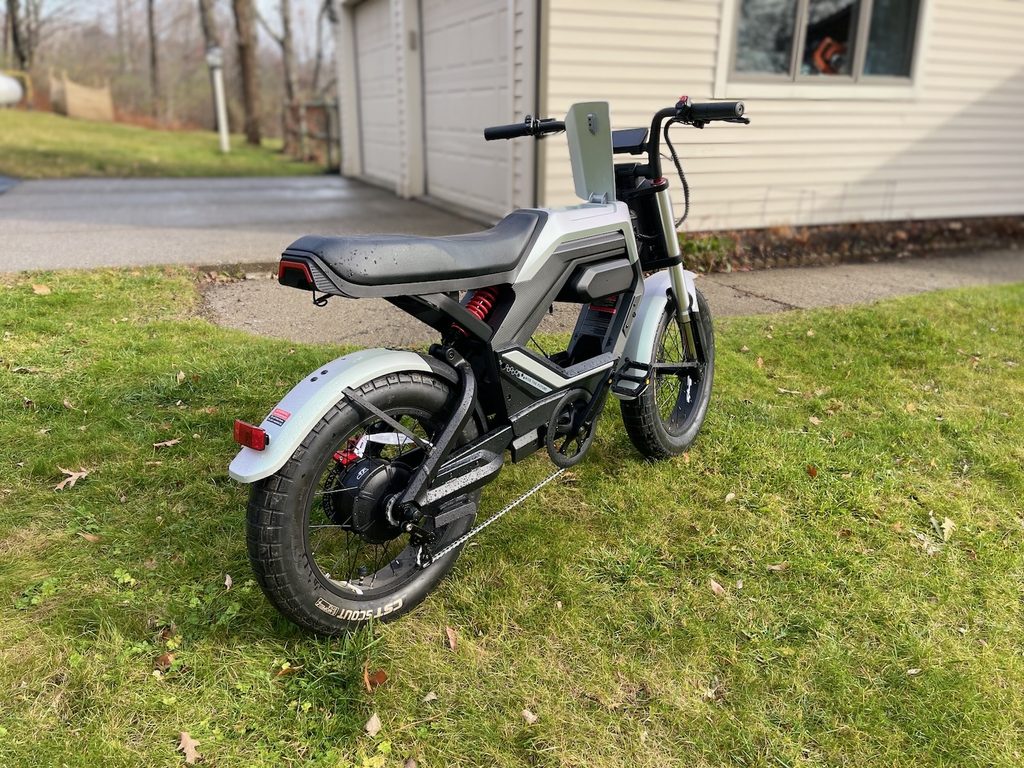
You get Eco, Normal and Sport modes, plus a red Boost button that delivers full power for up to 10 seconds at a time. To me, Boost is mostly a party trick. Sport mode already gives you plenty of torque, and a throttle shortcut bumps any mode to full power anyway.
Boost also sets off a loud rocket sound effect, and you’ll want to turn it off. It’s just annoying. Out of the box, the throttle plays a simulated engine sound too. You can shut both off or turn the volume down in the app, and that was one of the first things I did.
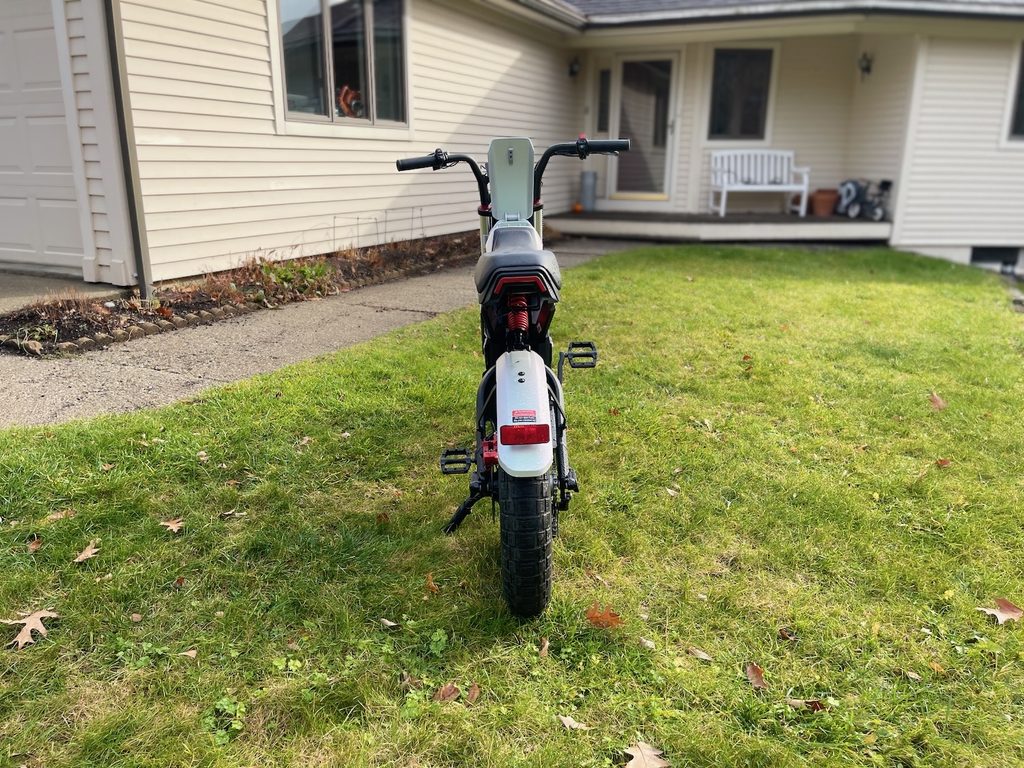
I did see 35 mph once, rolling down a hill. Early on, Aotos released a firmware update that let the bike reach 35 mph under power. They’ve since pulled it for regulatory reasons, and when I asked for it, they wouldn’t turn it back on. That’s a shame, but I get it.
The look is half the fun. Most of the people I’ve talked to about it call it Tron-like, and it’s hard to argue. In the app, you can change the colors of the ambient lights along the frame and set them to solid, breathing, flashing or wave. There’s even a red that leans into the motorcycle vibe. It looks like it costs a lot more than it does.
Standing Up Through the Potholes
Most of my riding was on pavement. I live on a dirt road, though, because welcome to Maine, and I wanted to see how the suspension handled it. Our road has plenty of potholes and divots, and some of the drops are deeper than 2 or 3 inches. I stood up on the pedals through the worst of them and let my legs soak up the hits. Between that and the shocks, the bike stayed comfortable the whole way.
The fenders rattle when you hit a bump, and that bugs me. I haven’t figured out exactly where the noise comes from yet, and it’s the main thing that makes me question the build. Some reviewers report rattling screws they had to tighten. Others say their bikes are completely tight. Yours could go either way, so give everything a once-over after your first few rides.
Leaves covered the roads on most of my rides, and the roads were dry. The leaves never made the bike feel loose, even on the dirt road.
The Hill in My Neighborhood
There’s a steep hill in my neighborhood, and it’s the one place the Flux struggles. Hub motors build up heat and lose torque on long, steep climbs. On that hill, the bike slowed to about 12 mph when I relied on the throttle alone.
Pedaling helps, and you’ll want to. Push the pedals and the speed comes back up. Aotos claims the bike can climb a 25% grade, and it can, just slowly. Your results will depend on the hill. TailHappyTV rode a steep incline in Santa Monica at 25 to 27 mph without pedaling, though I don’t know how that grade compares with mine. Another tester on TikTok dropped to 8 or 9 mph on a steep hill in Normal mode. If your daily route has a steep climb like mine, plan to pedal it.
Range Drops Fast on Cold Days
Aotos claims up to 70 miles. My rides suggest a lot less, at least this time of year. Some of my sunny afternoons were cold and some were warmer. The bike felt the same either way, but the battery didn’t. On a cold day, my 6 to 7 mile out-and-back took the battery from 100% down to about 65%. At that pace, you’d get somewhere around 18 to 20 miles from a full charge.
To be fair, I wasn’t trying to save battery. I rode full speed in Sport mode the whole time, and cold weather cuts lithium battery range. Warm-weather numbers come out a lot better. TailHappyTV rode 17 miles in Santa Monica, mostly full throttle in Sport and Boost, and finished with 56% left. That works out to roughly 38 miles on a full charge. I haven’t done a full drain myself, so my number is an early, cold-weather estimate. I’ll update this review once it warms up.
The weight matters here too. With the battery in, you’re looking at about 109 lb. If you run the battery flat, you won’t be pedaling this bike home. You’ll be calling someone for a ride, so keep an eye on that battery bar.
The Battery Doubles as a Power Bank
The battery locks into the frame with a key, so you’ll need that key every time you pull the battery out to charge it inside. Keep it on your house keys, because charging without it gets tricky. The battery has a carry handle and weighs about 13.6 lb on its own, so carrying it up the stairs isn’t a big deal.
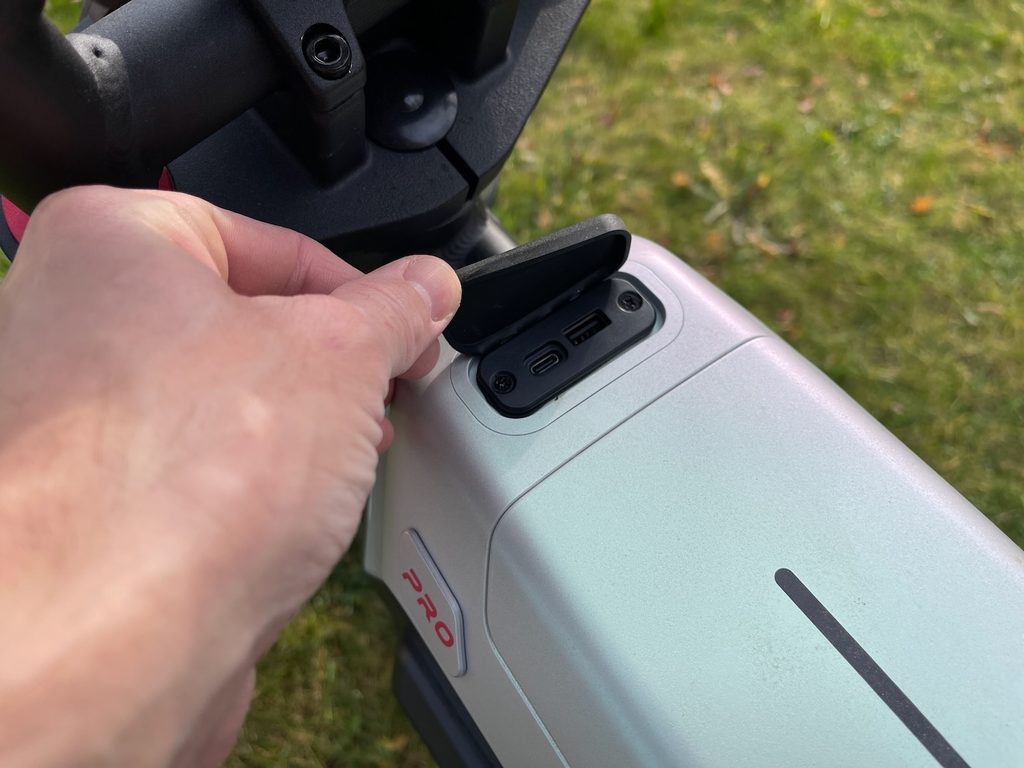
It’s a 48V 21Ah pack, which works out to 1,008Wh. It charges through its own connector, so you can’t borrow a charger from another e-bike. Built into the battery are USB-C and USB-A ports, so once it’s off the bike, you can use it to charge your phone or a camera. Aotos rates the battery to a slightly higher water resistance standard than the bike, IPX6 to the bike’s IPX5. The warranty covers it for one year or 500 charge cycles, whichever comes first, with at least 80% of its capacity left.
Aotos doesn’t say who makes the battery cells. I’ve asked, and I’ll update this section when I hear back.
A Milk Run With a Backpack
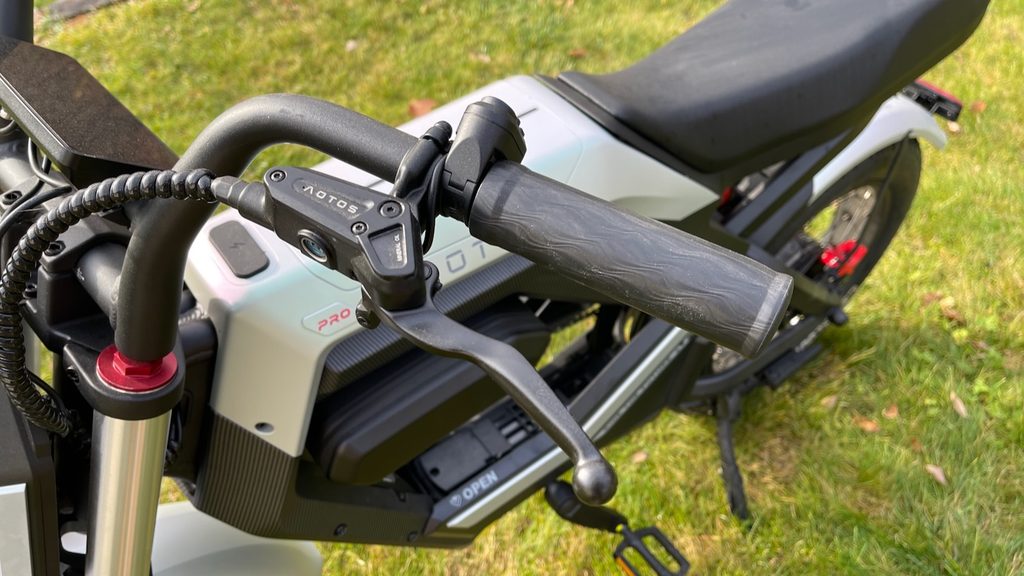
I took the Flux to the grocery store one afternoon to grab two half gallons of milk for my son. The Pro gives you a small plastic phone compartment and the under-frame bag, and neither one holds a half gallon of milk. I wore a backpack, and if you’re planning errands, you’ll want one too. For quick trips and riding for fun, you won’t miss the space.
There’s no place on the bike to carry the charger either. You do get USB ports on the frame, so you can charge your phone from the bike’s battery if it dies halfway through a ride.
Fit for Tall Riders (I’m 6’2″)
Aotos lists a 33.5 inch seat height and a rider range of 5’2″ to 6’7″. At 6’2″, I find it a little small. You can’t adjust the seat, and the pedals are the only place to put your feet. That leaves your legs bent the whole ride, with no relaxed position.
You’ll notice it in corners. You lift the inside pedal all the way up for clearance, same as on a regular bike, then go back to one leg down and one leg up. You get used to it, but you never stop noticing it. If you’re my height or taller, try to sit on one before you buy.
Nobody’s ridden on the back with me yet. The passenger pegs and the 330 lb max load make two-up riding possible. I’m still working on convincing my wife, and we only have one helmet between us.
Brakes, Tires and Lights
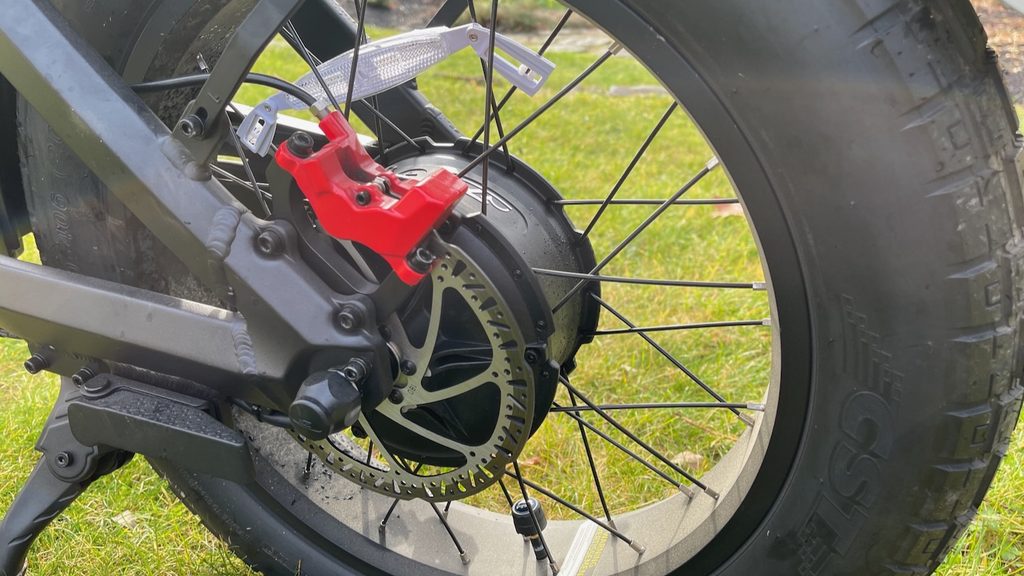
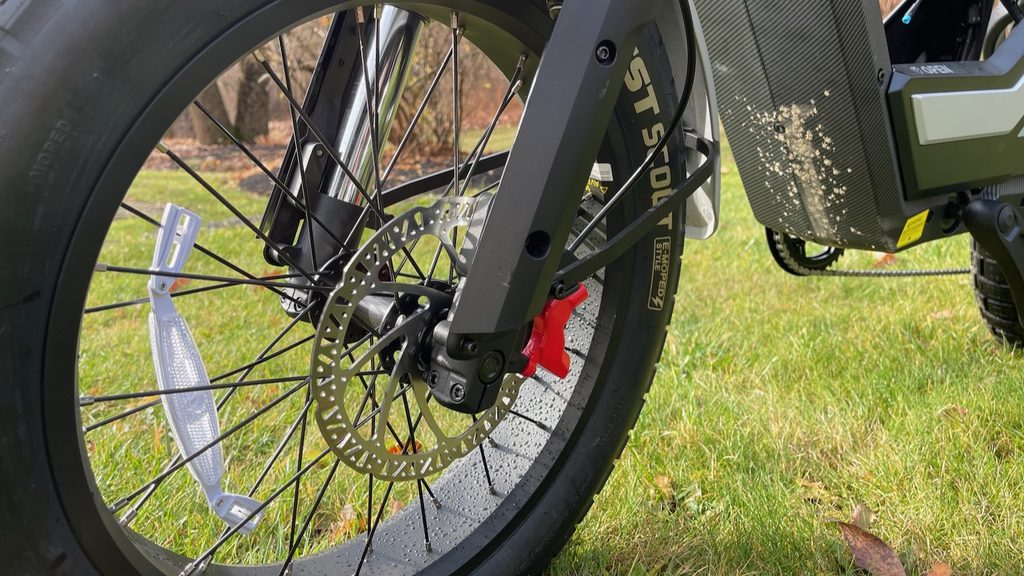
The hydraulic disc brakes stop the bike well. Aotos uses four-piston calipers on 180mm rotors front and rear. I went out to the dirt road on purpose to test hard stops, because I wanted to know how the brakes behave on loose ground. When you slam on the rear brake there, the bike pulls to the right, the side the rear disc sits on. It caught my attention the first time. It’s probably normal, but practice a few hard stops somewhere safe before you need one.
The tires are CST Scouts, 20 x 4 inches, with a tread built for the road. They top out at 30 PSI. If you pump them up right after assembly, you’ll get better handling and more range.
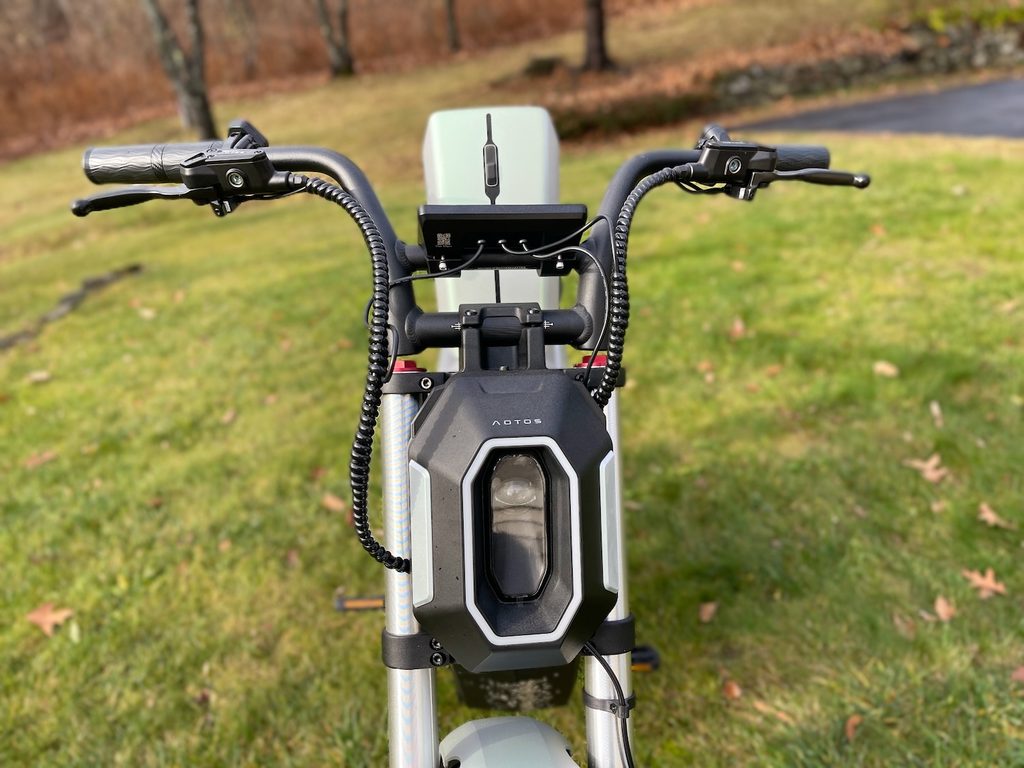
The headlight has a short beam and could be aimed higher. It does more to help drivers see you than to light up the road ahead, and that’s kept me off the bike after dark. One owner who has put 400 miles on his bolted on an aftermarket headlight for that reason. There are no turn signals and no mirror. On a bike that looks this much like a motorcycle, you’ll miss both. A mirror is the first accessory I plan to add.
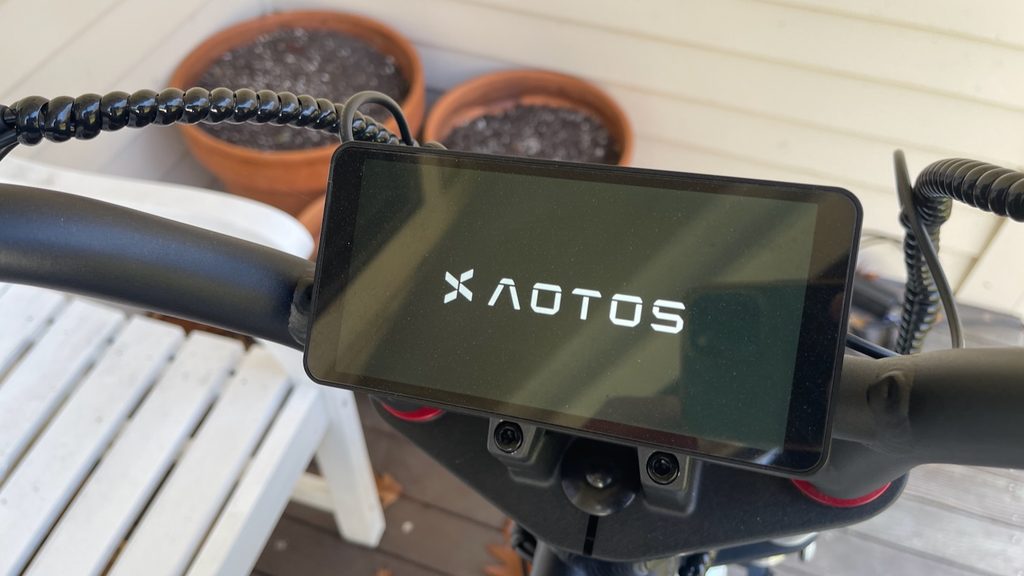
The display is easy to read in daylight. It dims when you turn the lights on, so you can tell at a glance that your lights are on. The horn goes off with the lightest touch. I hit it by mistake more times than I can count, and you will too.
The App Packs In a Lot
The app pairs with the bike over Bluetooth, and most settings only work while your phone is connected. You can set a teen mode that caps speed at 9.3 mph, which is barely faster than jogging but useful if a younger rider will use the bike. You can have the bike power itself off after 2, 5 or 10 minutes. You can turn on an abnormal movement alarm and share a digital key with up to three people in your household.
There’s also swipe to start, navigation mirrored to the display, proximity unlock and firmware updates. I haven’t tried navigation or proximity unlock yet.

The Pro is supposed to come with one free year of 4G GPS tracking. After that, Aotos charges $2.90 a month or $29 a year. I haven’t been able to find or activate my subscription. One owner on Reddit says the always-on 4G connection drains the battery while the bike is parked, and turning off proximity unlock fixed it.
The tire pressure sensors have been a letdown so far. There are no instructions for installing them. Once I screwed them on, I never got a reading, and they never paired. TailHappyTV got his working by typing each sensor’s MAC address into the app, and the pressures showed up on his display right away. I haven’t tried that yet, and I’ll update this section once I do.
Charging Takes Some Fiddling
Charging is fiddly, and other reviewers say so too. The plug only fits one way, so you’ll be turning it around in the dark. The included charger is a 4.5A unit. Aotos quotes about 6 hours for a full charge, and TailHappyTV puts it closer to 4 hours from empty. The Pro’s under-frame bag also gets in the way when you reach for the battery, which is an odd design choice on the version that comes with the bag.
Reliability and Theft
Besides the driveway shutdown, the bike once threw an error that seemed to point to suspension vibration. Both happened early, and neither has come back. Other reviewers report a different shutdown. One commuter found the bike powers off 15 to 30 seconds after you put the kickstand down, and Aotos has said a firmware update would address that.
Theft is less of a worry than on most e-bikes. At about 109 lb with the battery, nobody is wheeling it away in a hurry. Without power the motor resists, and you can’t pedal it anywhere without the battery. If someone moves it before you’ve entered your PIN, an old-school alarm goes off, loud enough to turn heads. Add the included lock and GPS tracking, and a thief has easier targets.
What Owners and Other Reviewers Are Saying
My own rides only tell part of the story, so we also dug into how the Flux X26 Pro has been received since launch. We went through 107 posts and articles about the bike, including 25 YouTube reviews and ride videos, more than a dozen written reviews, and about 670 comments from YouTube, Reddit, Instagram and TikTok. We also read Aotos’ 115 verified buyer reviews, which average 3.8 out of 5.
Most hands-on reviewers love the look, the comfort and the dash, and they agree with me that the pedals are mostly for show. Their complaints line up with mine: slow climbs, a weak headlight, no turn signals, and tire pressure sensors that don’t always pair. In the comments, the design gets the most praise by far. The most common gripe from people who haven’t ridden one is that 28 mph is too slow for the money.
Owners rarely complain about speed. Their complaints are mostly about defects: bikes that wouldn’t power on, batteries that drained while parked, an app that wouldn’t connect and a broken battery tray.
Fulfillment has been the other sore spot. Several buyers mention missing accessories and orders with no follow-up, and owners describe slow email replies. One YouTuber’s bike arrived without a battery, and he walks through how hard it was to get replacement parts in the US. In May, a Reddit post claimed Aotos had shut down. No one ever showed proof, and backers have since received their bikes.
A lot of that comes with a first production run from a brand-new company, and plenty of owners have had a smooth experience. My review unit arrived complete. Still, Aotos is young, and when you buy one you’re betting on how well its support holds up over the next few years. If something arrives broken or missing, plan on being patient.
Wear a Real Helmet
At 28 mph on a bike that weighs over 100 lb, a regular bicycle helmet won’t cut it. I wear a Fox Racing Proframe RS. It’s a full-face downhill helmet with MIPS, and a BOA dial in the back lets you tighten the fit around your head. I got it on sale, and I wouldn’t ride this bike with an open-face helmet.
If you’ll spend a lot of time in traffic at top speed, you can step up to a helmet rated for motorcycles or speed e-bikes. Just know a DOT sticker alone doesn’t tell you much, so read the reviews, measure your head and pick the size that actually fits you.
How I Tested
I rode the Flux X26 Pro on a string of sunny fall afternoons, some cold and some warmer, with leaves on the ground and dry roads every time. Most of my riding was on pavement: an out-and-back of 6 to 7 miles on a quiet two-lane back road, laps around my neighborhood and its steep hill, and a grocery run. I also rode the potholed dirt road I live on to test the suspension and hard braking.
I built the bike myself on our deck in about 90 minutes, with help from my wife on the front wheel. I rode mostly in Sport mode at or near 28 mph, used the app over Bluetooth, set up the PIN and alarm, and tried to install and pair the tire pressure sensors. I’m 6’2″, which shaped my take on fit. Shorter fall days limited my total miles, so my range estimate is early.