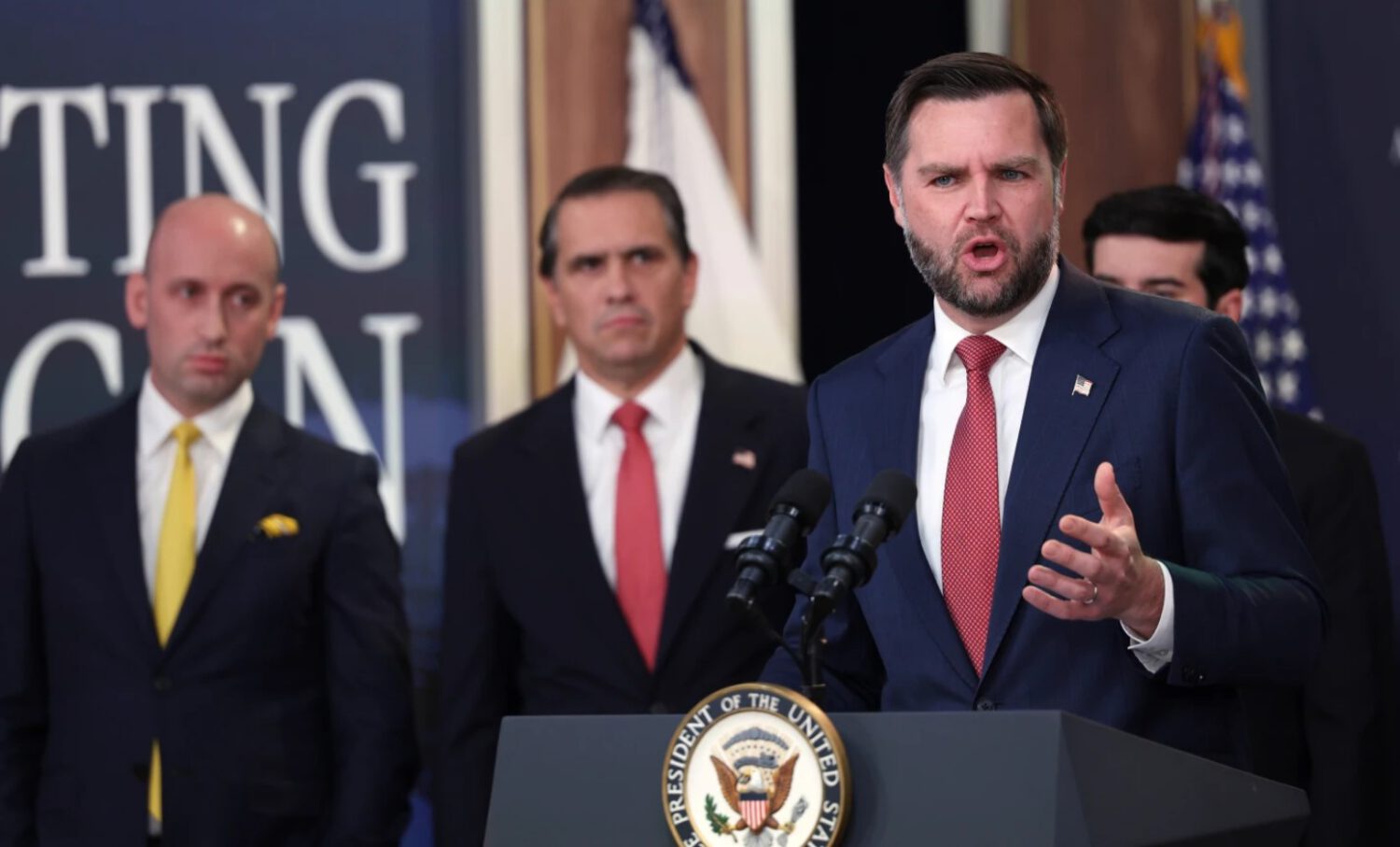
Vice President JD Vance announced on October 8, 2026, that the Trump administration is suspending Microsoft from a program that allows H-1B workers to pursue employer-sponsored green cards, accusing the company of fraud and visa misuse. The action targets green-card sponsorship specifically, not H-1B status itself, meaning affected workers retain their temporary work authorization but face disruption to the pathway toward permanent residency.
What the Suspension Actually Means
The administration cited figures from Microsoft’s recent layoffs and visa usage to support its fraud allegation, though the connection between those numbers remains contested.
To support the abuse claim, Vance cited the following figures, as reported by Fox Business:
- Approximately 6,000 U.S. workers laid off by Microsoft
- Approximately 6,300 H-1B visas benefiting the company
- Nearly 3,000 green cards pursued on behalf of employees
Vance characterized the alleged practice as replacing each laid-off American worker with roughly one and a half “foreign indentured servants.” That phrase is Vance’s political characterization, not an independently verified finding.
Available reporting does not establish that the U.S. layoffs directly correspond to the visa workers Vance cited. Microsoft had not responded to requests for comment as of the reporting date.
The suspension’s precise legal mechanism, duration, and scope were not detailed in the sources reviewed. Whether affected H-1B workers can seek green-card sponsorship through alternative means, or whether the suspension extends to pending applications, remains unresolved.
Adobe was also named among the companies targeted, according to Fox Business, suggesting the Microsoft action is part of a broader enforcement push rather than an isolated case.
A Broader Squeeze on the Talent Pipeline
Proposed federal fees on international student work programs could compound the pressure on employers and universities that rely on international talent pipelines and foreign-born early-career talent.
The Department of Homeland Security published a proposed rule in the Federal Register on October 8, 2026, that would impose a $70,000 fee for each initial Optional Practical Training recommendation and a $30,000 fee for subsequent recommendations, including extensions. The OPT proposal appeared the same date as the Microsoft announcement; it may have been available for public inspection a day earlier.
OPT allows eligible F-1 international students to work temporarily in positions related to their fields of study. It also functions as a common bridge to later immigration categories, including H-1B status.
Under the proposal, the fee would formally be charged to the SEVP-certified university, not directly to the student or employer. Even so, the economic burden could potentially shift through institutional charges, reduced program participation, or employer arrangements.
These fees are not currently in effect. The proposal requires a public comment period and publication of a final rule before implementation, with a 60-day window after final publication before fees would apply, according to the Federal Register notice.
If finalized at the proposed amounts, the fees could potentially reduce universities’ willingness to recommend students for OPT, though no independent economic analysis in the sources reviewed establishes that outcome.
What Comes Next
Key legal and policy questions remain open as both the Microsoft suspension and the OPT fee proposal move through their respective processes.
The sources reviewed did not identify a Microsoft statement about a possible legal challenge. The administration has not released detailed evidence supporting the fraud allegation beyond the figures Vance presented; the sources reviewed did not identify a supporting investigative report or agency finding.
If the OPT fees are finalized, universities, international students, and employers may face decisions about program participation that could affect early-career hiring across specialized fields. For H-1B workers whose green-card processes at Microsoft are now disrupted, the scope and duration of the suspension remain the central unanswered questions.