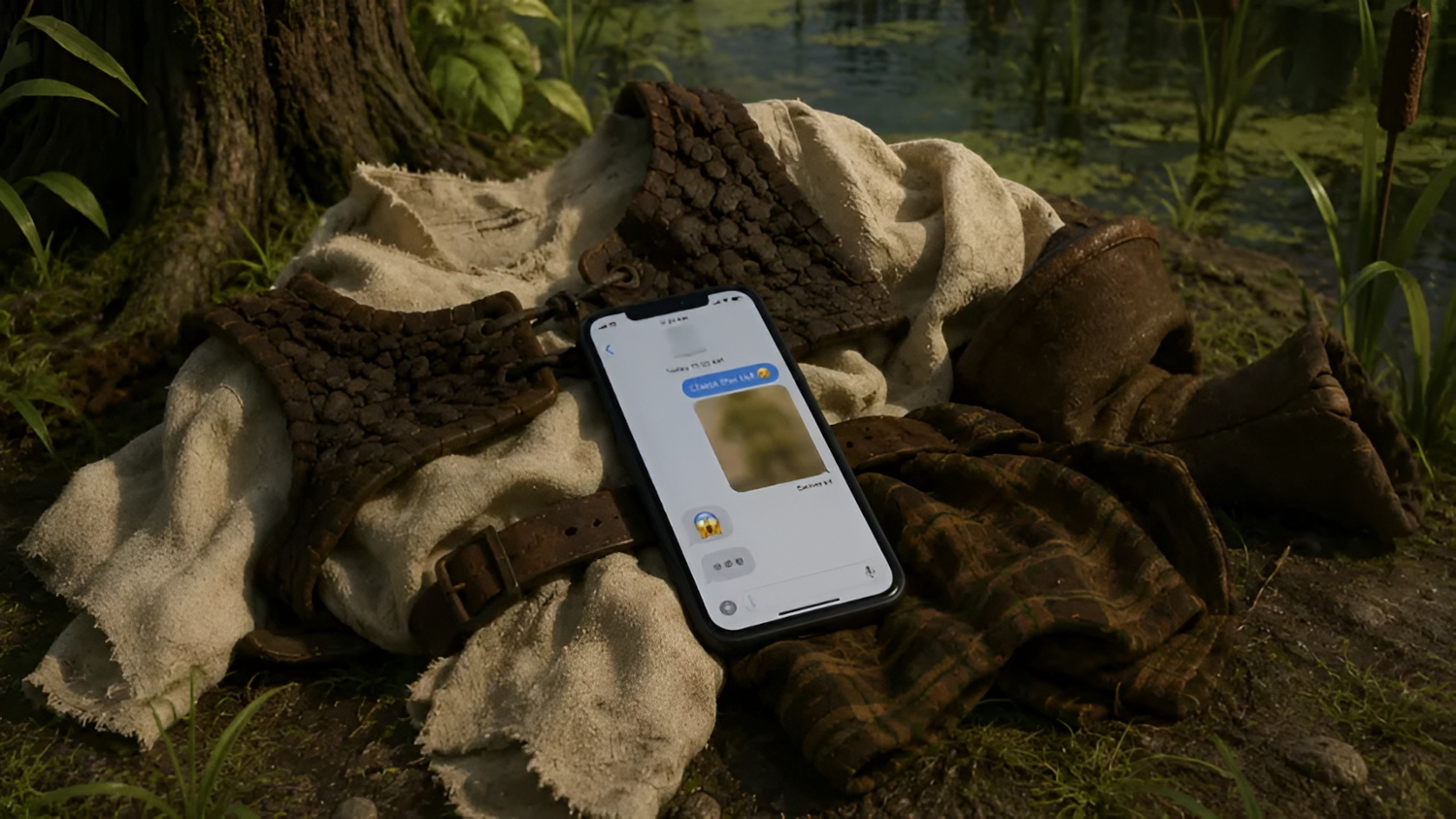
D.J. Byrnes, who publishes the progressive political outlet The Rooster, spent approximately 23 hours in custody after texting an Ohio state senator a digitally altered nude image of Shrek alongside political commentary. The charge is misdemeanor telecommunications harassment, and Byrnes has pleaded not guilty.
The case puts Ohio’s harassment statute in direct tension with First Amendment protections for political satire. The parties are Byrnes; Sen. Jerry Cirino; and the Kirtland Police Department, which received Cirino’s complaint and made the arrest.
What “Shrexting” Actually Means Here
This article uses “Shrexting” as informal shorthand for sending sexually explicit or suggestive Shrek-themed material; it has no legal standing.
The records show, according to reporting by Signal Ohio, that Byrnes sent Cirino three text messages on May 6. Those messages included political commentary, the insult “Young Mussolini,” promotion of Byrnes’ newsletter, and one digitally altered image depicting Shrek with an exposed, erect, humanlike… member.
Cirino emailed Kirtland Police Chief Jamey Fisher two days later, described the image as “disgusting” and “pornographic,” and requested that charges be filed. Byrnes was arrested in June, held for roughly 23 hours, and released on bond.
What the Charge Actually Requires
Ohio’s harassment statute demands proof of intent, not just proof that the recipient was offended.
Ohio Revised Code section 2917.21 prohibits knowingly making a telecommunications transmission with the purpose to harass, intimidate, or abuse another person. Sending something offensive does not automatically satisfy that standard; prosecutors must prove Byrnes’ intent, not just Cirino’s reaction.
The reported facts involve three texts sent during a single afternoon. The statute does not require a particular number of communications, but context, wording, and any prior contact between the parties will all be relevant to proving the required purpose.
A first-degree misdemeanor conviction under this statute carries a maximum sentence of six months in jail. Byrnes pleaded not guilty and said he believed the facts presented in court would establish his innocence, according to Signal Ohio.
Why the First Amendment Matters
Political criticism of public officials receives especially strong First Amendment protection, even when the expression is crude or shocking.
Offensive, insulting, or irreverent speech does not automatically forfeit constitutional protection because a recipient found it disturbing. The government may regulate certain narrow categories, including true threats, speech that meets the legal standard for actionable harassment, and material that satisfies the Supreme Court’s Miller v. California obscenity test, among other recognized exceptions.
That three-part Miller test asks whether material appeals to prurient interest and depicts sexual conduct in a patently offensive way under applicable law. It also asks whether the material lacks any serious literary, artistic, political, or scientific value.
The reported context here includes direct political commentary aimed at a named public official. The defense can argue that the image functioned as political satire rather than material sent primarily to arouse or degrade, though whether it clears the Miller bar is a fact-specific question for the court. Some legal scholars compare this kind of contested expression to content that has historically were banned under obscenity-adjacent standards before courts intervened.
Cirino describing the image as “pornographic” does not resolve that question on its own.
What This Case Could Decide
The verdict will test how far Ohio’s harassment law can reach when crude political mockery arrives by text.
Byrnes’ guilt is not established. The prosecution must prove intent beyond the mere fact that a sitting senator was offended, and that is a considerably harder legal task than it might initially appear.