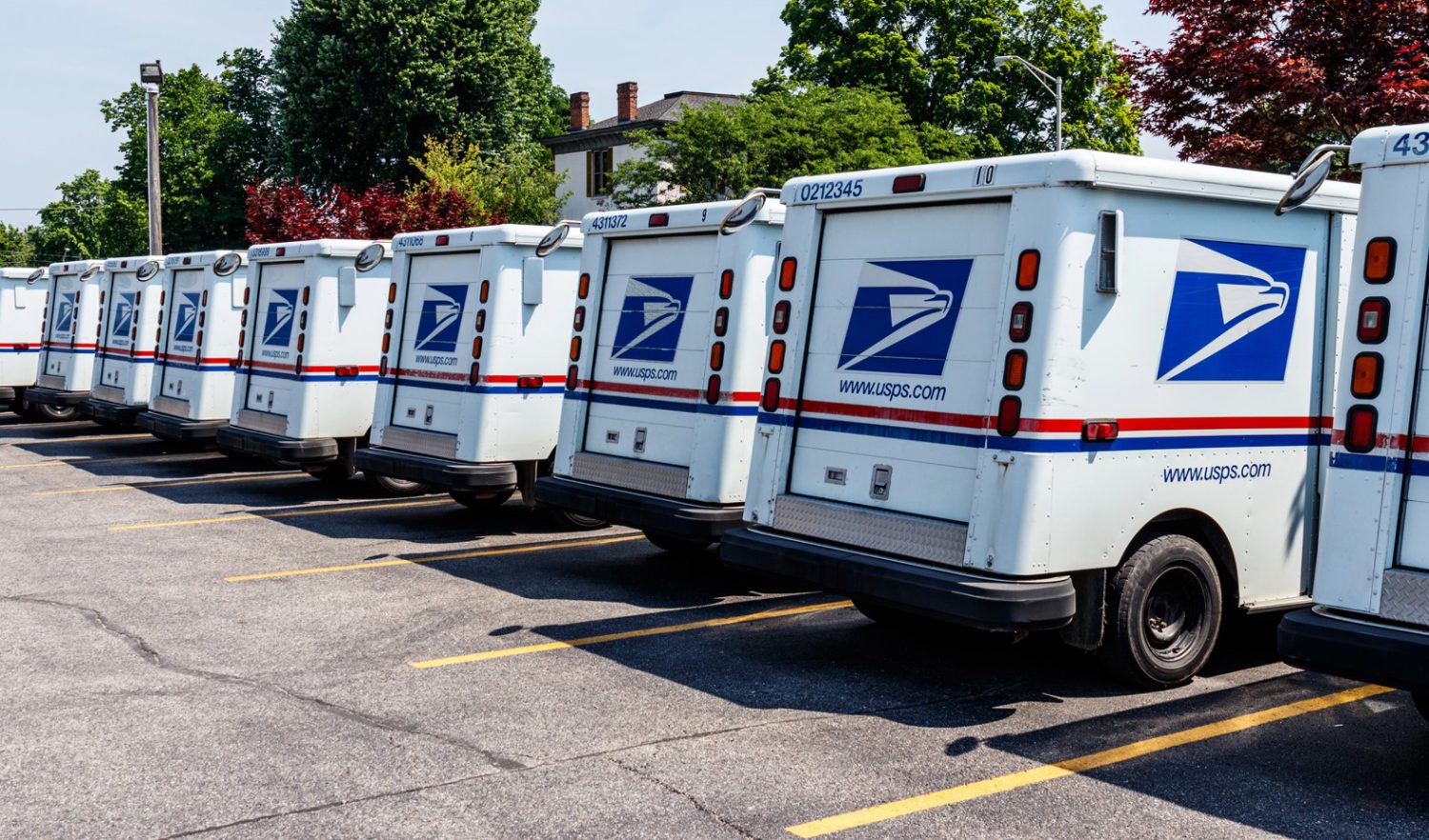
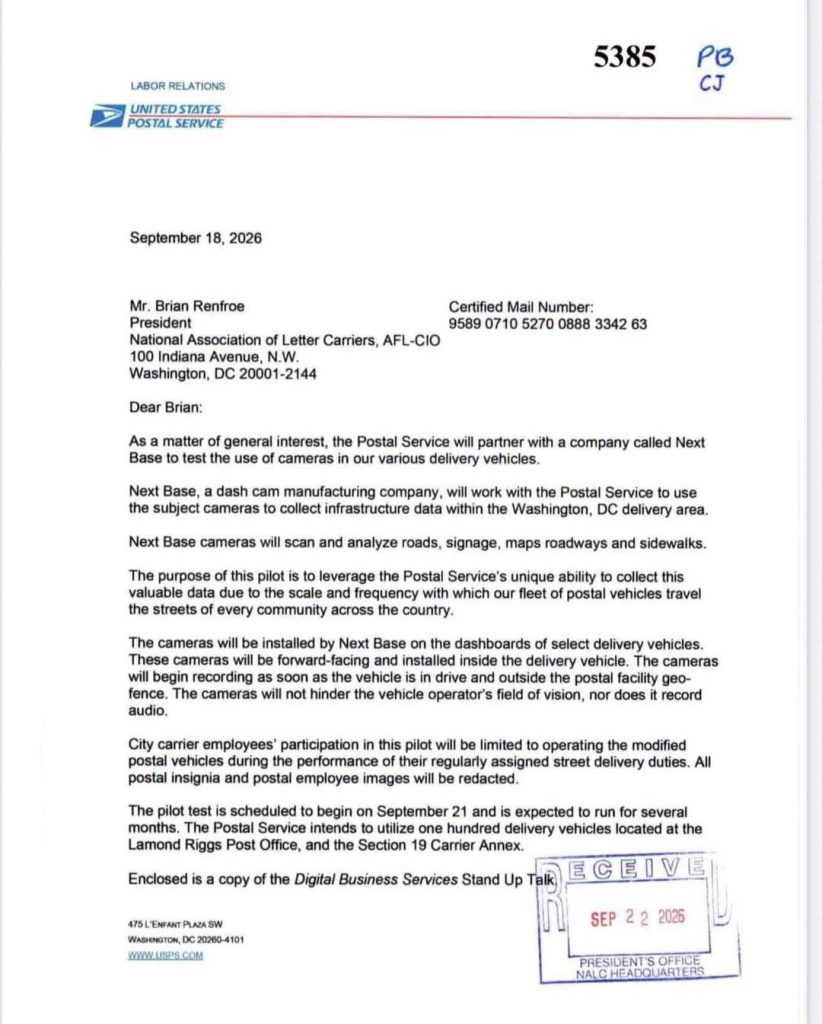
The United States Postal Service is testing forward-facing cameras in roughly 100 delivery vehicles operating in the Washington, D.C., area, according to a labor-relations letter reported by 404 Media. The cameras, supplied by dashcam manufacturer Nextbase, are intended to scan roads, signage, and sidewalks while trucks follow their normal delivery routes.
The pilot was scheduled to begin September 21, 2026. The stated purpose is roadway and infrastructure data collection and what USPS calls “community safety,” though what happens to everything else the cameras capture remains a less-answered question.
What the Cameras Will Actually Do
The cameras begin recording when a truck leaves the postal facility and are designed to collect roadway and infrastructure data without altering driver duties.
Cameras activate when a truck shifts into drive and departs the postal facility. There is no audio recording, and the cameras face forward only, positioned so they do not obstruct the driver’s field of vision. USPS has stated that employees will not need to take any additional action.
Nextbase markets cameras capable of recording in resolutions up to 4K, with product materials noting the ability to capture license-plate details. Those are advertised product capabilities, not confirmed specifications for the units installed in the pilot.
USPS says the pilot does not use automatic license plate reader software. A camera can visually record a plate without running it through ALPR software that converts the image into a searchable database entry; those are meaningfully different functions. Whether USPS retains, processes, or searches incidentally captured plate images is not established in the available reporting.
The logic behind using mail trucks specifically comes directly from USPS Labor Relations, in a letter to National Association of Letter Carriers president Brian Renfroe: “The purpose of this pilot is to leverage the Postal Service’s unique ability to collect this valuable data due to the scale and frequency with which our fleet of postal vehicles travel the streets of every community across the country.”
The arrangement resembles dedicated roadway-mapping fleets, but relies on vehicles already in service rather than purpose-built survey cars.
What USPS Isn’t Saying Yet
Several key details about data retention, access, and processing have not been publicly disclosed.
The available reporting does not identify a retention period for footage collected during the pilot. Whether recordings are stored continuously, converted into extracted roadway data, or deleted after processing has not been established.
No public disclosure identifies which entities beyond USPS may access the recordings or any derived datasets. Publicly, no policy has been stated covering whether images of pedestrians, homes, private driveways, or vehicles will be automatically blurred or deleted.
Whether the system uses artificial intelligence to classify road defects in real time, or whether footage is recorded for later review, also remains unclear. A USPS spokesperson told 404 Media: “The Postal Service is conducting a limited pilot to assess whether vehicle-mounted cameras can help identify roadway conditions and support community safety.” The agency added that privacy safeguards are included but has not detailed them publicly.
The privacy impact of any camera system depends less on the camera’s existence than on what is retained and automatically recognized. Equally important: how long the data stays accessible and whether it can be linked to identifiable people or vehicles.
A Different Use Case Than What’s Already on the Trucks
This pilot’s forward-facing infrastructure focus sets it apart from the exterior cameras already mounted on some USPS vehicles.
Some USPS vehicles already carry 360-degree cameras that record the outside of the vehicle. The available reporting describes those as recording for a limited period, with a purpose distinct from continuous infrastructure data collection.
This pilot’s stated goal is sustained, forward-facing roadway scanning, which is a different application. Expanded nationally, the program would raise consequential questions around data minimization, retention schedules, third-party access, and law-enforcement sharing. For now, the evidence supports only a limited Washington, D.C., pilot with 100 trucks and an open set of unanswered data-governance questions.