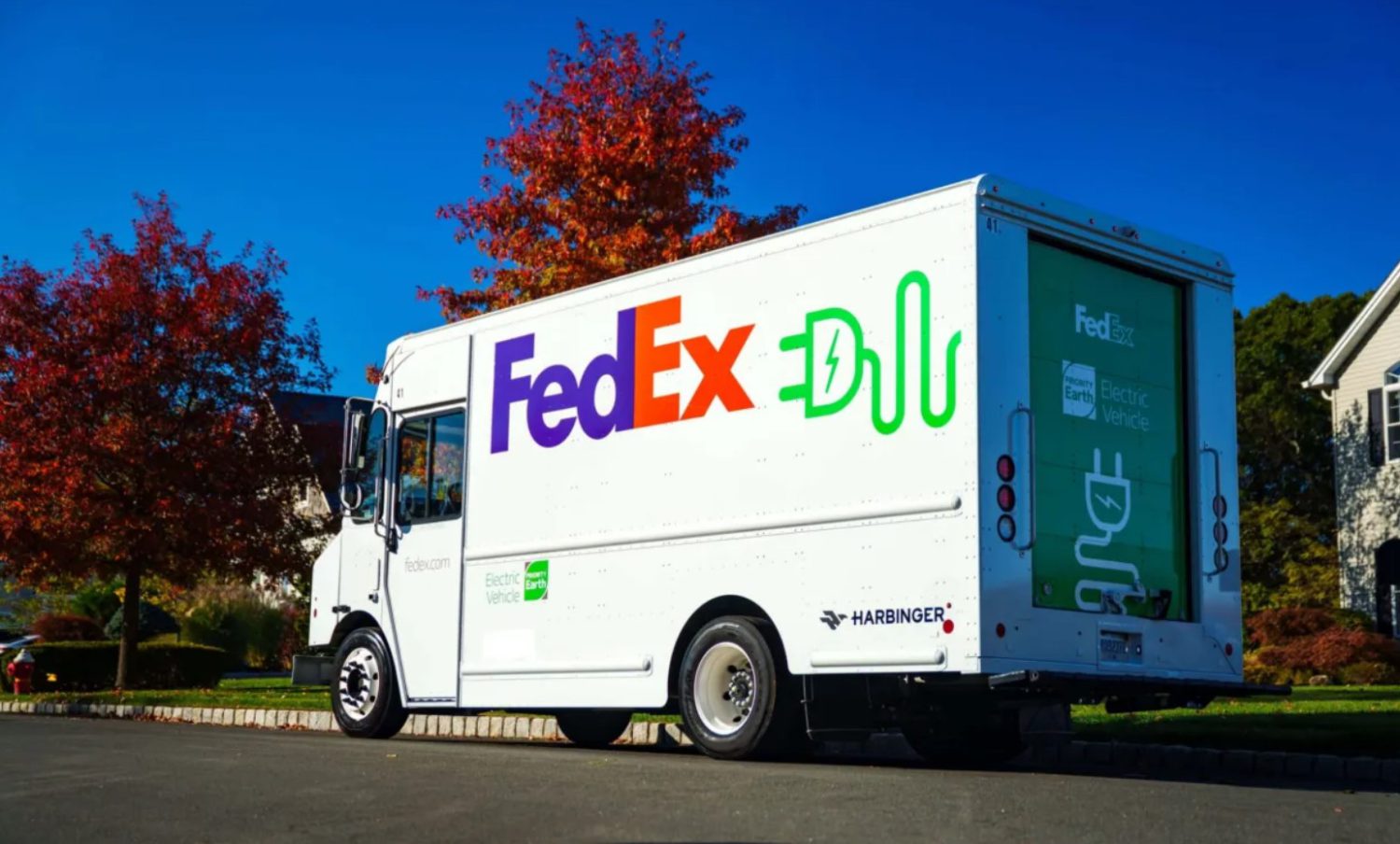
FedEx has placed an order for 2,000 all-electric trucks from Harbinger Motors, valued at more than $300 million, with deliveries planned by the end of 2027. The vehicles are intended as direct, one-for-one replacements for conventional combustion trucks on pickup-and-delivery routes across the United States and Canada. The central question the deal leaves open is whether a company founded in 2022 can manufacture at the pace the schedule demands.
From 53 Trucks to 2,000
This order dramatically expands what began as a modest pilot relationship between FedEx and Harbinger.
FedEx and Harbinger have an existing financial and operational relationship. FedEx co-led Harbinger’s $160 million Series C financing round in 2025, alongside Capricorn’s Technology Impact Fund and THOR Industries. That round brought the startup’s total funding to $358 million.
An earlier order of 53 Class 5 and Class 6 electric vehicles accompanied that financing. Those are medium-duty trucks, heavier than a typical cargo van but far lighter than a highway tractor-trailer, used regularly on neighborhood and urban delivery routes.
Harbinger’s core product is what the industry calls a stripped chassis: the electric platform, battery systems, and major mechanical components, without a delivery body attached. A separate specialist called an upfitter adds the cargo box or other equipment before the truck enters service. The new 2,000-vehicle commitment is Harbinger’s largest order to date and, according to the company, ranks among the largest binding orders for electric medium- or heavy-duty trucks placed anywhere.
The Production Question
Delivering 2,000 trucks by the end of 2027 will require Harbinger to sustain a manufacturing pace it has not yet demonstrated at this scale.
Harbinger plans to deliver all 2,000 vehicles by the end of 2027. Working backward from that deadline, the pace works out to roughly 111 trucks per month across an 18-month window. That figure is an arithmetic estimate based on the stated volume and timeframe, not a company-issued production forecast.
According to reporting by TechCrunch, Harbinger has already reached commercial manufacturing and is generating revenue. That distinguishes the company from several earlier commercial-EV startups that raised significant capital without ever delivering vehicles to paying customers.
Harbinger estimates its trucks reduce fuel costs by about $20,000 per vehicle annually compared with diesel equivalents. Applied across the full order, that figure suggests roughly $40 million in potential annual fuel savings for FedEx. Actual results will vary based on electricity prices, charging infrastructure costs, specific routes, and maintenance; the estimate originates with Harbinger and has not been independently audited.
Delivering on that schedule is the central question this order leaves unanswered.
What Comes Next
The order connects directly to FedEx’s longer-term push to electrify its entire pickup-and-delivery fleet.
The trucks align with FedEx’s stated goal of transitioning its entire pickup-and-delivery fleet to electric vehicles by 2040, according to Axios reporting on the carrier’s fleet strategy. Canadian deployments will be supported by Harbinger’s dealer partner, Kaizen Automotive Group. If you follow commercial fleet electrification, the shift from small pilot orders to volume commitments like this one is worth tracking closely.
The order is confirmed and described by Harbinger as binding. Whether the company meets its 2027 delivery target will offer the broader commercial-EV market a meaningful data point on what a young manufacturer can realistically achieve at scale.