A patent grant dropped on September 29, 2026, just sixteen days before Tesla’s rescheduled Roadster demonstration. U.S. Patent No. 12,746,987 B1, titled “Electric Fan Car,” describes an active aerodynamic system that uses electric fans to press a vehicle toward the road. A driverless Tesla incident earlier this year had already kept the brand in the spotlight.
The timing is genuinely interesting. The conclusion it invites may not be.
The application was filed in January 2024, based on a provisional filing from January 17, 2023. The USPTO’s examination clock, not Tesla’s product calendar, determined when this grant landed. That distinction matters before you start reading it as a Roadster spec sheet.
How the Fan System Works
Here is what the patent actually describes, and what it does not tell you.
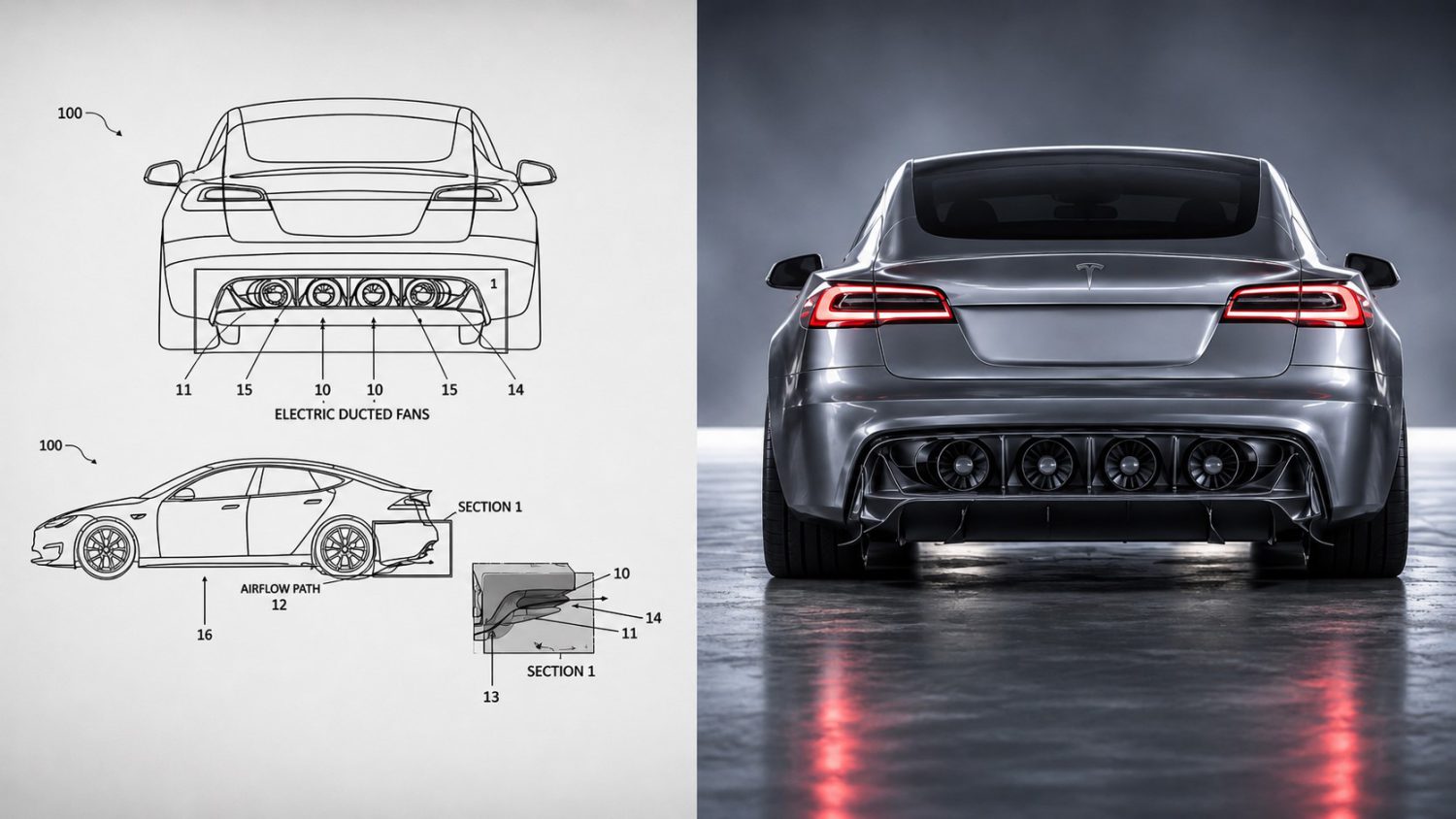
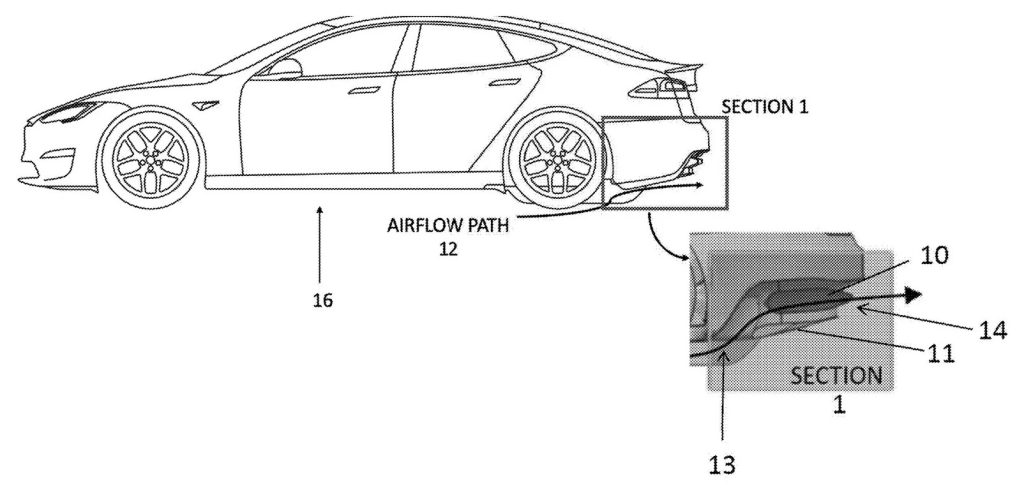
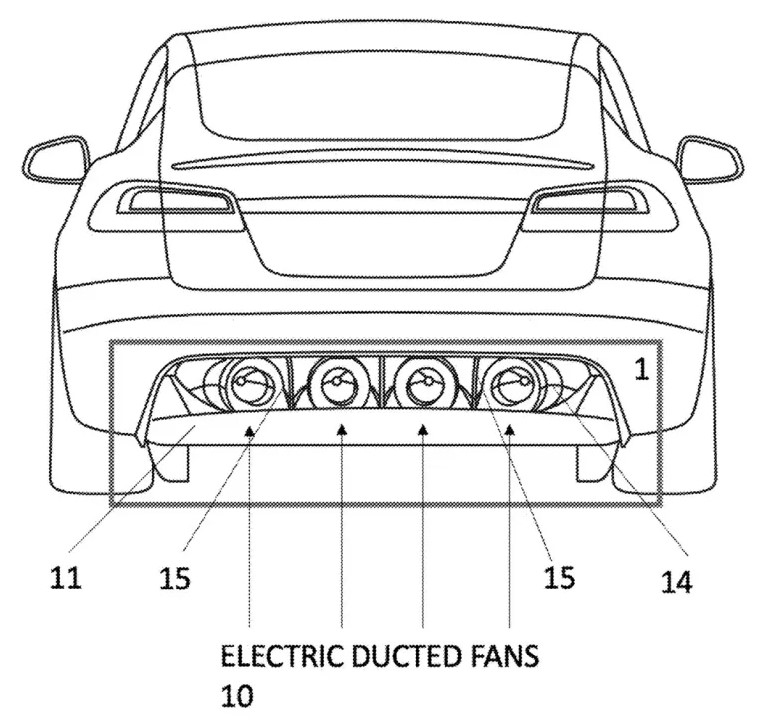
The patent describes four electric axial fans positioned side by side in the rear diffuser, separated by vertical strakes. An underbody inlet feeds air into a duct that runs toward a rear outlet. The fans draw air from beneath the car, reducing underbody pressure. That drop in pressure lets atmospheric force above push the vehicle toward the road.
The system connects directly to the vehicle’s high-voltage battery and is electronically controlled, meaning it operates on demand rather than as a fixed aerodynamic feature.
According to U.S. Patent No. 12,746,987 B1, the system is designed to “increase downforce” and “reduce drag” independent of vehicle speed.
Why Speed-Independent Downforce Matters
Electric fans accomplish something a passive diffuser cannot: they work before the car is moving fast enough for aerodynamics to matter.
Conventional diffusers depend on airflow velocity to create low-pressure zones beneath the car. At low speeds, they contribute relatively little. Fans sidestep that limitation, which means the system could improve cornering stability and braking grip in exactly the conditions where passive aerodynamics typically lose effectiveness.
That is the meaningful part of this patent. The unresolved part is everything else.
Power consumption, packaging complexity, noise, and debris ingestion are real trade-offs. The patent addresses none of them with test data. No independent performance figures exist yet.
Fan-assisted ground effect is not a new concept. The McMurtry Speirling and Gordon Murray Automotive T.50 both use fan-driven downforce. Tesla’s contribution is EV-native execution, drawing power from a high-voltage battery rather than a mechanical drive.
The Roadster Connection Is Plausible, Not Confirmed
The patent points toward the Roadster as a candidate, but the evidence stops well short of confirmation.
The patent illustrations depict a Model S-shaped vehicle, not the Roadster. Patent drawings routinely use generalized vehicle architectures rather than production silhouettes, so the resemblance rules nothing in or out.
Tesla previously filed a related patent involving deployable skirts and electric fans, according to Drive Tesla Canada. The newer patent appears less reliant on ground-contact skirts, but both filings point in the same direction: Tesla has been exploring this category of technology for several years.
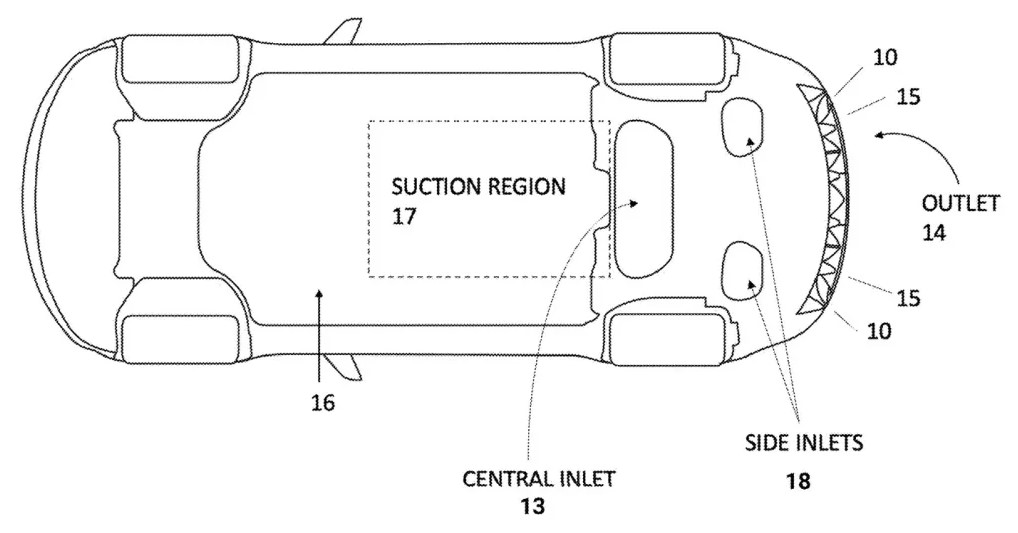
The Roadster is a plausible candidate given its high-performance positioning, and fan-assisted downforce suits that brief directly. However, no Tesla statement, official specification, or prototype documentation confirms the system will appear in the Roadster. InsideEVs notes the patent drawings offer no model-specific identification.
The October 15 demonstration was rescheduled from October 1 after severe weather was forecast for the planned outdoor event location. Whether that event answers the production question depends entirely on what Tesla chooses to show.